

ExploreExplorarBH-0001
Make a vacuumHaga un vacío
Pull the air out of a water bottle through a straw and watch a balloon shrink, then grow.Saque el aire de una botella de agua con un popote y vea cómo un globo se encoge y luego crece.
- Ways in:Formas de empezar:
- Read, 2 minutesLeer, 2 minutos
- Watch, 3 minutesVer, 3 minutos
- Do, 15 minutesHacer, 15 minutos
- Simulate, 5 minutesSimular, 5 minutos
- AgesEdades
- Every age. Best for ages 4 to 12.Todas las edades. Ideal de 4 a 12 años.
- CostCosto
- Things already at homeCosas que ya hay en casa
- EpisodeEpisodio
- Episode 1Episodio 1
The MESH'D components this item uses:Los componentes MESH'D que usa:ManufacturingManufacturaHolistic DesignDiseño integral
WatchVea
Read the transcriptLea la transcripción
Hey, it's Mickie Byrd, and this is byrd@home, where we give you science experiments and engineering projects that you can do with objects you have at home.
All right, so today we're going to learn about vacuums. A vacuum is a space devoid of matter and can be created when the pressure inside the space is lower than the pressure outside of it. So today, I'm going to show you how to create your very own vacuum. What you need is water bottle, straw, and some kind of balloon. In my case, I found a rubber glove that I can use.
So we'll start by taking the bottle, and you can use a pencil, anything you have. You're going to poke a hole like this. So now you have a hole in your bottle.
All right, next thing you're going to do is take your straw, and you're going to put the straw into the hole that you just made, like that.
Next, you're going to take your balloon, and then you'll put it on top of your bottle. For me, it's too big, so instead I'm going to cut off one of the fingers. Take some scissors, like that, and I can use that, put it over the top. There. So now we're going to create the vacuum using the straw.
All right, so here's our vacuum. Whenever you take the air out of the bottle, it's going to cause the pressure inside of the bottle to be less, and then you'll see the balloon shrink.
Here's something cool. If you actually put the balloon inside of the bottle, whenever you take the air out, this time it'll grow.
So your engineering challenge today is to design and create the coolest vacuum you can using what you find in your home. Remember, the key concept with a vacuum is to somehow decrease the pressure inside.
And for science, it's all about changing the variables and seeing what the results are. In our case, you can do things like change the type of bottle. Instead of a balloon, try using a plastic bag or a piece of paper and see how it affects the results. Be sure to remember to make your hypothesis, or guess, before you start your experiment.
Once you finish your project or experiment, be sure to ask an adult before you post it. All right, that's all we have for today. So go build a future that you desire.
Hola, soy Mickie Byrd y esto es byrd@home, donde les damos experimentos de ciencia y proyectos de ingeniería que pueden hacer con objetos que tienen en casa.
Muy bien, hoy vamos a aprender sobre el vacío. El vacío es un espacio sin materia, y se puede crear cuando la presión dentro del espacio es más baja que la presión de afuera. Así que hoy les voy a mostrar cómo crear su propio vacío. Lo que necesitan es una botella de agua, un popote y algún tipo de globo. En mi caso, encontré un guante de goma que puedo usar.
Empezamos con la botella, y pueden usar un lápiz, lo que tengan. Van a hacer un agujero así. Ahora tienen un agujero en la botella.
Muy bien, lo siguiente es tomar el popote y meter el popote en el agujero que acaban de hacer, así.
Después van a tomar el globo y lo van a poner encima de la botella. El mío es demasiado grande, así que mejor voy a cortar uno de los dedos. Tomo unas tijeras, así, y puedo usar eso: lo pongo encima. Listo. Ahora vamos a crear el vacío con el popote.
Muy bien, aquí está nuestro vacío. Cuando sacan el aire de la botella, la presión dentro de la botella baja, y entonces ven que el globo se encoge.
Aquí hay algo genial. Si ponen el globo dentro de la botella, cuando sacan el aire, esta vez crece.
Su reto de ingeniería de hoy es diseñar y crear el vacío más genial que puedan con lo que encuentren en su casa. Recuerden: la idea clave del vacío es bajar de alguna forma la presión adentro.
Y en la ciencia, todo se trata de cambiar las variables y ver cuáles son los resultados. En nuestro caso, pueden cambiar el tipo de botella. En lugar de un globo, prueben con una bolsa de plástico o un pedazo de papel y vean cómo cambian los resultados. No olviden hacer su hipótesis, o suposición, antes de empezar el experimento.
Cuando terminen su proyecto o experimento, pregunten a un adulto antes de publicarlo. Muy bien, eso es todo por hoy. Así que vayan a construir el futuro que desean.
Do, about 15 minutesHacer, unos 15 minutos
Build it at homeConstrúyalo en casa
StepsPasos
- Poke a hole in the side of the bottle with the pencil.Haga un agujero en un lado de la botella con el lápiz.
- Push the straw into the hole you just made.Meta el popote en el agujero que acaba de hacer.
- Stretch the balloon over the top of the bottle. If it is too big, cut a finger off the rubber glove and use that.Estire el globo sobre la boca de la botella. Si es demasiado grande, corte un dedo del guante de goma y use ese.
- Pull the air out of the bottle through the straw, and watch the balloon shrink.Saque el aire de la botella por el popote y observe cómo el globo se encoge.
- Now put the balloon inside the bottle, its open end over the top, and pull the air out again. This time it grows.Ahora ponga el globo dentro de la botella, con la abertura sobre la boca, y saque el aire otra vez. Esta vez crece.
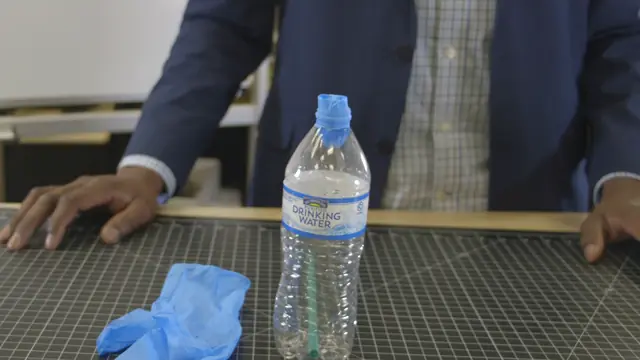
What you needLo que necesita
- An empty plastic water bottleUna botella de agua de plástico vacía
- A drinking strawUn popote
- A balloon, or a rubber glove to cut a finger fromUn globo, o un guante de goma para cortarle un dedo
- A pencil, or anything with a point, to poke a holeUn lápiz, o algo con punta, para hacer un agujero
- ScissorsTijeras
Things already at home.Cosas que ya hay en casa.
A grown-up pokes the hole and does the cutting. Use a clean straw of your own, and ask a grown-up before you post your project or results online.Una persona adulta hace el agujero y los cortes. Use un popote limpio y propio, y pregunte a una persona adulta antes de publicar su proyecto o sus resultados en internet.
Read, 2 minutesLeer, 2 minutos
The big ideaLa gran idea
A vacuum is a space with no matter in it, and you can make one by lowering the pressure inside a space below the pressure outside it. When you pull air out of the bottle, the pressure inside drops, so the air outside pushes the balloon on top down and it shrinks. Put the balloon inside the bottle instead, and pulling the air out makes it grow.El vacío es un espacio sin materia, y se puede crear bajando la presión dentro de un espacio por debajo de la presión de afuera. Al sacar aire de la botella, la presión adentro baja, así que el aire de afuera empuja el globo de arriba hacia adentro y se encoge. Si pone el globo dentro de la botella, al sacar el aire el globo crece.
Simulate, 5 minutesSimular, 5 minutos
Air pressure in a bottleLa presión del aire en una botella
Pull air out of a bottle through its straw and watch what the air outside does to a balloon on top of the bottle, or inside it.Saque aire de una botella por su popote y vea lo que el aire de afuera le hace a un globo sobre la botella, o dentro de ella.
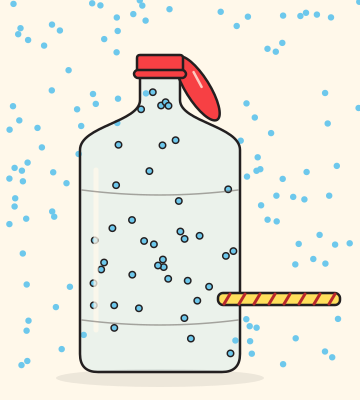
The drawing shows where it starts. It runs here once its script has loaded.El dibujo muestra dónde empieza. Funciona aquí una vez que carga su código.
Your challengeSu reto
- Pull enough air out that the balloon on top sinks into the bottle.Saque suficiente aire para que el globo de arriba se meta en la botella. Not done yet.Todavía no.
- Put the balloon inside, then pull until the outside pushes harder by five kilopascals.Ponga el globo adentro y saque aire hasta que afuera empuje cinco kilopascales más fuerte. Not done yet.Todavía no.
- Pull more air out than a mouth can.Saque más aire del que puede sacar una boca. Not done yet.Todavía no.
Every challenge done. Now try it for real at home.Todos los retos logrados. Ahora pruébelo de verdad en casa.
Air pressure outsidePresión del aire afuera
Air pressure inside the bottlePresión del aire dentro de la botella
The outside pushes harder byAfuera empuja más fuerte por
The blue arrow is the push of the air in the room, the dark one the push of the air in the bottle, each as long as its pressure.La flecha azul es el empuje del aire del cuarto, la oscura el empuje del aire de la botella, cada una tan larga como su presión.
What is happeningQué está pasando
Air is made of tiny particles that never stop moving. Every time they bump into something, they push on it. All of those pushes together are air pressure.El aire está hecho de partículas diminutas que nunca dejan de moverse. Cada vez que chocan con algo, lo empujan. Todos esos empujones juntos son la presión del aire.
When you pull air out through the straw, fewer particles are left inside the bottle to push. The air outside still pushes just as hard, so it wins: it pushes a balloon on top down into the bottle, and it fills a balloon inside the bottle, whose opening lets the outside air in.Al sacar aire por el popote, quedan menos partículas dentro de la botella para empujar. El aire de afuera sigue empujando igual de fuerte, así que gana: empuja hacia adentro un globo puesto encima de la botella, y llena un globo puesto dentro de la botella, cuya abertura deja entrar el aire de afuera.
Pull out every particle and you would have a vacuum, a space with no matter in it. A mouth can only pull a little of the air out; a pump can pull out much more.Si sacara todas las partículas tendría un vacío, un espacio sin materia. Con la boca solo se puede sacar un poco del aire; una bomba puede sacar mucho más.
Things to tryCosas para probar
- Pull out a little air, then a lot, and watch how far the balloon moves.Saque un poco de aire, luego mucho, y vea cuánto se mueve el globo.
- Move the balloon from the top to the inside, and pull again.Cambie el globo de arriba hacia adentro y vuelva a sacar aire.
- Watch the two pressures: the balloon always moves toward the side that pushes less.Observe las dos presiones: el globo siempre se mueve hacia el lado que empuja menos.
The numbers come from a simple model: Boyle’s law for the air and a stretchy skin for the balloon. A real balloon stiffens as it stretches and a plastic bottle squeezes in a little, so your own bottle may move a little differently.Los números vienen de un modelo sencillo: la ley de Boyle para el aire y una piel elástica para el globo. Un globo real se pone más duro al estirarse y una botella de plástico se aprieta un poco, así que su botella puede moverse un poco distinto.
Open the simulation on its own pageAbrir la simulación en su propia página
Your engineering challengeSu reto de ingeniería
Design and create the coolest vacuum you can with what you find in your home. Remember the key: somehow lower the pressure inside.Diseñe y cree el vacío más genial que pueda con lo que encuentre en su casa. Recuerde la clave: bajar de alguna forma la presión adentro.
Make it an experimentConviértalo en un experimento
Science is about changing one thing and watching what happens. Write down your guess, your hypothesis, before you start.La ciencia se trata de cambiar una cosa y observar qué pasa. Escriba su suposición, su hipótesis, antes de empezar.
- Change the type of bottle.Cambie el tipo de botella.
- Instead of a balloon, try a plastic bag or a piece of paper, and see how it changes the result.En lugar de un globo, pruebe con una bolsa de plástico o un pedazo de papel, y vea cómo cambia el resultado.
Use it, share it, adapt itÚsela, compártala, adáptela
The credit to copyEl crédito para copiar
Free BYRD, CC BY. “Make a vacuum” from the Byrd Academy STEM Curriculum by Byrd EDU, byrdathome.org.Free BYRD, CC BY. “Haga un vacío”, del Currículo STEM de Byrd Academy, de Byrd EDU, byrdathome.org.
This is free to use, share and adapt, even commercially, under the Creative Commons Attribution 4.0 International license (CC BY 4.0), with this credit. What Free BYRD means.Esto es libre de usar, compartir y adaptar, incluso con fines comerciales, bajo la licencia Creative Commons Atribución 4.0 Internacional (CC BY 4.0), con este crédito. Qué significa Free BYRD.
Keep goingSiga adelante
What to do nextQué hacer después
Make it harderHágalo más difícil
Make the balloon inside the bottle grow as big as you can, then work out how to keep it big after you stop pulling. Hint: the air comes back in through the straw.Haga que el globo dentro de la botella crezca lo más que pueda, y luego descubra cómo mantenerlo grande cuando deje de sacar aire. Pista: el aire vuelve a entrar por el popote.
For a younger onePara alguien más pequeño
A grown-up sets up the bottle and does the pulling; the little one watches the balloon and calls out shrink or grow each time.Una persona adulta prepara la botella y saca el aire; el pequeño observa el globo y dice se encoge o crece cada vez.
Try this nextPruebe esto después
Air pressure in a bottleLa presión del aire en una botella
Pull air out of a bottle through its straw and watch what the air outside does to a balloon on top of the bottle, or inside it.Saque aire de una botella por su popote y vea lo que el aire de afuera le hace a un globo sobre la botella, o dentro de ella.
- Ways in:Formas de empezar:
- SimulateSimular
Best for ages 4 to 12Ideal de 4 a 12 años
ManufacturingManufacturaDesignDiseño
Free BYRD, CC BYSimulationSimulación
Pipelines: how water, oil and gas travel under the groundTuberías: cómo viajan el agua, el petróleo y el gas bajo tierra
Follow water from a tall tower to your tap, then follow oil and gas across the country, past the pumps, the valves, the tool that rides inside the pipe and the people who watch it all.Siga el agua desde una torre alta hasta su llave, y luego siga el petróleo y el gas por todo el país, pasando por las bombas, las válvulas, la herramienta que viaja dentro del tubo y las personas que lo vigilan todo.
- Ways in:Formas de empezar:
- TourRecorrer
Best for ages 4 and upIdeal desde los 4 años
ManufacturingManufacturaElectronicsElectrónica
Free BYRD, CC BYVirtual tourRecorrido virtual
 BH-0004
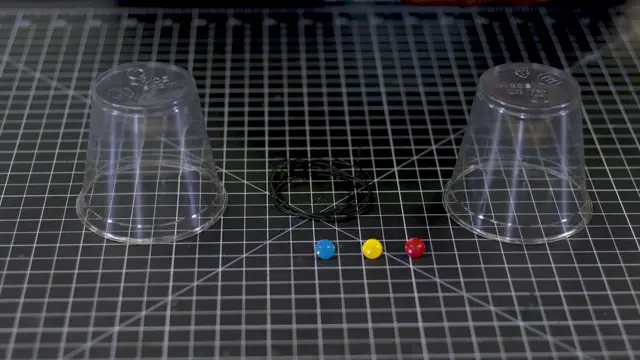
 Build a cup phoneConstruya un teléfono de vasos
Two cups and a string carry your voice across the room: see how sound travels as a vibration.Dos vasos y una cuerda llevan su voz de un lado a otro del cuarto: vea cómo el sonido viaja como una vibración.
- Ways in:Formas de empezar:
- ReadLeer
- DoHacer
- SimulateSimular
Best for ages 4 to 10Ideal de 4 a 10 años
ManufacturingManufacturaElectronicsElectrónica
Free BYRD, CC BYLessonLección
 BH-0006
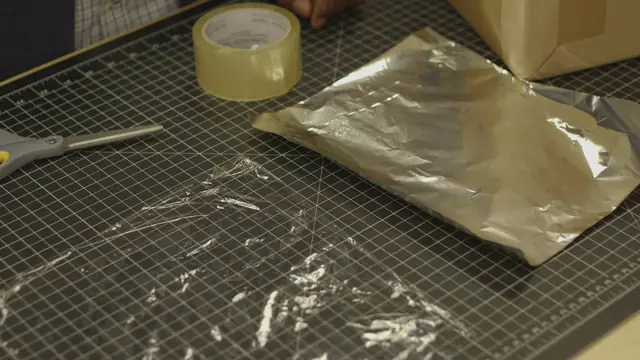
 Build a solar ovenConstruya un horno solar
Turn a box, foil and clear plastic into an oven the sun heats, made for Pi Day to keep a pie warm.Convierta una caja, papel de aluminio y plástico transparente en un horno que calienta el sol, hecho para el Día de Pi para mantener caliente un pastel.
- Ways in:Formas de empezar:
- ReadLeer
- DoHacer
- SimulateSimular
Best for ages 8 and upIdeal desde los 8 años
ManufacturingManufacturaElectronicsElectrónica
Free BYRD, CC BYLessonLección