

The episodesLos episodios
Press play, then build.Dele play y construya.
Each byrd@home episode shows one experiment or project with everyday objects, explains the science, and ends with an engineering challenge. Every video here has captions in English and Spanish and a transcript.Cada episodio de byrd@home muestra un experimento o proyecto con objetos de todos los días, explica la ciencia y termina con un reto de ingeniería. Cada video aquí tiene subtítulos en inglés y en español y una transcripción.
88
byrd@home episodesepisodios de byrd@home
Read the transcriptLea la transcripción
Hey, it's Mickie Byrd, and this is byrd@home, where we give you science experiments and engineering projects that you can do with objects you have at home.
All right, so today we're going to learn about vacuums. A vacuum is a space devoid of matter and can be created when the pressure inside the space is lower than the pressure outside of it. So today, I'm going to show you how to create your very own vacuum. What you need is water bottle, straw, and some kind of balloon. In my case, I found a rubber glove that I can use.
So we'll start by taking the bottle, and you can use a pencil, anything you have. You're going to poke a hole like this. So now you have a hole in your bottle.
All right, next thing you're going to do is take your straw, and you're going to put the straw into the hole that you just made, like that.
Next, you're going to take your balloon, and then you'll put it on top of your bottle. For me, it's too big, so instead I'm going to cut off one of the fingers. Take some scissors, like that, and I can use that, put it over the top. There. So now we're going to create the vacuum using the straw.
All right, so here's our vacuum. Whenever you take the air out of the bottle, it's going to cause the pressure inside of the bottle to be less, and then you'll see the balloon shrink.
Here's something cool. If you actually put the balloon inside of the bottle, whenever you take the air out, this time it'll grow.
So your engineering challenge today is to design and create the coolest vacuum you can using what you find in your home. Remember, the key concept with a vacuum is to somehow decrease the pressure inside.
And for science, it's all about changing the variables and seeing what the results are. In our case, you can do things like change the type of bottle. Instead of a balloon, try using a plastic bag or a piece of paper and see how it affects the results. Be sure to remember to make your hypothesis, or guess, before you start your experiment.
Once you finish your project or experiment, be sure to ask an adult before you post it. All right, that's all we have for today. So go build a future that you desire.
Hola, soy Mickie Byrd y esto es byrd@home, donde les damos experimentos de ciencia y proyectos de ingeniería que pueden hacer con objetos que tienen en casa.
Muy bien, hoy vamos a aprender sobre el vacío. El vacío es un espacio sin materia, y se puede crear cuando la presión dentro del espacio es más baja que la presión de afuera. Así que hoy les voy a mostrar cómo crear su propio vacío. Lo que necesitan es una botella de agua, un popote y algún tipo de globo. En mi caso, encontré un guante de goma que puedo usar.
Empezamos con la botella, y pueden usar un lápiz, lo que tengan. Van a hacer un agujero así. Ahora tienen un agujero en la botella.
Muy bien, lo siguiente es tomar el popote y meter el popote en el agujero que acaban de hacer, así.
Después van a tomar el globo y lo van a poner encima de la botella. El mío es demasiado grande, así que mejor voy a cortar uno de los dedos. Tomo unas tijeras, así, y puedo usar eso: lo pongo encima. Listo. Ahora vamos a crear el vacío con el popote.
Muy bien, aquí está nuestro vacío. Cuando sacan el aire de la botella, la presión dentro de la botella baja, y entonces ven que el globo se encoge.
Aquí hay algo genial. Si ponen el globo dentro de la botella, cuando sacan el aire, esta vez crece.
Su reto de ingeniería de hoy es diseñar y crear el vacío más genial que puedan con lo que encuentren en su casa. Recuerden: la idea clave del vacío es bajar de alguna forma la presión adentro.
Y en la ciencia, todo se trata de cambiar las variables y ver cuáles son los resultados. En nuestro caso, pueden cambiar el tipo de botella. En lugar de un globo, prueben con una bolsa de plástico o un pedazo de papel y vean cómo cambian los resultados. No olviden hacer su hipótesis, o suposición, antes de empezar el experimento.
Cuando terminen su proyecto o experimento, pregunten a un adulto antes de publicarlo. Muy bien, eso es todo por hoy. Así que vayan a construir el futuro que desean.
Episode 1Episodio 1
Make a vacuumHaga un vacío
Pull the air out of a water bottle through a straw and watch a balloon shrink, then grow.Saque el aire de una botella de agua con un popote y vea cómo un globo se encoge y luego crece.
Captions are on in the language this page is in; switch them in the player's menu. The transcript is under the video.Los subtítulos aparecen en el idioma de esta página; puede cambiarlos en el menú del reproductor. La transcripción está debajo del video.
Every episodeTodos los episodios
Every episode, and its lesson.Cada episodio, y su lección.
Each lesson is written out in full, with its steps and its challenge.Cada lección está escrita completa, con sus pasos y su reto.
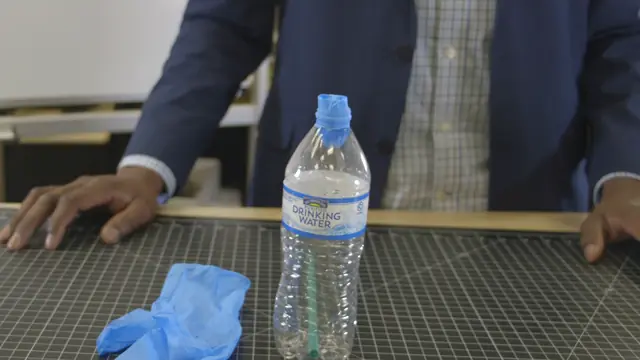 Episode 1Episodio 1
Make a vacuumHaga un vacío
Pull the air out of a water bottle through a straw and watch a balloon shrink, then grow.Saque el aire de una botella de agua con un popote y vea cómo un globo se encoge y luego crece.
Watch it aboveVéalo arriba The lesson, BH-0001La lección, BH-0001
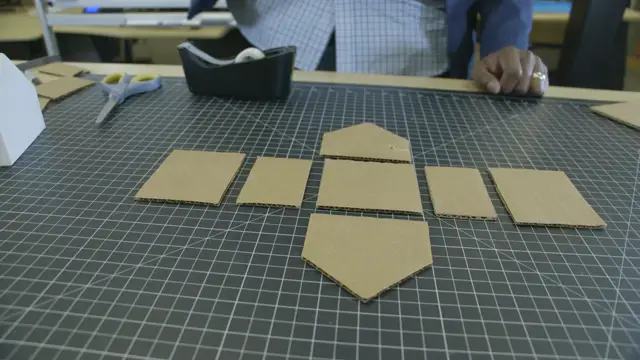 Episode 2Episodio 2
Prototype a house in cardboardHaga el prototipo de una casa en cartón
Draw a house as flat pieces, cut them from cardboard, and fold and tape them into a model you can hold.Dibuje una casa en piezas planas, recórtelas de cartón y dóblelas y péguelas hasta tener un modelo que pueda sostener.
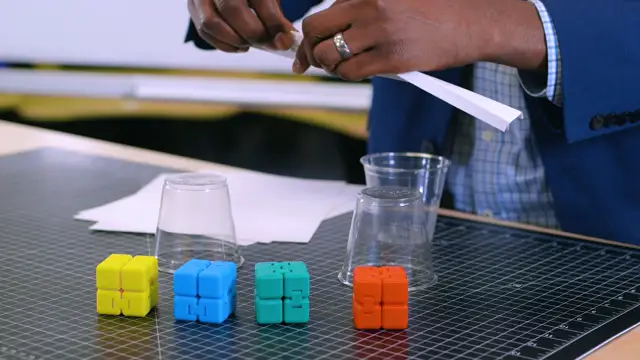 Episode 3Episodio 3
One sheet of paper, many triesUna hoja de papel, muchos intentos
Keep a cup of blocks off the table with only one sheet of paper, by improving your design one try at a time.Mantenga un vaso con bloques lejos de la mesa con una sola hoja de papel, mejorando su diseño intento tras intento.
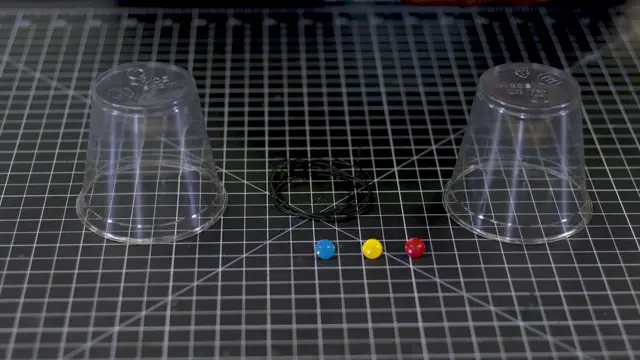 Episode 4Episodio 4
Build a cup phoneConstruya un teléfono de vasos
Two cups and a string carry your voice across the room: see how sound travels as a vibration.Dos vasos y una cuerda llevan su voz de un lado a otro del cuarto: vea cómo el sonido viaja como una vibración.
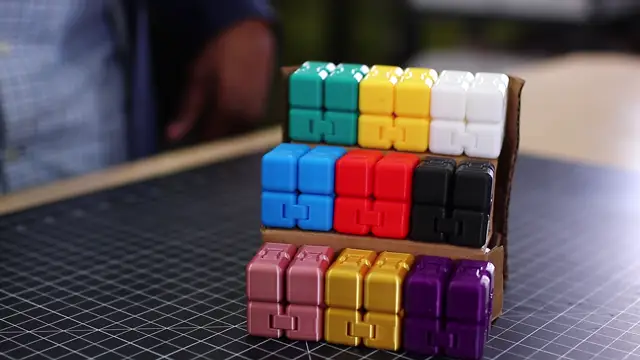 Episode 5Episodio 5
Invent a two-in-one block standInvente un soporte dos en uno para bloques
For International Women's Day, follow inventor Sarah E. Goode and design something that does two jobs: a cardboard case that carries your blocks and shows them off.Para el Día Internacional de la Mujer, siga a la inventora Sarah E. Goode y diseñe algo que haga dos trabajos: un estuche de cartón que lleva sus bloques y los exhibe.
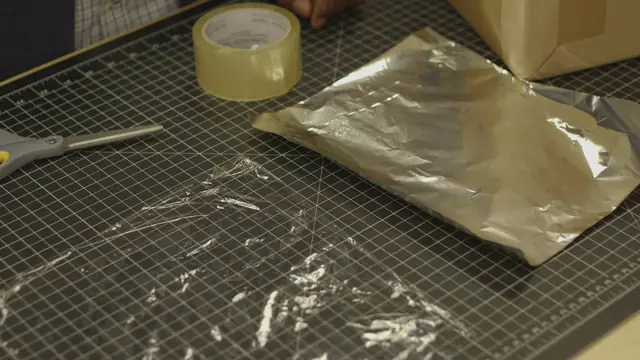 Episode 6Episodio 6
Build a solar ovenConstruya un horno solar
Turn a box, foil and clear plastic into an oven the sun heats, made for Pi Day to keep a pie warm.Convierta una caja, papel de aluminio y plástico transparente en un horno que calienta el sol, hecho para el Día de Pi para mantener caliente un pastel.
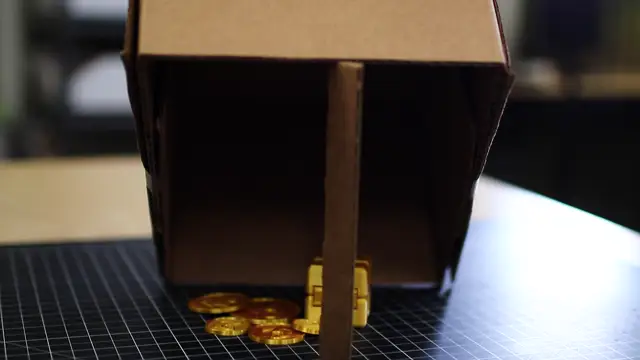 Episode 7Episodio 7
Engineer a leprechaun trapDiseñe una trampa para duendes
For St. Patrick's Day, take a trap from problem to prototype with the seven steps of the engineering design process.Para el Día de San Patricio, lleve una trampa del problema al prototipo con los siete pasos del proceso de diseño de ingeniería.
 Episode 8Episodio 8
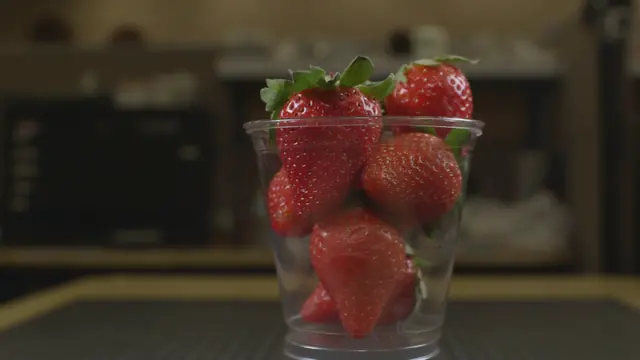
Strawberries, up closeFresas, de cerca