

SimulationsSimulacionesSIM-0003
Simulate, 5 minutesSimular, 5 minutos
Heat in a solar ovenEl calor en un horno solar
Aim your oven at the sun, add foil, plastic and newspaper, and watch the temperature inside climb over an hour until the food is hot.Apunte su horno al sol, agregue papel de aluminio, plástico y periódico, y vea subir la temperatura adentro durante una hora hasta que la comida esté caliente.
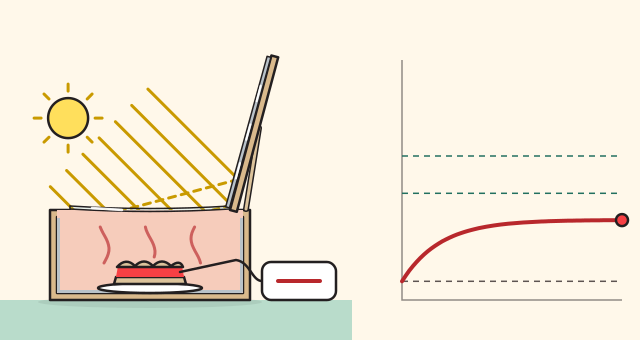
The drawing shows where it starts. It runs here once its script has loaded.El dibujo muestra dónde empieza. Funciona aquí una vez que carga su código.
Your challengeSu reto
- Take the plastic off the window and compare the new line with the last one.Quite el plástico de la ventana y compare la línea nueva con la anterior. Not done yet.Todavía no.
- Get the inside past one hundred forty degrees Fahrenheit (sixty Celsius) within the hour, hot enough to keep food hot.Haga que el interior pase de sesenta grados Celsius (ciento cuarenta Fahrenheit) dentro de la hora, lo bastante para mantener caliente la comida. Not done yet.Todavía no.
- Get the inside past one hundred sixty five degrees Fahrenheit (seventy four Celsius) within the hour, hot enough to reheat leftovers.Haga que el interior pase de setenta y cuatro grados Celsius (ciento sesenta y cinco Fahrenheit) dentro de la hora, lo bastante para recalentar sobras. Not done yet.Todavía no.
Every challenge done. Now try it for real at home.Todos los retos logrados. Ahora pruébelo de verdad en casa.
Sunlight getting into the ovenLuz del sol que entra al horno
Inside the ovenDentro del horno
The day outsideEl día afuera
Each yellow ray carries the same sunlight; a dashed one has bounced off the foil. On the graph, the solid line is this oven over the hour, the dashed line your last try, and the green lines the temperatures that keep food hot and that reheat leftovers.Cada rayo amarillo lleva la misma luz del sol; uno punteado rebotó en el aluminio. En la gráfica, la línea continua es este horno durante la hora, la punteada su intento anterior, y las líneas verdes las temperaturas que mantienen caliente la comida y que recalientan las sobras.
What is happeningQué está pasando
Sunlight carries energy. When it shines straight onto the window, the most light gets in; when it comes in at a slant, the same sunlight is spread out, so less of it reaches the window.La luz del sol lleva energía. Cuando brilla directo sobre la ventana, entra la mayor cantidad de luz; cuando llega inclinada, la misma luz se reparte, así que menos alcanza la ventana.
Foil on the lid bounces extra sunlight down through the window. The lid catches the most when the sun is a little to the front, so the best aim is a trade between the window and the lid.El papel de aluminio en la tapa rebota más luz del sol hacia la ventana. La tapa atrapa más cuando el sol está un poco al frente, así que la mejor posición es un equilibrio entre la ventana y la tapa.
Inside, the light turns into heat. Heat always leaks out of a warm box: plastic over the window keeps the warm air in, and newspaper in the walls slows the leak. The inside keeps warming until the heat leaking out matches the heat coming in.Adentro, la luz se convierte en calor. El calor siempre se escapa de una caja caliente: el plástico sobre la ventana mantiene adentro el aire caliente, y el periódico en las paredes frena la fuga. El interior se sigue calentando hasta que el calor que sale iguala al calor que entra.
Things to tryCosas para probar
- Turn the oven away from the sun and watch the rays thin out and the line flatten.Aleje el horno del sol y vea cómo los rayos se separan y la línea se aplana.
- Take the foil off the lid and see which rays stop.Quite el papel de aluminio de la tapa y vea qué rayos se detienen.
- Change one thing at a time and compare the new line with the last one.Cambie una cosa a la vez y compare la línea nueva con la anterior.
- Run the hour and watch how fast the inside warms at first, and how it slows down later.Corra la hora y vea qué tan rápido se calienta el interior al principio, y cómo se frena después.
This is a model of a box oven on a clear, sunny day with no wind: the light is counted in a flat slice through the oven, and how much heat leaks out comes from typical numbers for cardboard, newspaper and plastic, some of them estimates. A real box also has side walls, and clouds and wind change everything, so your own oven will heat differently. Use a food thermometer, and let a grown-up take the food out.Este es un modelo de un horno de caja en un día claro y soleado, sin viento: la luz se cuenta en un corte plano del horno, y cuánto calor se escapa sale de números típicos del cartón, el periódico y el plástico, algunos de ellos estimados. Una caja real también tiene paredes a los lados, y las nubes y el viento lo cambian todo, así que su horno se calentará de otra manera. Use un termómetro de cocina, y deje que una persona adulta saque la comida.
Use it, share it, adapt itÚsela, compártala, adáptela
The credit to copyEl crédito para copiar
Free BYRD, CC BY. “Heat in a solar oven” from the Byrd Academy STEM Curriculum by Byrd EDU, byrdathome.org.Free BYRD, CC BY. “El calor en un horno solar”, del Currículo STEM de Byrd Academy, de Byrd EDU, byrdathome.org.
This is free to use, share and adapt, even commercially, under the Creative Commons Attribution 4.0 International license (CC BY 4.0), with this credit. What Free BYRD means.Esto es libre de usar, compartir y adaptar, incluso con fines comerciales, bajo la licencia Creative Commons Atribución 4.0 Internacional (CC BY 4.0), con este crédito. Qué significa Free BYRD.