

ExploreExplorarBH-0043
Design a holder with every dimension, build it in cardboard and fit-test itDiseñe un soporte con todas sus medidas, constrúyalo en cartón y pruebe el ajuste
Find something at home that needs a holder or a bracket, draw it with a dimension on every feature, build it in cardboard, run a fit test, and make one reasoned revision.Encuentre algo en casa que necesite un soporte o una ménsula, dibújelo con una medida en cada detalle, constrúyalo en cartón, haga una prueba de ajuste y haga una sola revisión razonada.
- Ways in:Formas de empezar:
- Read, 3 minutesLeer, 3 minutos
- Do, 45 minutesHacer, 45 minutos
- Simulate, 5 minutesSimular, 5 minutos
- AgesEdades
- Every age. Best for ages 12 and up.Todas las edades. Ideal desde los 12 años.
- CostCosto
- Things already at homeCosas que ya hay en casa
- From the curriculumDel currículo
- STEM-HS-04
The MESH'D components this item uses:Los componentes MESH'D que usa:ManufacturingManufacturaHolistic DesignDiseño integral
Do, about 45 minutesHacer, unos 45 minutos
Build it at homeConstrúyalo en casa
StepsPasos
- Find the need: something at home that needs a holder, a stand or a bracket. Measure it twice and write its sizes.Encuentre la necesidad: algo en casa que necesite un soporte, una base o una ménsula. Mídalo dos veces y anote sus medidas.
- Sketch the part. Put a dimension on every feature: every length, width, slot and hole, with a tolerance such as plus or minus one millimeter.Dibuje la pieza. Ponga una medida en cada detalle: cada largo, ancho, ranura y agujero, con una tolerancia como más o menos un milímetro.
- Decide the clearance for the object's slot and write down why.Decida la holgura de la ranura del objeto y escriba por qué.
- Cut the parts from cardboard to the drawing. Measure each piece and note how far it differs.Corte las piezas de cartón según el dibujo. Mida cada pieza y anote cuánto difiere.
- Assemble, then run the fit test: does the object sit, slide or wobble? Does the holder stand?Arme, y luego haga la prueba de ajuste: ¿el objeto se asienta, se resbala o se tambalea? ¿El soporte se sostiene?
- Make one revision with its reason stated out loud, and change the drawing to match.Haga una sola revisión con su razón dicha en voz alta, y cambie el dibujo para que coincida.
- Put the holder to work where it belongs and label it with the maker's name.Ponga el soporte a trabajar donde corresponde y etiquételo con el nombre de quien lo hizo.
- Present the part with its drawing.Presente la pieza con su dibujo.
What you needLo que necesita
- Cardboard from a boxCartón de una caja
- A ruler, a pencil and paper for the drawingUna regla, un lápiz y papel para el dibujo
- Scissors, or a box cutter for the grown-up, and a cutting mat or a spare boardTijeras, o una navaja para la persona adulta, y un tapete de corte o una tabla sobrante
- Tape or glueCinta o pegamento
- The object that needs a holder: a phone, a toothbrush, a remote, a spool of threadEl objeto que necesita soporte: un teléfono, un cepillo de dientes, un control remoto, un carrete de hilo
Things already at home.Cosas que ya hay en casa.
A grown-up does the cutting with a box cutter, or stays beside a teen using one: cut on a mat or thick cardboard, away from the body, with the blade retracted whenever it is set down. Blades and scissors stay out of reach of younger children. Hot glue, if used, stays with the grown-up, and a burn is cooled with water right away. If the part is later printed, the printer's rules apply: a hot nozzle burns, so cool a burn with water right away and tell a grown-up, place the printer where there is good ventilation, and touch the nozzle only after the machine has cooled.Una persona adulta hace los cortes con la navaja, o se queda junto al adolescente que la usa: se corta sobre un tapete o cartón grueso, lejos del cuerpo, con la hoja guardada cada vez que se deja. Las navajas y las tijeras se quedan fuera del alcance de los niños más pequeños. El pegamento caliente, si se usa, se queda con la persona adulta, y una quemadura se enfría con agua de inmediato. Si la pieza se imprime después, aplican las reglas de la impresora: la boquilla caliente quema, así que enfríe una quemadura con agua de inmediato y avise a una persona adulta, coloque la impresora donde haya buena ventilación y toque la boquilla solo cuando la máquina ya se haya enfriado.
Read, 3 minutesLeer, 3 minutos
The big ideaLa gran idea
Design begins with a real need: a bracket, a holder, a fixture for something that keeps falling over. In CAD the discipline is to put a dimension on every feature, so the drawing fully describes the part and nothing is left to guesswork. The model is not the part: whatever you make differs a little from the drawing, and only a fit test shows how much. Tolerance is the designer's job, the amount a size is allowed to vary, planned for how the machine or the hands really make it. Revision is not failure. Reality gives feedback and the design improves, and one revision with its reason stated out loud is the standard. Cardboard is a fast way to find out before a printer ever runs.El diseño empieza con una necesidad real: una ménsula, un soporte, una base para algo que siempre se cae. En el diseño asistido por computadora la disciplina es poner una medida en cada detalle, para que el dibujo describa la pieza por completo y nada quede a la adivinanza. El modelo no es la pieza: lo que usted haga difiere un poco del dibujo, y solo una prueba de ajuste muestra cuánto. La tolerancia es trabajo de quien diseña, la cantidad que una medida puede variar, planeada según cómo la máquina o las manos la hacen de verdad. Revisar no es fracasar. La realidad da retroalimentación y el diseño mejora, y una sola revisión con su razón dicha en voz alta es la norma. El cartón es una forma rápida de averiguarlo antes de que una impresora siquiera arranque.
Explore, 5 minutesExplorar, 5 minutos
How a 3D printer slices a partCómo una impresora 3D corta una pieza en capas
Slice a little house, a cup, a cone or a pyramid into layers, watch the printer build it from the bed up, and see where a part needs support.Corte en capas una casita, un vaso, un cono o una pirámide, vea a la impresora construirla desde la cama hacia arriba y descubra dónde una pieza necesita soporte.
The drawing shows where it starts. It runs here once its script has loaded.El dibujo muestra dónde empieza. Funciona aquí una vez que carga su código.
Your challengeSu reto
- Find a layer where the house’s wide roof reaches out past its walls.Encuentre una capa donde el techo ancho de la casita sale más allá de sus paredes. Not done yet.Todavía no.
- Change the house’s design so it prints with no supports at all.Cambie el diseño de la casita para que se imprima sin ningún soporte. Not done yet.Todavía no.
- Slice the cone so its steps are less than a tenth of a millimeter deep, and see what that costs in time.Corte el cono en capas para que sus escalones midan menos de una décima de milímetro de fondo, y vea lo que cuesta en tiempo. Not done yet.Todavía no.
Every challenge done. Now try it for real at home.Todos los retos logrados. Ahora pruébelo de verdad en casa.
Printed so far, of the whole print timeImpreso hasta ahora, del tiempo total
Layers in allCapas en total
Print time, from the modelTiempo de impresión, según el modelo
Height, in whole layersAltura, en capas completas
Steps on the sloping sideEscalones en el lado inclinado
SupportsSoportes
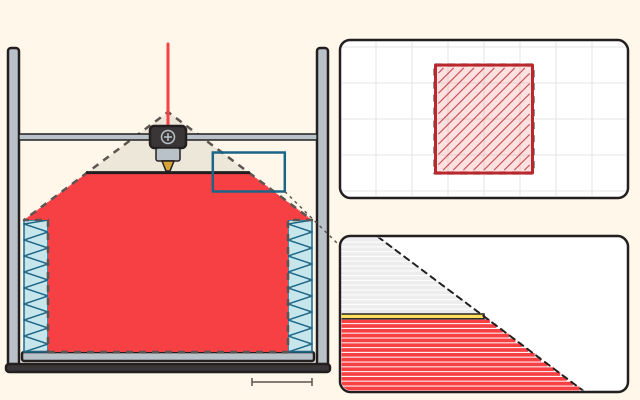
On the left, the part from the side, cut down the middle: the red layers are printed, the bold line is the layer printing now, and the pale ones are still to come; the dashed line is the part as designed. On the right, that layer from above, the layer under it dashed; below it, the blue box on the left seen up close, the true side dashed over the steps. Drag the carriage to move up and down.A la izquierda, la pieza de lado, cortada por la mitad: las capas rojas ya están impresas, la línea gruesa es la capa que se imprime ahora y las claras faltan; la línea punteada es la pieza tal como se diseñó. A la derecha, esa capa desde arriba, con la capa de abajo punteada; debajo, el recuadro azul de la izquierda visto de cerca, con el lado real punteado sobre los escalones. Arrastre el carro para subir y bajar.
What is happeningQué está pasando
A 3D printer builds a part by slicing it into thin layers and printing them one on top of another. As the little house’s roof comes up to its peak, each layer is shorter than the last.Una impresora 3D construye una pieza cortándola en capas delgadas e imprimiéndolas una encima de otra. A medida que el techo de la casita sube hacia la punta, cada capa es más corta que la anterior.
Because it prints in whole layers, a slope comes out as tiny steps, and a part’s height comes out in whole layers too. Thinner layers make smaller steps and a smoother side, but there are more of them, so they take longer to print.Como imprime en capas completas, una pendiente sale como escalones pequeñitos, y la altura de una pieza también sale en capas completas. Las capas más delgadas hacen escalones más chicos y un lado más liso, pero son más, así que tardan más en imprimirse.
Each layer has to rest on the one below. Where a layer sticks out over air, like the eaves of a wide roof, the printer adds supports underneath to hold it up, and they are snapped off afterward.Cada capa tiene que apoyarse en la de abajo. Donde una capa sobresale sobre el aire, como los aleros de un techo ancho, la impresora agrega soportes debajo para sostenerla, y después se quitan.
A designer can change a part so every layer rests on the one below and it needs no supports at all. Designing for the way a part will be made saves material, time and cleanup.Quien diseña puede cambiar una pieza para que cada capa se apoye en la de abajo y no necesite ningún soporte. Diseñar pensando en cómo se fabricará la pieza ahorra material, tiempo y limpieza.
Things to tryCosas para probar
- Drag the carriage, or step the layers, from the bed to the peak of the house.Arrastre el carro, o recorra las capas, desde la cama hasta la punta de la casita.
- Change the layer height and compare the steps up close and the print time.Cambie la altura de capa y compare los escalones de cerca y el tiempo de impresión.
- Make the roof no wider than the walls and see what happens to the supports.Haga el techo no más ancho que las paredes y vea qué pasa con los soportes.
- Print the cone and the pyramid: which one has the deeper steps?Imprima el cono y la pirámide: ¿cuál tiene los escalones más hondos?
The print time comes from a simple model of the outline, the fill and the moves between layers. A real slicer also prints solid floors and tops, slows down for small layers, counts every travel move and builds its supports as a lattice, so its time and its supports are different.El tiempo de impresión viene de un modelo sencillo del contorno, el relleno y los movimientos entre capas. Un programa real también imprime pisos y tapas sólidas, va más lento en las capas pequeñas, cuenta cada traslado y arma sus soportes como un enrejado, así que su tiempo y sus soportes son distintos.
Open the simulation on its own pageAbrir la simulación en su propia página
Your engineering challengeSu reto de ingeniería
Reach a fit in no more than one revision: the holder grips its object, stands on its own, and your drawing has a dimension on every feature, with the revision and its reason explained out loud.Logre el ajuste con no más de una revisión: el soporte sujeta su objeto, se sostiene solo, y su dibujo tiene una medida en cada detalle, con la revisión y su razón explicadas en voz alta.
Make it an experimentConviértalo en un experimento
Science is about changing one thing and watching what happens. Write down your guess, your hypothesis, before you start.La ciencia se trata de cambiar una cosa y observar qué pasa. Escriba su suposición, su hipótesis, antes de empezar.
- Change the clearance: a slot cut exactly to size, a little wider, and a little narrower. Which one grips best?Cambie la holgura: una ranura cortada justo a la medida, un poco más ancha y un poco más angosta. ¿Cuál sujeta mejor?
- Change the material thickness: single cardboard against doubled. How much does the fit change?Cambie el grosor del material: cartón sencillo contra cartón doble. ¿Cuánto cambia el ajuste?
- Same drawing, two builders. Measure both parts and compare them with the drawing and with each other.El mismo dibujo, dos constructores. Mida las dos piezas y compárelas con el dibujo y entre sí.
Use it, share it, adapt itÚsela, compártala, adáptela
The credit to copyEl crédito para copiar
Free BYRD, CC BY. “Design a holder with every dimension, build it in cardboard and fit-test it” from the Byrd Academy STEM Curriculum by Byrd EDU, byrdathome.org.Free BYRD, CC BY. “Diseñe un soporte con todas sus medidas, constrúyalo en cartón y pruebe el ajuste”, del Currículo STEM de Byrd Academy, de Byrd EDU, byrdathome.org.
This is free to use, share and adapt, even commercially, under the Creative Commons Attribution 4.0 International license (CC BY 4.0), with this credit. What Free BYRD means.Esto es libre de usar, compartir y adaptar, incluso con fines comerciales, bajo la licencia Creative Commons Atribución 4.0 Internacional (CC BY 4.0), con este crédito. Qué significa Free BYRD.
Keep goingSiga adelante
What to do nextQué hacer después
Make it harderHágalo más difícil
Redraw it as three views, front, top and side, with every dimension given once and none twice. Then design it for a 3D printer: which face would touch the bed, and where would an overhang need support?Vuelva a dibujarla en tres vistas, frente, planta y lado, con cada medida dada una sola vez y ninguna dos veces. Luego diséñela para una impresora 3D: ¿qué cara tocaría la cama, y dónde necesitaría soporte un voladizo?
For a younger onePara alguien más pequeño
The younger one chooses the object and measures it with the grown-up, then decorates the finished holder and tests the fit by putting the object in and taking it out ten times.La niña o el niño elige el objeto y lo mide con la persona adulta, luego decora el soporte terminado y prueba el ajuste metiendo y sacando el objeto diez veces.
Try this nextPruebe esto después
How a 3D printer slices a partCómo una impresora 3D corta una pieza en capas
Slice a little house, a cup, a cone or a pyramid into layers, watch the printer build it from the bed up, and see where a part needs support.Corte en capas una casita, un vaso, un cono o una pirámide, vea a la impresora construirla desde la cama hacia arriba y descubra dónde una pieza necesita soporte.
- Ways in:Formas de empezar:
- SimulateSimular
Best for ages 6 and upIdeal desde los 6 años
ManufacturingManufacturaDesignDiseño
Free BYRD, CC BYSimulationSimulación
Inside a 3D printerDentro de una impresora 3D
Follow a print from idea to object: the model on the computer, the slicer that cuts it into layers, the filament and the gears that push it, the hot end that melts it, the motors and belts that move it, and how layer after layer becomes a thing you can hold.Siga una impresión desde la idea hasta el objeto: el modelo en la computadora, el programa que lo corta en capas, el filamento y los engranajes que lo empujan, la punta caliente que lo derrite, los motores y bandas que lo mueven, y cómo capa tras capa se vuelve algo que usted puede sostener.
- Ways in:Formas de empezar:
- TourRecorrer
Best for ages 6 and upIdeal desde los 6 años
ManufacturingManufacturaElectronicsElectrónicaSoftwareSoftware
Free BYRD, CC BYVirtual tourRecorrido virtual
 BH-0002
 Prototype a house in cardboardHaga el prototipo de una casa en cartón
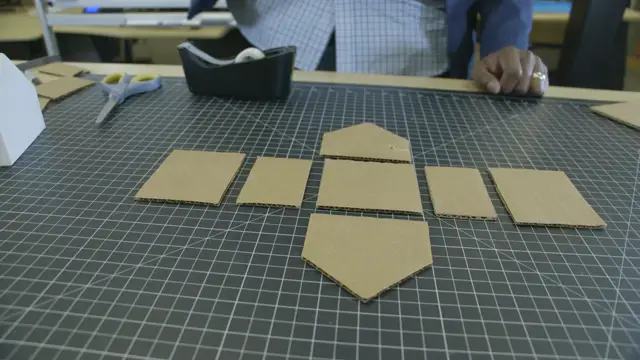
Draw a house as flat pieces, cut them from cardboard, and fold and tape them into a model you can hold.Dibuje una casa en piezas planas, recórtelas de cartón y dóblelas y péguelas hasta tener un modelo que pueda sostener.
- Ways in:Formas de empezar:
- ReadLeer
- DoHacer
- SimulateSimular
Best for ages 6 to 14Ideal de 6 a 14 años
ManufacturingManufacturaDesignDiseño
Free BYRD, CC BYLessonLección
Design a product for one personDiseñe un producto para una sola persona
Interview someone at home, list what they need, build a prototype for them, and add up what it costs to make.Entreviste a alguien de su casa, anote lo que necesita, construya un prototipo para esa persona y sume cuánto cuesta hacerlo.
- Ways in:Formas de empezar:
- ReadLeer
- DoHacer
Best for ages 10 and upIdeal desde los 10 años
ManufacturingManufacturaDesignDiseño
Free BYRD, CC BYHome activityActividad en casa