

ExploreExplorarBH-0048
Balance a ruler seesaw with coinsEquilibre un subibaja de regla con monedas
Rest a ruler on a pencil, stack coins on each side, and find the rule that lets one coin far out balance a whole stack close in.Apoye una regla sobre un lápiz, apile monedas a cada lado y descubra la regla que permite que una moneda lejos equilibre toda una pila cerca.
- Ways in:Formas de empezar:
- Read, 3 minutesLeer, 3 minutos
- Do, 20 minutesHacer, 20 minutos
- Simulate, 5 minutesSimular, 5 minutos
- AgesEdades
- Every age. Best for ages 6 and up.Todas las edades. Ideal desde los 6 años.
- CostCosto
- Things already at homeCosas que ya hay en casa
The MESH'D components this item uses:Los componentes MESH'D que usa:ManufacturingManufacturaHolistic DesignDiseño integral
Do, about 20 minutesHacer, unos 20 minutos
Build it at homeConstrúyalo en casa
StepsPasos
- Tape the pencil to the table so it cannot roll.Pegue el lápiz a la mesa con cinta para que no ruede.
- Lay the ruler across the pencil and slide it until it balances on its own. Note the mark right over the pencil: that is the pivot.Ponga la regla atravesada sobre el lápiz y deslícela hasta que quede en equilibrio sola. Fíjese en la marca que queda justo sobre el lápiz: ese es el punto de apoyo.
- Stack two coins on one side at a mark you choose. Count how many marks they sit from the pivot.Apile dos monedas de un lado, en la marca que usted elija. Cuente a cuántas marcas están del punto de apoyo.
- Place one coin on the other side and slide it outward until the ruler balances again. Count its marks too.Ponga una moneda del otro lado y deslícela hacia afuera hasta que la regla vuelva a quedar en equilibrio. Cuente también sus marcas.
- Write both sides in a table: the number of coins and the marks from the pivot.Anote los dos lados en una tabla: el número de monedas y las marcas desde el punto de apoyo.
- Multiply coins times marks for each side and compare the two answers.Multiplique monedas por marcas en cada lado y compare las dos respuestas.
- Try new stacks and new spots, predicting each time before you let go.Pruebe pilas nuevas y lugares nuevos, prediciendo cada vez antes de soltar.
What you needLo que necesita
- A flat ruler with clear marksUna regla plana con marcas claras
- A pencilUn lápiz
- Ten coins that are all the same kindDiez monedas, todas del mismo tipo
- Tape and a small cup for the coinsCinta adhesiva y un vaso chico para las monedas
- Paper and a pencil to recordPapel y un lápiz para anotar
Things already at home.Cosas que ya hay en casa.
Coins are a choking hazard, so keep them away from babies and toddlers, and count them back into a cup when you finish. Never put a coin in your mouth. Keep fingers clear when the ruler tips, and use a ruler with no sharp metal edge.Las monedas pueden causar asfixia, así que manténgalas lejos de bebés y niños pequeños, y cuéntelas de regreso en un vaso al terminar. Nunca se meta una moneda en la boca. Aparte los dedos cuando la regla se incline y use una regla sin bordes de metal filosos.
Read, 3 minutesLeer, 3 minutos
The big ideaLa gran idea
A seesaw is a lever: a stiff bar that turns on a pivot, here a pencil. A weight on one side tries to turn the bar, and how hard it turns depends on two things: how heavy the weight is and how far it sits from the pivot. Multiply the two and you get its turning effect. When the turning effects on the two sides are equal, the bar balances. That is why one coin far from the pencil can balance two coins half as far away, and why a small push on a long handle can lift a heavy load. Pry bars, wheelbarrows and playground seesaws all trade distance for force this way.Un subibaja es una palanca: una barra firme que gira sobre un punto de apoyo, aquí un lápiz. Un peso de un lado trata de girar la barra, y qué tan fuerte la gira depende de dos cosas: qué tan pesado es y qué tan lejos está del punto de apoyo. Multiplique las dos y obtiene su efecto de giro. Cuando los efectos de giro de los dos lados son iguales, la barra queda en equilibrio. Por eso una moneda lejos del lápiz puede equilibrar dos monedas a la mitad de esa distancia, y por eso un empujón pequeño en un mango largo puede levantar una carga pesada. Las barras para palanquear, las carretillas y los subibajas del parque cambian distancia por fuerza de esta manera.
Simulate, 5 minutesSimular, 5 minutos
Balance a ruler seesawEquilibre un subibaja de regla
Stack coins on a ruler resting on a pencil, see which side turns harder, and balance a big stack with one coin far out.Apile monedas sobre una regla apoyada en un lápiz, vea qué lado gira más fuerte y equilibre una pila grande con una sola moneda lejos del lápiz.
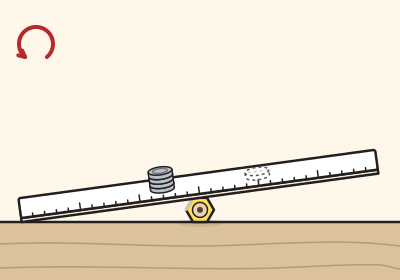
The drawing shows where it starts. It runs here once its script has loaded.El dibujo muestra dónde empieza. Funciona aquí una vez que carga su código.
Your challengeSu reto
- Make the ruler balance with coins on both sides of the pencil.Haga que la regla quede en equilibrio con monedas a los dos lados del lápiz. Not done yet.Todavía no.
- Balance the stack of four coins with just one coin.Equilibre la pila de cuatro monedas con una sola moneda. Not done yet.Todavía no.
- Slide the pencil off the middle, then balance the ruler’s own weight with coins on the short side only.Mueva el lápiz fuera de la mitad y luego equilibre el peso de la regla con monedas solo del lado corto. Not done yet.Todavía no.
Every challenge done. Now try it for real at home.Todos los retos logrados. Ahora pruébelo de verdad en casa.
Turning effect to the leftEfecto de giro hacia la izquierda
Turning effect to the rightEfecto de giro hacia la derecha
On the ruler:Sobre la regla:
A turning effect is a weight times its distance from the pencil, here in grams times centimeters. Each coin weighs five grams and the ruler twenty, its weight acting at its middle. The side that turns harder goes down; when the two match, the ruler balances. The dashed coin shows where the next one goes.Un efecto de giro es un peso por su distancia al lápiz, aquí en gramos por centímetros. Cada moneda pesa cinco gramos y la regla veinte, y su peso actúa en su mitad. El lado que gira más fuerte baja; cuando los dos son iguales, la regla queda en equilibrio. La moneda punteada muestra dónde va la siguiente.
What is happeningQué está pasando
A seesaw turns on its pivot, here a pencil under a ruler. A weight on one side turns it one way, and how hard it turns depends on two things: how heavy the weight is and how far it sits from the pivot. The weight times the distance is its turning effect.Un subibaja gira sobre su punto de apoyo, aquí un lápiz bajo una regla. Un peso de un lado lo gira hacia ese lado, y qué tan fuerte lo gira depende de dos cosas: qué tan pesado es y qué tan lejos está del punto de apoyo. El peso por la distancia es su efecto de giro.
Add up the turning effects on each side. The side with the bigger total goes down; when the totals match, the ruler balances. That is why one coin far out can balance a stack close in: one coin twelve centimeters out turns just as hard as four coins three centimeters out, because one times twelve is the same as four times three.Sume los efectos de giro de cada lado. El lado con el total más grande baja; cuando los totales son iguales, la regla queda en equilibrio. Por eso una moneda lejos puede equilibrar una pila cerca: una moneda a doce centímetros gira igual de fuerte que cuatro monedas a tres centímetros, porque uno por doce es lo mismo que cuatro por tres.
The ruler has weight too, and it acts at its middle. With the pencil under the middle it turns neither way, but slide the pencil over and the ruler’s weight sits on the long side and tips it. Balance it with coins on the short side and you have weighed the ruler with coins.La regla también pesa, y su peso actúa en su mitad. Con el lápiz bajo la mitad no la gira hacia ningún lado, pero si mueve el lápiz, el peso de la regla queda del lado largo y la inclina. Equilíbrela con monedas del lado corto y habrá pesado la regla con monedas.
Things to tryCosas para probar
- Put one coin twice as far from the pencil as another: how many coins does the near side need to balance it?Ponga una moneda al doble de distancia del lápiz que otra: ¿cuántas monedas necesita el lado cercano para equilibrarla?
- Put a coin right over the pencil. Does it turn the ruler at all?Ponga una moneda justo sobre el lápiz. ¿Gira la regla en algo?
- Slide the pencil off the middle with no coins, first leaving the ruler’s weight out, then counting it: what changes?Mueva el lápiz fuera de la mitad sin monedas, primero dejando fuera el peso de la regla y luego contándolo: ¿qué cambia?
- Try it for real on the kitchen table: a ruler, a round pencil and a handful of coins of one kind.Pruébelo de verdad en la mesa de la cocina: una regla, un lápiz redondo y un puñado de monedas de un solo tipo.
A model, kept simple: the pencil is a sharp edge, the coins never slide, each coin weighs five grams as a five-cent coin does, and the ruler weighs twenty grams, the model’s choice, so weigh yours on a kitchen scale if you can. The pencil is drawn bigger and the coins thicker than life. A round pencil lets a real ruler roll a little, so a ruler that is almost balanced may rest at a small tilt instead of tipping all the way.Un modelo, simple a propósito: el lápiz es un filo, las monedas nunca se resbalan, cada moneda pesa cinco gramos como una moneda de cinco centavos, y la regla pesa veinte gramos, una elección del modelo, así que pese la suya en una báscula de cocina si puede. El lápiz está dibujado más grande y las monedas más gruesas que en la vida real. Un lápiz redondo deja que una regla real ruede un poco, así que una regla casi en equilibrio puede quedarse un poco inclinada en vez de caer del todo.
Open the simulation on its own pageAbrir la simulación en su propia página
Your engineering challengeSu reto de ingeniería
Balance a stack of four coins with as few coins as you can on the other side. Predict where the few coins must go before you place them, then test your prediction.Equilibre una pila de cuatro monedas con la menor cantidad de monedas posible del otro lado. Prediga dónde deben ir esas pocas monedas antes de ponerlas, y luego compruebe su predicción.
Make it an experimentConviértalo en un experimento
Science is about changing one thing and watching what happens. Write down your guess, your hypothesis, before you start.La ciencia se trata de cambiar una cosa y observar qué pasa. Escriba su suposición, su hipótesis, antes de empezar.
- Keep one coin on the left at the same mark and move a single coin on the right farther out, one mark at a time. At which mark does the right side win?Deje una moneda a la izquierda en la misma marca y aleje una sola moneda a la derecha, una marca a la vez. ¿En qué marca gana el lado derecho?
- Put two coins on the left at one mark. Where does one coin on the right have to go to balance them? Then try three and four coins on the left.Ponga dos monedas a la izquierda en una marca. ¿Dónde tiene que ir una moneda a la derecha para equilibrarlas? Luego pruebe con tres y con cuatro monedas a la izquierda.
- With no coins at all, slide the pencil away from the middle of the ruler. Which way does the ruler tip, and what does that tell you about the ruler's own weight?Sin ninguna moneda, mueva el lápiz lejos del centro de la regla. ¿Hacia dónde se inclina la regla y qué le dice eso del peso de la propia regla?
Use it, share it, adapt itÚsela, compártala, adáptela
The credit to copyEl crédito para copiar
Free BYRD, CC BY. “Balance a ruler seesaw with coins” from the Byrd Academy STEM Curriculum by Byrd EDU, byrdathome.org.Free BYRD, CC BY. “Equilibre un subibaja de regla con monedas”, del Currículo STEM de Byrd Academy, de Byrd EDU, byrdathome.org.
This is free to use, share and adapt, even commercially, under the Creative Commons Attribution 4.0 International license (CC BY 4.0), with this credit. What Free BYRD means.Esto es libre de usar, compartir y adaptar, incluso con fines comerciales, bajo la licencia Creative Commons Atribución 4.0 Internacional (CC BY 4.0), con este crédito. Qué significa Free BYRD.