
ExploreExplorarBH-0059
Test which spoon carries heat bestPruebe qué cuchara lleva mejor el calor
Stand a metal, a wooden and a plastic spoon in a mug of warm tap water, feel their handles minute by minute, then try ice water, and find out why metal changes first both ways.Ponga una cuchara de metal, una de madera y una de plástico en una taza con agua tibia de la llave, sienta sus mangos minuto a minuto, luego pruebe con agua con hielo, y descubra por qué el metal cambia primero en los dos casos.
- Ways in:Formas de empezar:
- Read, 3 minutesLeer, 3 minutos
- Do, 25 minutesHacer, 25 minutos
- Simulate, 6 minutesSimular, 6 minutos
- AgesEdades
- Every age. Best for ages 6 and up.Todas las edades. Ideal desde los 6 años.
- CostCosto
- Things already at homeCosas que ya hay en casa
The MESH'D components this item uses:Los componentes MESH'D que usa:ManufacturingManufactura
Do, about 25 minutesHacer, unos 25 minutos
Build it at homeConstrúyalo en casa
StepsPasos
- Touch the top end of each spoon's handle and say how warm it feels. They all start at the temperature of the room.Toque la punta del mango de cada cuchara y diga qué tan tibia se siente. Todas empiezan a la temperatura del cuarto.
- A grown-up fills the mug with warm tap water, testing it on the inside of a wrist.Una persona adulta llena la taza con agua tibia de la llave, probándola en la parte interior de la muñeca.
- Stand all three spoons in the mug, bowls down and handles leaning on the rim.Ponga las tres cucharas en la taza, con la parte honda hacia abajo y los mangos recargados en la orilla.
- Every minute for five minutes, touch the top of each handle with the same fingertip and rank them: warmest, middle and coolest.Cada minuto durante cinco minutos, toque la punta de cada mango con la misma yema del dedo y ordénelos: el más tibio, el de en medio y el más fresco.
- Write the ranks in a table.Anote el orden en una tabla.
- Dry the spoons, wait until they are back to room temperature, and repeat the test in the cup of ice water.Seque las cucharas, espere a que regresen a la temperatura del cuarto y repita la prueba en el vaso con agua con hielo.
- Compare the two tables. Which spoon changed first both times?Compare las dos tablas. ¿Qué cuchara cambió primero las dos veces?
What you needLo que necesita
- A metal spoon, a wooden spoon and a plastic spoon of about the same lengthUna cuchara de metal, una de madera y una de plástico, más o menos del mismo largo
- A mugUna taza
- Warm tap water, about as warm as a bathAgua tibia de la llave, más o menos como la de un baño
- A cup of ice water, for the second testUn vaso con agua con hielo, para la segunda prueba
- A timer, paper and a pencilUn temporizador, papel y un lápiz
Things already at home.Cosas que ya hay en casa.
Use warm water from the tap only, never water from a kettle, a stove or a microwave, and test it on the inside of a wrist first, no warmer than a comfortable bath: hot liquids scald skin. A grown-up pours, keeps hot cups out of young children's reach, and stays within arm's reach of little ones around the water. Keep the mug on a steady table away from the edge, and wipe up spills.Use solo agua tibia de la llave, nunca agua de una tetera, de la estufa o del microondas, y pruébela primero en la parte interior de la muñeca, no más caliente que un baño cómodo: los líquidos calientes queman la piel. Una persona adulta sirve el agua, mantiene las tazas calientes fuera del alcance de los niños pequeños y se queda al alcance de su brazo de los más pequeños cuando haya agua. Deje la taza en una mesa firme, lejos de la orilla, y seque lo que se derrame.
Read, 3 minutesLeer, 3 minutos
The big ideaLa gran idea
Heat always flows from something warmer to something cooler. In a solid it moves by conduction, passed along from particle to particle. Metals pass heat along hundreds of times better than wood or plastic, so in warm water a metal spoon's handle warms up first, while a wooden or plastic one stays near room temperature. Conduction works the other way too: in ice water, the metal handle cools first. It also explains why metal feels colder than wood in the same room, even though both are the same temperature: the metal carries heat out of your fingers faster. That is why pot handles and cooking spoons are often wood or plastic.El calor siempre va de lo más caliente a lo más frío. En un sólido se mueve por conducción, pasando de una partícula a otra. Los metales conducen el calor cientos de veces mejor que la madera o el plástico, así que en agua tibia el mango de una cuchara de metal se calienta primero, mientras que uno de madera o de plástico se queda cerca de la temperatura del cuarto. La conducción también funciona al revés: en agua con hielo, el mango de metal se enfría primero. También explica por qué el metal se siente más frío que la madera en el mismo cuarto, aunque los dos estén a la misma temperatura: el metal saca el calor de sus dedos más rápido. Por eso los mangos de las ollas y las cucharas de cocina muchas veces son de madera o de plástico.
Simulate, 6 minutesSimular, 6 minutos
Heat on the move: spoons and cupsEl calor en movimiento: cucharas y vasos
Stand a steel, a wooden and a plastic spoon in a hot drink, then pour the drink into three kinds of cup, and see where the heat goes, safely.Ponga una cuchara de acero, una de madera y una de plástico en una bebida caliente, luego sirva la bebida en tres tipos de vaso, y vea a dónde va el calor, sin peligro.
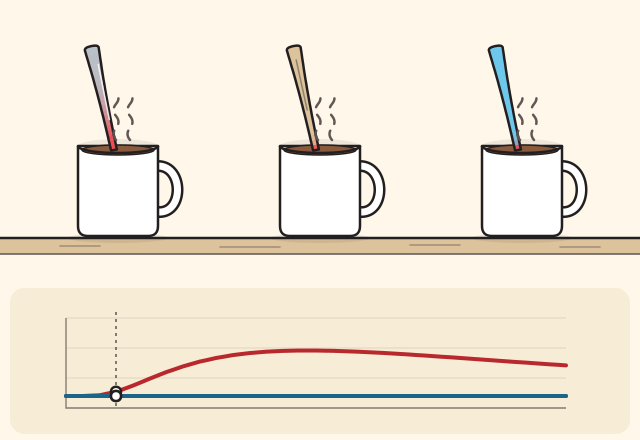
The drawing shows where it starts. It runs here once its script has loaded.El dibujo muestra dónde empieza. Funciona aquí una vez que carga su código.
Your challengeSu reto
- Warm a spoon’s handle end five degrees above the room.Caliente la punta del mango de una cuchara cinco grados por encima del cuarto. Not done yet.Todavía no.
- Keep a drink above sixty degrees for twenty minutes.Mantenga una bebida a más de sesenta grados durante veinte minutos. Not done yet.Todavía no.
- Find the minute when the steel spoon’s handle end is warmest.Encuentre el minuto en que la punta del mango de la cuchara de acero está más caliente. Not done yet.Todavía no.
Every challenge done. Now try it for real at home.Todos los retos logrados. Ahora pruébelo de verdad en casa.
A spoon glows red where it is warm. Wavy red arrows are heat leaving a cup, thicker for faster. The chart follows the handle ends or the drinks over half an hour; the dashed line is the room. Never touch a hot spoon or cup to test it: this is the safe way to compare.Una cuchara se pone roja donde está caliente. Las flechas rojas onduladas son calor que sale de un vaso, más gruesas si sale más rápido. La gráfica sigue las puntas de los mangos o las bebidas durante media hora; la línea punteada es el cuarto. Nunca toque una cuchara o un vaso caliente para probar: esta es la manera segura de comparar.
What is happeningQué está pasando
Heat always flows from hot to cold. In a solid it moves by conduction, passed from one jiggling particle to the next. Metals pass it along about a hundred times faster than wood or plastic, so a steel spoon in a hot drink warms up its handle while a wooden or plastic one stays cool.El calor siempre va de lo caliente a lo frío. En un sólido se mueve por conducción, pasando de una partícula que vibra a la siguiente. Los metales lo pasan unas cien veces más rápido que la madera o el plástico, así que una cuchara de acero en una bebida caliente calienta su mango, mientras que una de madera o de plástico se queda fresca.
A hot drink loses heat to the room through its cup’s walls and, most of all, from its open top, where steam carries heat away. The hotter it is compared with the room, the faster it cools, so it cools quickly at first and slowly later. That pattern is Newton’s law of cooling.Una bebida caliente pierde calor hacia el cuarto por las paredes del vaso y, sobre todo, por arriba, donde el vapor se lleva el calor. Entre más caliente esté comparada con el cuarto, más rápido se enfría, así que al principio se enfría rápido y después más despacio. Ese patrón es la ley de enfriamiento de Newton.
A foam cup’s wall is full of tiny trapped bubbles of air, which conducts heat poorly, so less heat leaks out the sides. A lid traps the steam and stops the biggest leak of all. The solar oven uses the same ideas the other way round: clear plastic over the top and newspaper in the walls keep the heat in.La pared de un vaso de unicel está llena de burbujitas de aire atrapadas, y el aire conduce mal el calor, así que se escapa menos calor por los lados. Una tapa atrapa el vapor y detiene la fuga más grande de todas. El horno solar usa las mismas ideas al revés: el plástico transparente arriba y el periódico en las paredes guardan el calor adentro.
Safety first: hot drinks and the spoons in them can burn. Never touch a spoon or a cup to find out how hot it is; this simulation is the safe way to compare.La seguridad primero: las bebidas calientes y las cucharas que están en ellas pueden quemar. Nunca toque una cuchara o un vaso para saber qué tan caliente está; esta simulación es la manera segura de comparar.
Things to tryCosas para probar
- Watch the minutes go by and follow the red glow climbing the steel spoon.Vea pasar los minutos y siga el brillo rojo que sube por la cuchara de acero.
- Start the drink just off the boil, then only warm: how much hotter does the steel handle get?Empiece con la bebida recién hervida y luego solo tibia: ¿cuánto más se calienta el mango de acero?
- Switch to the cups. Compare the glass with the foam cup, then the foam cup with the lid. Which change helps more?Cambie a los vasos. Compare el vidrio con el unicel, y luego el unicel con la tapa. ¿Qué cambio ayuda más?
This is a model. The spoons all have the same shape so the test is fair, and the numbers for their materials come from engineering tables. Each cup cools by Newton’s law with one rate, though a real drink cools faster than that while it steams hardest. The warm air rising off a drink also warms a spoon, which the model leaves out.Este es un modelo. Las cucharas tienen todas la misma forma para que la prueba sea justa, y los datos de sus materiales vienen de tablas de ingeniería. Cada vaso se enfría según la ley de Newton con una sola rapidez, aunque una bebida real se enfría más rápido mientras suelta más vapor. El aire caliente que sube de la bebida también calienta la cuchara, algo que el modelo deja fuera.
Open the simulation on its own pageAbrir la simulación en su propia página
Your engineering challengeSu reto de ingeniería
Design a handle that stays comfortable. Wrap the handle of a metal spoon in different things from the house, one at a time, stand it in the same warm water, and find the wrap that keeps the top coolest after five minutes.Diseñe un mango que se pueda agarrar cómodamente. Envuelva el mango de una cuchara de metal con distintas cosas de la casa, una a la vez, póngala en la misma agua tibia y encuentre la envoltura que mantiene más fresca la punta después de cinco minutos.
Make it an experimentConviértalo en un experimento
Science is about changing one thing and watching what happens. Write down your guess, your hypothesis, before you start.La ciencia se trata de cambiar una cosa y observar qué pasa. Escriba su suposición, su hipótesis, antes de empezar.
- Change only the water: warm tap water, then ice water, with the same three dry spoons. Which handle changes first each time?Cambie solo el agua: agua tibia de la llave y luego agua con hielo, con las mismas tres cucharas secas. ¿Qué mango cambia primero cada vez?
- Change only how deep the water is: fill the mug higher, then lower, and compare how warm the metal handle feels after three minutes.Cambie solo qué tan honda está el agua: llene la taza más alto y luego más bajo, y compare qué tan tibio se siente el mango de metal después de tres minutos.
- Change only the size of the metal spoon: a small teaspoon against a big serving spoon. Which handle top warms first?Cambie solo el tamaño de la cuchara de metal: una cucharita contra una cuchara grande de servir. ¿Qué punta de mango se calienta primero?
Use it, share it, adapt itÚsela, compártala, adáptela
The credit to copyEl crédito para copiar
Free BYRD, CC BY. “Test which spoon carries heat best” from the Byrd Academy STEM Curriculum by Byrd EDU, byrdathome.org.Free BYRD, CC BY. “Pruebe qué cuchara lleva mejor el calor”, del Currículo STEM de Byrd Academy, de Byrd EDU, byrdathome.org.
This is free to use, share and adapt, even commercially, under the Creative Commons Attribution 4.0 International license (CC BY 4.0), with this credit. What Free BYRD means.Esto es libre de usar, compartir y adaptar, incluso con fines comerciales, bajo la licencia Creative Commons Atribución 4.0 Internacional (CC BY 4.0), con este crédito. Qué significa Free BYRD.
Keep goingSiga adelante
What to do nextQué hacer después
Make it harderHágalo más difícil
Measure instead of feeling. Hold the tip of a kitchen thermometer against the top of each handle and read it every minute, then graph temperature against time for all three spoons. Which line climbs fastest, and why does even the metal handle stay cooler than the water?Mida en vez de sentir. Sostenga la punta de un termómetro de cocina contra la punta de cada mango y léalo cada minuto, y luego haga una gráfica de la temperatura contra el tiempo para las tres cucharas. ¿Qué línea sube más rápido, y por qué hasta el mango de metal se queda más fresco que el agua?
For a younger onePara alguien más pequeño
A younger child can be the toucher, saying warm or cool for each handle while you hold the mug and stay within arm's reach. Use water that is only a little warm, and try the cold water the same way.La niña o el niño más pequeño puede ser quien toca y decir tibio o fresco para cada mango mientras usted sostiene la taza y se queda al alcance de su brazo. Use agua apenas tibia, y pruebe el agua fría de la misma manera.
Try this nextPruebe esto después
Heat on the move: spoons and cupsEl calor en movimiento: cucharas y vasos
Stand a steel, a wooden and a plastic spoon in a hot drink, then pour the drink into three kinds of cup, and see where the heat goes, safely.Ponga una cuchara de acero, una de madera y una de plástico en una bebida caliente, luego sirva la bebida en tres tipos de vaso, y vea a dónde va el calor, sin peligro.
- Ways in:Formas de empezar:
- SimulateSimular
Best for ages 6 and upIdeal desde los 6 años
ManufacturingManufacturaDesignDiseño
Free BYRD, CC BYSimulationSimulación
 BH-0006
 Build a solar ovenConstruya un horno solar
Turn a box, foil and clear plastic into an oven the sun heats, made for Pi Day to keep a pie warm.Convierta una caja, papel de aluminio y plástico transparente en un horno que calienta el sol, hecho para el Día de Pi para mantener caliente un pastel.
- Ways in:Formas de empezar:
- ReadLeer
- DoHacer
- SimulateSimular
Best for ages 8 and upIdeal desde los 8 años
ManufacturingManufacturaElectronicsElectrónica
Free BYRD, CC BYLessonLección
Warm Spoon, Cool SpoonCuchara tibia, cuchara fresca
Your baby feels a warm spoon and a cool spoon and notices the difference.Su bebé siente una cuchara tibia y una fresca y nota la diferencia.
- Ways in:Formas de empezar:
- DoHacer
about birth to one yeardel nacimiento a un año, más o menos
Free BYRD, CC BYAges zero to fiveDe cero a cinco años
Fair test logRegistro de prueba justa
A sheet for testing one change at a time: your question, three tests, and what the results say.Una hoja para probar un cambio a la vez: su pregunta, tres pruebas y lo que dicen los resultados.
- Ways in:Formas de empezar:
- DoHacer
Best for ages 5 and upIdeal desde los 5 años
DesignDiseño
Free BYRD, CC BYPrintablePara imprimir