

SimulationsSimulacionesSIM-0023
Simulate, 8 minutesSimular, 8 minutos
A garden food webLa red alimentaria de un jardín
See who eats whom in a garden, then take a species out or add more and watch the others rise and fall over four years of seasons.Vea quién se come a quién en un jardín, luego saque una especie o agregue más y vea cómo las demás suben y bajan a lo largo de cuatro años de estaciones.
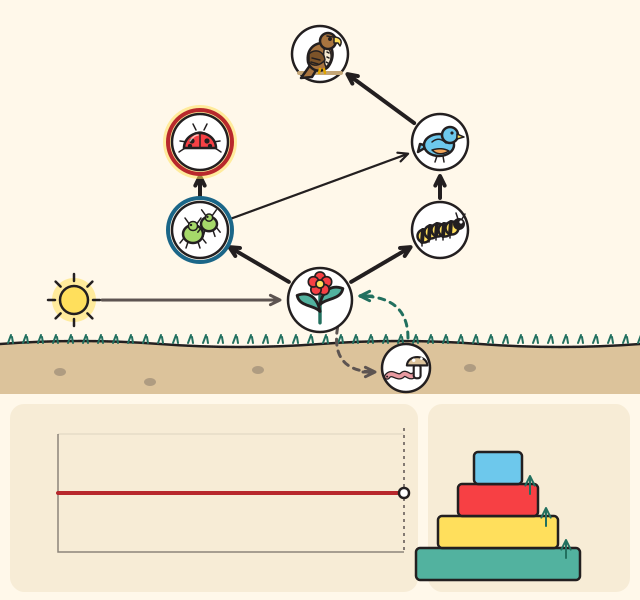
The drawing shows where it starts. It runs here once its script has loaded.El dibujo muestra dónde empieza. Funciona aquí una vez que carga su código.
Your challengeSu reto
- Take the ladybugs out and watch the aphids more than double.Saque las mariquitas y vea cómo los pulgones llegan a más del doble. Not done yet.Todavía no.
- Take the hawk out and watch the birds grow by half.Saque el halcón y vea cómo los pájaros crecen una mitad más. Not done yet.Todavía no.
- Take the decomposers out and watch the plants fall below half.Saque los descomponedores y vea cómo las plantas bajan a menos de la mitad. Not done yet.Todavía no.
- Without adding hawks, make the hawk grow by half. Follow its food chain down.Sin agregar halcones, haga que el halcón crezca una mitad más. Siga su cadena alimentaria hacia abajo. Not done yet.Todavía no.
Every challenge done. Now try it for real at home.Todos los retos logrados. Ahora pruébelo de verdad en casa.
Energy each level keeps, plants up to the hawk:Energía que guarda cada nivel, de las plantas al halcón:
Share passed up each step:Parte que pasa en cada escalón:
Each arrow points from the eaten to the eater, the way the energy flows; thicker means more. A circle grows and shrinks with its species, the dashed ring its usual size. Red is the species you picked, blue what it eats, green what eats it, on the web and on the chart. The pyramid's layers are the plants, the plant eaters, the insect hunters and the hawk; each keeps about a tenth of the energy below it, or less.Cada flecha va de lo que se come a quien se lo come, como fluye la energía; más gruesa es más. Un círculo crece y se encoge con su especie, el anillo punteado es su tamaño usual. El rojo es la especie que eligió, el azul lo que come, el verde lo que se la come, en la red y en la gráfica. Los pisos de la pirámide son las plantas, los que comen plantas, los cazadores de insectos y el halcón; cada uno guarda más o menos una décima parte de la energía del piso de abajo, o menos.
What is happeningQué está pasando
Every food chain starts with plants, which make their own food from sunlight. Aphids and caterpillars eat the plants, ladybugs eat aphids, small birds eat caterpillars and some aphids, and a hawk hunts the small birds. The arrows point from the eaten to the eater: that is the way the energy flows.Toda cadena alimentaria empieza con las plantas, que fabrican su propio alimento con la luz del sol. Los pulgones y las orugas comen plantas, las mariquitas comen pulgones, los pájaros pequeños comen orugas y algunos pulgones, y un halcón caza a los pájaros pequeños. Las flechas van de lo que se come a quien se lo come: así fluye la energía.
Each species is held in place by what it eats and by what eats it. Take the ladybugs out and nothing stops the aphids, so they multiply and eat the plants down. Take the hawk out and the birds grow, eat more caterpillars, and the plants do better. A change at one end of a chain travels all the way along it.A cada especie la sostienen en su lugar lo que come y quien se la come. Si saca las mariquitas, nada detiene a los pulgones, así que se multiplican y se comen las plantas. Si saca el halcón, los pájaros aumentan, comen más orugas y a las plantas les va mejor. Un cambio en un extremo de una cadena viaja hasta el otro.
Decomposers, such as worms, fungi and bacteria, break down dead leaves, bodies and droppings and give the nutrients back to the soil. Without them the nutrients stay locked in dead matter and the plants slowly starve. The nutrients go round and round; the energy does not.Los descomponedores, como las lombrices, los hongos y las bacterias, deshacen las hojas muertas, los cuerpos y los excrementos y devuelven los nutrientes a la tierra. Sin ellos, los nutrientes se quedan atrapados en la materia muerta y las plantas pasan hambre poco a poco. Los nutrientes dan vueltas y vueltas; la energía no.
A rule of thumb: an eater keeps only about a tenth of the energy in its food as new body; the rest is used up living and leaves as heat. That is why each layer of the energy pyramid is so much smaller than the one below it, and why a garden can feed many aphids but only a hawk’s visits.Una regla práctica: quien come guarda solo más o menos una décima parte de la energía de su comida como cuerpo nuevo; el resto se gasta en vivir y se va como calor. Por eso cada piso de la pirámide de energía es mucho más pequeño que el de abajo, y por eso un jardín alimenta a muchos pulgones pero solo a las visitas de un halcón.
Things to tryCosas para probar
- Take out one species at a time and watch the red, blue and green lines: what rises, and what falls?Saque una especie a la vez y observe las líneas roja, azul y verde: ¿qué sube y qué baja?
- Triple the aphids, then play the seasons: what happens to them, and to the ladybugs?Triplique los pulgones y luego recorra las estaciones: ¿qué les pasa a ellos, y a las mariquitas?
- Read the pyramid: how much of the plants’ energy reaches the hawk?Lea la pirámide: ¿cuánta de la energía de las plantas llega al halcón?
This is a model with made-up rates, chosen so a garden left alone stays steady, and it uses the ten percent rule of thumb for every eater. Real gardens have winters, weather and thousands of species, and birds and hawks breed once a year while aphids breed all season. Read the rises and falls, not the exact numbers.Este es un modelo con tasas inventadas, elegidas para que un jardín sin cambios se mantenga estable, y usa la regla práctica del diez por ciento para todos los que comen. Los jardines reales tienen inviernos, clima y miles de especies, y los pájaros y los halcones se reproducen una vez al año mientras que los pulgones lo hacen toda la temporada. Fíjese en lo que sube y baja, no en los números exactos.
Use it, share it, adapt itÚsela, compártala, adáptela
The credit to copyEl crédito para copiar
Free BYRD, CC BY. “A garden food web” from the Byrd Academy STEM Curriculum by Byrd EDU, byrdathome.org.Free BYRD, CC BY. “La red alimentaria de un jardín”, del Currículo STEM de Byrd Academy, de Byrd EDU, byrdathome.org.
This is free to use, share and adapt, even commercially, under the Creative Commons Attribution 4.0 International license (CC BY 4.0), with this credit. What Free BYRD means.Esto es libre de usar, compartir y adaptar, incluso con fines comerciales, bajo la licencia Creative Commons Atribución 4.0 Internacional (CC BY 4.0), con este crédito. Qué significa Free BYRD.