
Virtual toursRecorridos virtualesTOUR-0008

TOUR-0008

Virtual tour, 8 minutes, 7 stopsRecorrido virtual, 8 minutos, 7 paradas

The power grid, from the power plant to your homeLa red eléctrica, de la central a su casa

Ride along with electricity from a power plant's spinning generator, up onto high-voltage lines, down through a substation and the transformer on your street, to the meter on your wall, while people keep supply and demand in balance.Acompañe a la electricidad desde el generador que gira en una central, por las líneas de alto voltaje, a través de una subestación y del transformador de su calle, hasta el medidor de su pared, mientras unas personas mantienen en equilibrio la oferta y la demanda.

AgesEdades
Every age. Best for ages 5 and up.Todas las edades. Ideal desde los 5 años.
TopicTema
Electricity and magnetsElectricidad e imanes
HowCómo
Tap the ring, or use Go deeper or the arrow keys.Toque el anillo, o use Más adentro o las flechas del teclado.

The MESH'D components this tour shows:Los componentes MESH'D que muestra:ElectronicsElectrónica

The stopsLas paradas

Look forBusque

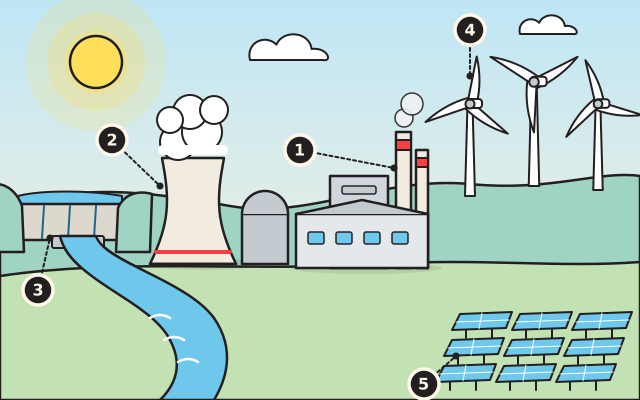
  1. A natural gas plantUna central de gas natural
  2. A nuclear plantUna central nuclear
  3. A dam for hydropowerUna presa hidroeléctrica
  4. Wind turbinesAerogeneradores
  5. Solar panelsPaneles solares

Stop 1Parada 1

Power plantsLas centrales eléctricas

Electricity is made at power plants. In 2025, natural gas was the top source in the United States, nuclear energy was second and coal third. Wind, flowing water and sunlight make a growing share.La electricidad se produce en centrales eléctricas. En 2025, el gas natural fue la fuente principal en Estados Unidos, la energía nuclear la segunda y el carbón la tercera. El viento, el agua que corre y la luz del sol aportan una parte cada vez mayor.

Most electricity is made with steam that spins a turbine. Water and wind spin turbines too, and solar panels turn sunlight straight into electricity.La mayor parte de la electricidad se produce con vapor que hace girar una turbina. El agua y el viento también mueven turbinas, y los paneles solares convierten la luz del sol directamente en electricidad.

Try this at homePruébelo en casaPower and RenewablesEnergía y fuentes renovables
Learn more: U.S. Energy Information Administration, Electricity explained: electricity in the United StatesMás información: U.S. Energy Information Administration, Electricity explained: electricity in the United States

Next: The generatorSiguiente: El generador

Look forBusque

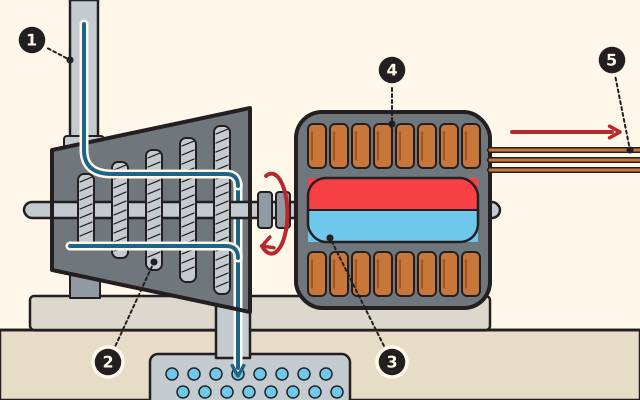
  1. Steam pushing inEl vapor que entra empujando
  2. The turbine's blades on the shaftLas aspas de la turbina en el eje
  3. The spinning electromagnet, the rotorEl electroimán que gira, el rotor
  4. Coils of copper wire, the statorBobinas de alambre de cobre, el estator
  5. Current flowing outLa corriente que sale

Stop 2Parada 2

The generatorEl generador

In 1831, Michael Faraday found that moving a magnet inside a coil of wire makes an electric current flow. Most generators today are based on his discovery.En 1831, Michael Faraday descubrió que mover un imán dentro de una bobina de alambre hace fluir una corriente eléctrica. La mayoría de los generadores de hoy se basan en ese descubrimiento.

Steam, water or wind pushes the blades of a turbine and spins its shaft. The shaft turns an electromagnet, the rotor, inside a ring of wire coils, the stator. Current flows out of the coils and on toward the power lines.El vapor, el agua o el viento empujan las aspas de una turbina y hacen girar su eje. El eje hace girar un electroimán, el rotor, dentro de un anillo de bobinas de alambre, el estator. La corriente sale de las bobinas hacia las líneas eléctricas.

Try this at homePruébelo en casaMagnets, fields and compassesImanes, campos y brújulas

Learn more: U.S. Energy Information Administration, Electricity explained: how electricity is generatedMás información: U.S. Energy Information Administration, Electricity explained: how electricity is generated

Next: Up to high voltageSiguiente: Hacia el alto voltaje

Look forBusque

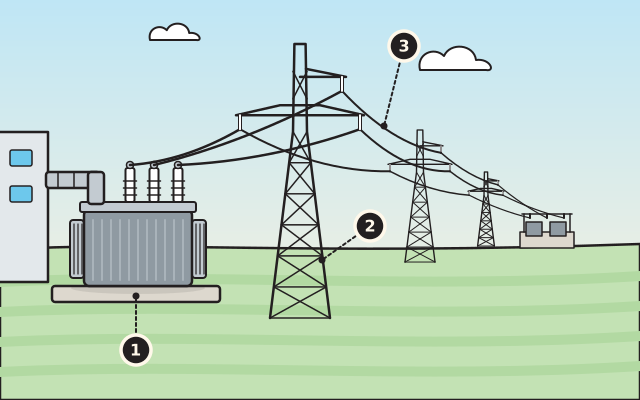
  1. The step-up transformerEl transformador elevador
  2. A tall metal towerUna torre alta de metal
  3. High-voltage linesLas líneas de alto voltaje

Stop 3Parada 3

Up to high voltageHacia el alto voltaje

Leaving the plant, the electricity passes through a transformer that steps up, or raises, the voltage. High-voltage lines, hanging between tall metal towers, carry it over long distances.Al salir de la central, la electricidad pasa por un transformador que eleva el voltaje. Las líneas de alto voltaje, colgadas entre altas torres de metal, la llevan a grandes distancias.

Why so high? At higher voltage, sending electricity far is more efficient and costs less. The United States has thousands of miles of these lines.¿Por qué tan alto? Con más voltaje, enviar electricidad lejos es más eficiente y cuesta menos. En Estados Unidos hay miles de millas de estas líneas.

Try this at homePruébelo en casaVolts, ohms and amps: Ohm's lawVoltios, ohmios y amperios: la ley de Ohm

Learn more: U.S. Energy Information Administration, Electricity explained: delivery to consumersMás información: U.S. Energy Information Administration, Electricity explained: delivery to consumers

Next: The substationSiguiente: La subestación

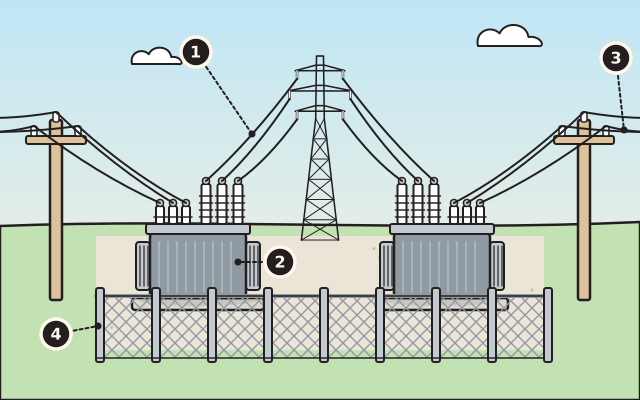
Look forBusque

  1. High-voltage lines coming inLas líneas de alto voltaje que llegan
  2. Transformers that step the voltage downLos transformadores que bajan el voltaje
  3. Distribution lines going outLas líneas de distribución que salen
  4. The fence around itLa cerca que la rodea

Stop 4Parada 4

The substationLa subestación

At a substation, transformers step the voltage down for the distribution lines. Those lines carry lower voltage electricity, which is safer to use in homes and businesses.En una subestación, los transformadores reducen el voltaje para las líneas de distribución. Esas líneas llevan electricidad de menor voltaje, más segura para usarse en casas y negocios.

Substations, transformers and lines like these make up the grid. It joins thousands of power plants to hundreds of millions of customers.Subestaciones, transformadores y líneas como estas forman la red. La red une miles de centrales con cientos de millones de clientes.

Learn more: U.S. Energy Information Administration, Electricity explained: delivery to consumersMás información: U.S. Energy Information Administration, Electricity explained: delivery to consumers

Next: Your streetSiguiente: Su calle

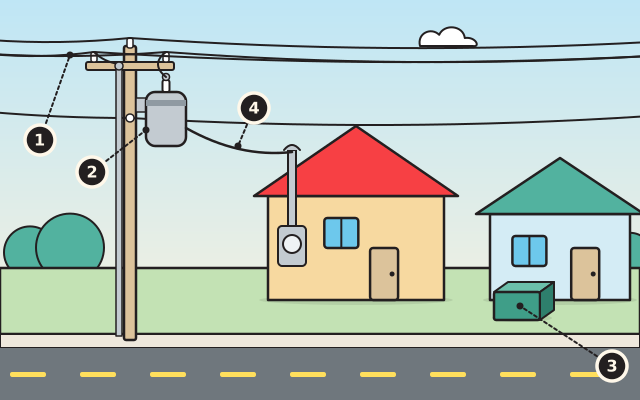
Look forBusque

  1. The distribution linesLas líneas de distribución
  2. A transformer on a poleUn transformador en un poste
  3. A transformer on a padUn transformador sobre una base
  4. The line to the houseLa línea hacia la casa

Stop 5Parada 5

Your streetSu calle

On your street, a distribution transformer, on a pole or on a pad on the ground, turns the voltage down to a level safe for homes and businesses.En su calle, un transformador de distribución, en un poste o sobre una base en el suelo, baja el voltaje a un nivel seguro para casas y negocios.

More than sixty million of these transformers sit on poles and pads across the country. They work day and night and stay in use for many decades.Más de sesenta millones de estos transformadores están en postes y bases por todo el país. Trabajan de día y de noche y siguen en uso durante muchas décadas.

Learn more: U.S. Department of Energy, DOE Finalizes Energy Efficiency Standards for Distribution TransformersMás información: U.S. Department of Energy, DOE Finalizes Energy Efficiency Standards for Distribution Transformers

Next: The meterSiguiente: El medidor

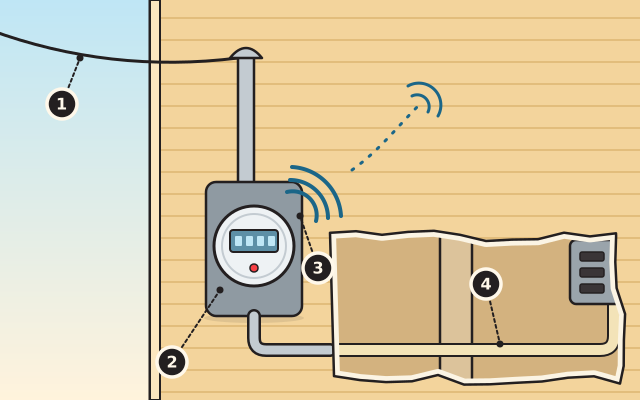
Look forBusque

  1. The line from the poleLa línea que viene del poste
  2. The meterEl medidor
  3. Readings sent wirelesslyLas lecturas enviadas sin cables
  4. The wires going on insideLos cables que siguen hacia adentro

Stop 6Parada 6

The meterEl medidor

Where the power line connects to the house, a meter measures how much electricity the home uses, in kilowatthours. Long ago, a worker came by to read it.Donde la línea eléctrica se conecta a la casa, un medidor mide cuánta electricidad usa el hogar, en kilovatios hora. Hace tiempo, un trabajador pasaba a leerlo.

Today many utilities use smart meters, which send the readings wirelessly as they happen. To follow the electricity inside, take the tour Inside a circuit.Hoy muchas compañías eléctricas usan medidores inteligentes, que envían las lecturas de forma inalámbrica al momento. Para seguir la electricidad dentro de la casa, tome el recorrido Dentro de un circuito.

Try this at homePruébelo en casaRead the power labels and test a solar calculator by angleLea las etiquetas de potencia y pruebe una calculadora solar según el ángulo

Learn more: U.S. Energy Information Administration, Electricity explained: measuring electricityMás información: U.S. Energy Information Administration, Electricity explained: measuring electricity

Next: Keeping the balanceSiguiente: Mantener el equilibrio

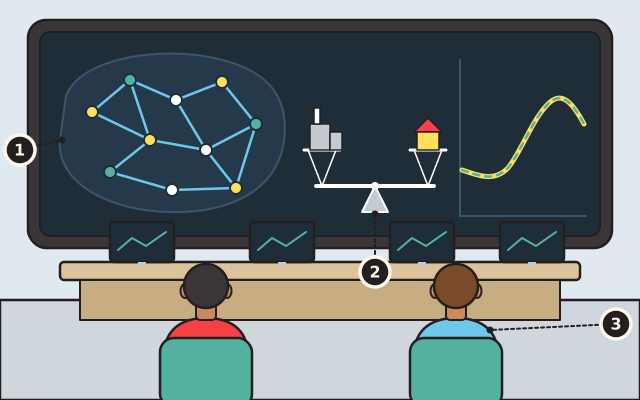
A control room: a wall screen shows a map of the grid, a level beam with a power plant on one side and a house on the other, and a curve with a dashed line following it. Two operators sit at desks with screens.

Look forBusque

  1. A map of the gridUn mapa de la red
  2. Supply and demand in balanceLa oferta y la demanda en equilibrio
  3. Operators on watchEl personal de operación en guardia

Stop 7Parada 7

Keeping the balanceMantener el equilibrio

For the grid to stay stable, the electricity supplied must match the electricity used. Organizations called balancing authorities run each region of the grid day to day and keep supply and demand matched all the time. If the two fall out of balance, blackouts can happen.Para que la red se mantenga estable, la electricidad que se suministra debe igualar la que se usa. Organizaciones llamadas autoridades de balance manejan cada región de la red día a día y mantienen la oferta y la demanda iguales en todo momento. Si se desequilibran, puede haber apagones.

The lower forty-eight states share three main grids, and one of them covers most of Texas.Los cuarenta y ocho estados contiguos comparten tres redes principales, y una de ellas cubre casi todo Texas.

Learn more: U.S. Energy Information Administration, Electricity explained: delivery to consumersMás información: U.S. Energy Information Administration, Electricity explained: delivery to consumers

Use it, share it, adapt itÚsela, compártala, adáptela

The credit to copyEl crédito para copiar

Free BYRD, CC BY. “The power grid, from the power plant to your home” from the Byrd Academy STEM Curriculum by Byrd EDU, byrdathome.org.Free BYRD, CC BY. “La red eléctrica, de la central a su casa”, del Currículo STEM de Byrd Academy, de Byrd EDU, byrdathome.org.

This is free to use, share and adapt, even commercially, under the Creative Commons Attribution 4.0 International license (CC BY 4.0), with this credit. What Free BYRD means.Esto es libre de usar, compartir y adaptar, incluso con fines comerciales, bajo la licencia Creative Commons Atribución 4.0 Internacional (CC BY 4.0), con este crédito. Qué significa Free BYRD.

Keep goingSiga adelante

What to do nextQué hacer después

Make it harderHágalo más difícil

With a grown-up, find your home's meter and read it at the same time on two days in a row. How much electricity did your home use in one day? Which things in your home might use the most?Con una persona adulta, busque el medidor de su casa y léalo a la misma hora dos días seguidos. ¿Cuánta electricidad usó su hogar en un día? ¿Qué cosas de su casa podrían usar más?

For a younger onePara alguien más pequeño

Take a walk and look up. Count the poles on your street and spot a transformer on a pole or a green box on the ground. Look, but never touch or climb near them.Salgan a caminar y miren hacia arriba. Cuenten los postes de su calle y busquen un transformador en un poste o una caja verde en el suelo. Mírenlos, pero nunca los toquen ni se suban cerca de ellos.

Try this nextPruebe esto después

SIM-0019

Magnets, fields and compassesImanes, campos y brújulas

See a bar magnet's field, walk a compass around it, push and pull two magnets, and find out which things at home a magnet picks up.Vea el campo de un imán de barra, mueva una brújula a su alrededor, empuje y atraiga dos imanes, y descubra qué cosas de la casa levanta un imán.

  • Ways in:Formas de empezar:
  • SimulateSimular

Best for ages 5 and upIdeal desde los 5 años

ElectronicsElectrónica

Free BYRD, CC BYSimulationSimulación

SIM-0020

Volts, ohms and amps: Ohm's lawVoltios, ohmios y amperios: la ley de Ohm

Light a bulb from a battery, add a resistor in a row or side by side, and read the volts and amps on a multimeter, the way an electrician checks a circuit.Encienda un foco con una pila, agregue una resistencia en fila o lado a lado, y lea los voltios y amperios en un multímetro, como revisa un circuito un electricista.

  • Ways in:Formas de empezar:
  • SimulateSimular

Best for ages 8 and upIdeal desde los 8 años

ElectronicsElectrónica

Free BYRD, CC BYSimulationSimulación

STEMGrades 9 to 12Grados 9 a 12 Where does the energy come from?¿De dónde viene la energía? STEM-HS-09

Power and RenewablesEnergía y fuentes renovables
Measure volts and amps to compute power, test a solar panel at different angles and light levels, then build a solar charger and measure its real efficiency.Mida voltios y amperios para calcular la potencia, pruebe un panel solar con distintos ángulos y niveles de luz, y luego construya un cargador solar y mida su eficiencia real.

  • Ways in:Formas de empezar:
  • ReadLeer
  • DoHacer
  • SimulateSimular

Grades 9 to 12Grados 9 a 12

ManufacturingManufacturaElectronicsElectrónica

Free BYRD, CC BYCurriculum unitUnidad del currículo

TOUR-0001

Inside a circuit, from the wall outlet to the chipDentro de un circuito, del tomacorriente al chip

Follow electricity from the outlet on your wall, through the wires and a phone charger, onto a circuit board and into a chip, where billions of tiny switches turn on and off.Siga la electricidad desde el tomacorriente de su pared, por los cables y un cargador de teléfono, hasta una placa de circuito y dentro de un chip, donde miles de millones de interruptores diminutos se encienden y se apagan.

  • Ways in:Formas de empezar:
  • TourRecorrer

Best for ages 8 and upIdeal desde los 8 años

ElectronicsElectrónica

Free BYRD, CC BYVirtual tourRecorrido virtual

Explore everythingExplorar todo