

CurriculumCurrículoSTEMGrades 3 to 5Grados 3 a 5STEM-ES-04
Robot Basics I: Shapes in MotionRobótica básica I: figuras en movimiento
Program a robot to drive squares and run an obstacle course, and discover that a right angle is a quarter turn.Programe un robot para recorrer cuadrados y una pista de obstáculos, y descubra que un ángulo recto es un cuarto de vuelta.
- Ways in:Formas de empezar:
- Read, 1 minuteLeer, 1 minuto
- Do, 225 minutesHacer, 225 minutos
- Simulate, 5 minutesSimular, 5 minutos
- GradesGrados
- Grades 3 to 5, and any learner ready for itGrados 3 a 5, y cualquier persona lista para ello
- TimeTiempo
- 5 sessions of about 45 minutes5 sesiones de unos 45 minutos
- CostCosto
- Needs equipmentNecesita equipo
The MESH'D components this unit uses:Los componentes MESH'D que usa esta unidad:SoftwareSoftware
The driving questionLa pregunta central
How do you tell a robot where to go?¿Cómo se le dice a un robot a dónde ir?
Geometry drives the robot. Plans go on cards before anything goes on a screen, and driving a square teaches the right angle better than any worksheet.La geometría maneja al robot. Los planes se escriben en tarjetas antes de tocar una pantalla, y recorrer un cuadrado enseña el ángulo recto mejor que cualquier hoja de ejercicios.
Learners will be able toAl terminar se podrá
- Put instructions in order so the robot runs them with no changes partway through.Ordenar instrucciones para que el robot las ejecute sin cambios a mitad del camino.
- Use quarter turns and half turns as angles, and name them in degrees.Usar cuartos de vuelta y medias vueltas como ángulos, y nombrarlos en grados.
- Measure how far one move goes and use it to scale a path.Medir cuánto avanza un movimiento y usarlo para ajustar la escala de un recorrido.
Where the math isDónde están las matemáticas
Angles found by driving: a quarter turn is ninety degrees, a half turn is one hundred eighty, and a full turn is three hundred sixty. Plus measuring distance and scaling it.Ángulos descubiertos al manejar: un cuarto de vuelta son noventa grados, media vuelta son ciento ochenta y una vuelta completa son trescientos sesenta. Además, medir distancias y ajustarlas a escala.
Texas standards, strand levelEstándares de Texas, por componente
- Math: Geometry and MeasurementMatemáticas: Geometría y medición
- Technology Applications: Computational ThinkingAplicaciones de tecnología: Pensamiento computacional
Session by sessionSesión por sesión
What to doQué hacer
- Robot rules: write the moves on instruction cards before touching a screen.Reglas del robot: escriba los movimientos en tarjetas de instrucciones antes de tocar una pantalla.
- Drive the shapes: a square is four moves and four right angles, and the angle is discovered by driving it.Recorra las figuras: un cuadrado son cuatro movimientos y cuatro ángulos rectos, y el ángulo se descubre al recorrerlo.
- Calibration: measure how far one move goes, then scale your moves to reach a target.Calibración: mida cuánto avanza un movimiento y luego ajuste sus movimientos para llegar a una meta.
- Design an obstacle course and run it.Diseñe una pista de obstáculos y recórrala.
- Run the course challenge and get ready to show the square drive.Haga el reto de la pista y prepárese para mostrar el recorrido del cuadrado.
What you needLo que necesita
- Floor tapeCinta para piso
- Paper instruction cardsTarjetas de papel para instrucciones
EquipmentEquipo
- A programmable educational robot and the device that programs itUn robot educativo programable y el dispositivo con que se programa
- A tape measure or rulerUna cinta métrica o una regla
Needs equipment.Necesita equipo.
Mark off the floor area where the robot runs, and keep feet, hands and loose things out of it while a program is running.Marque el área del piso donde corre el robot y mantenga pies, manos y objetos sueltos fuera de ella mientras el programa está en marcha.
What learners make and showLo que se hace y se muestra
An obstacle course run plus a driven square: the program runs with no edits, an angle is named correctly, and the calibration is explained.Un recorrido por la pista de obstáculos y un cuadrado recorrido: el programa funciona sin cambios, un ángulo se nombra correctamente y se explica la calibración.
Mix-ups to expectConfusiones que esperar
- The robot knows where it is. It only knows what it was told: it follows the program, one step at a time.El robot sabe dónde está. Solo sabe lo que se le dijo: sigue el programa, paso por paso.
- A turn is a curve. A robot's turn is an amount of rotation; it can turn in place and then head off in a new direction.Una vuelta es una curva. La vuelta de un robot es una cantidad de giro; puede girar en su lugar y luego avanzar en otra dirección.
- Angles are just corners. Angles are amounts of turn: a quarter turn is ninety degrees whether or not a corner is drawn.Los ángulos son solo esquinas. Los ángulos son cantidades de giro: un cuarto de vuelta son noventa grados, haya o no una esquina dibujada.
At homeEn casa
Try it at the kitchen tablePruébelo en la mesa de la cocina
Play robot at home: one family member writes the moves for a square on cards, and another walks them exactly, forward and a quarter turn, four times.Jueguen al robot en casa: un familiar escribe en tarjetas los movimientos de un cuadrado y otro los camina al pie de la letra, avanzar y dar un cuarto de vuelta, cuatro veces.
Simulate, 5 minutesSimular, 5 minutos
Code the robotPrograme al robot
Build a program from cards and watch the robot follow it exactly. Use a repeat to run the same cards again and again, so a short program can drive a whole square.Arme un programa con tarjetas y vea al robot seguirlo al pie de la letra. Use una repetición para correr las mismas tarjetas una y otra vez, para que un programa corto trace todo un cuadrado.
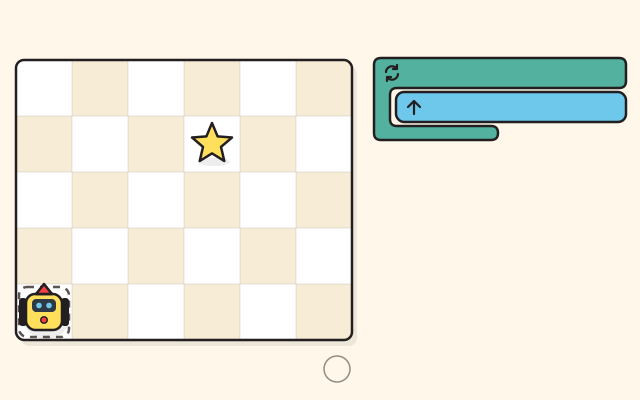
The drawing shows where it starts. It runs here once its script has loaded.El dibujo muestra dónde empieza. Funciona aquí una vez que carga su código.
Your challengeSu reto
- Get the robot to the star.Lleve el robot hasta la estrella. Not done yet.Todavía no.
- Drive the whole square with five cards or fewer.Trace todo el cuadrado con cinco tarjetas o menos. Not done yet.Todavía no.
- Climb the gem stairs and collect all four gems with five cards or fewer.Suba la escalera y recoja las cuatro gemas con cinco tarjetas o menos. Not done yet.Todavía no.
Every challenge done. Now try it for real at home.Todos los retos logrados. Ahora pruébelo de verdad en casa.
Add a cardAgregue una tarjeta
The programEl programa
Squares movedCasillas avanzadas
Quarter turnsCuartos de vuelta
Angle turned in allÁngulo girado en total
The robot facesEl robot mira hacia
The robot does the cards in order, exactly as written. A green repeat block runs the cards inside it again and again, so a pattern written once can run many times. The arrow marks the card just done; a red card is where it bumped. Each little corner on the path is a right angle.El robot hace las tarjetas en orden, tal como están escritas. Un bloque verde de repetición corre las tarjetas que tiene dentro una y otra vez, así que un patrón escrito una vez puede correr muchas veces. La flecha marca la tarjeta que acaba de hacer; una tarjeta roja es donde chocó. Cada esquinita en el camino es un ángulo recto.
What is happeningQué está pasando
A program is a list of exact instructions, and a robot follows them literally. It only knows what it was told, not what we meant.Un programa es una lista de instrucciones exactas, y un robot las sigue al pie de la letra. Solo sabe lo que se le dijo, no lo que quisimos decir.
A loop repeats the cards inside it. A square is one side and one turn, four times over, so instead of sixteen cards you can write the side and the turn once and put them inside a repeat that runs four times: five cards in all. Finding the pattern that repeats is the heart of a loop.Un ciclo repite las tarjetas que tiene dentro. Un cuadrado es un lado y un giro, cuatro veces, así que en lugar de dieciséis tarjetas puede escribir el lado y el giro una sola vez y ponerlos dentro de una repetición que corra cuatro veces: cinco tarjetas en total. Encontrar el patrón que se repite es el corazón de un ciclo.
A quarter turn is a right angle. Two make a half turn and four make a full turn, so a square has four equal sides and four right angles, and the robot ends facing the way it began.Un cuarto de vuelta es un ángulo recto. Dos hacen media vuelta y cuatro una vuelta completa, así que un cuadrado tiene cuatro lados iguales y cuatro ángulos rectos, y el robot termina mirando hacia donde empezó.
Debugging is watching: step through one card at a time, see where the robot goes wrong, and fix that card.Depurar es observar: avance una tarjeta a la vez, vea dónde se equivoca el robot y arregle esa tarjeta.
Things to tryCosas para probar
- Drive the square without a repeat and count the cards, then drive it again with one.Trace el cuadrado sin repetición y cuente las tarjetas; luego trácelo otra vez con una.
- Change how many times the repeat runs and watch where the robot ends up.Cambie cuántas veces corre la repetición y vea dónde termina el robot.
- Make the robot bump on purpose, then step through and fix the card that failed.Haga chocar al robot a propósito, luego avance paso a paso y arregle la tarjeta que falló.
- Watch the turns under the grid: how many quarter turns make a full turn?Mire los giros debajo de la cuadrícula: ¿cuántos cuartos de vuelta hacen una vuelta completa?
This robot moves exactly one square and turns exactly a quarter turn every time, and its repeats do not go one inside another. A real robot drifts and slips, so its distance and its turns have to be measured and adjusted.Este robot avanza exactamente una casilla y gira exactamente un cuarto de vuelta cada vez, y sus repeticiones no van una dentro de otra. Un robot real se desvía y resbala, así que hay que medir y ajustar su distancia y sus giros.
Open the simulation on its own pageAbrir la simulación en su propia página
Use it, share it, adapt itÚsela, compártala, adáptela
The credit to copyEl crédito para copiar
Free BYRD, CC BY. “Robot Basics I: Shapes in Motion” from the Byrd Academy STEM Curriculum by Byrd EDU, byrdathome.org.Free BYRD, CC BY. “Robótica básica I: figuras en movimiento”, del Currículo STEM de Byrd Academy, de Byrd EDU, byrdathome.org.
This is free to use, share and adapt, even commercially, under the Creative Commons Attribution 4.0 International license (CC BY 4.0), with this credit. What Free BYRD means.Esto es libre de usar, compartir y adaptar, incluso con fines comerciales, bajo la licencia Creative Commons Atribución 4.0 Internacional (CC BY 4.0), con este crédito. Qué significa Free BYRD.