

ExploreExplorarBH-0007
Engineer a leprechaun trapDiseñe una trampa para duendes
For St. Patrick's Day, take a trap from problem to prototype with the seven steps of the engineering design process.Para el Día de San Patricio, lleve una trampa del problema al prototipo con los siete pasos del proceso de diseño de ingeniería.
- Ways in:Formas de empezar:
- Read, 2 minutesLeer, 2 minutos
- Do, 45 minutesHacer, 45 minutos
- Simulate, 5 minutesSimular, 5 minutos
- AgesEdades
- Every age. Best for ages 6 and up.Todas las edades. Ideal desde los 6 años.
- CostCosto
- Things already at homeCosas que ya hay en casa
- EpisodeEpisodio
- Episode 7Episodio 7
The MESH'D components this item uses:Los componentes MESH'D que usa:ManufacturingManufacturaHolistic DesignDiseño integral
WatchVea
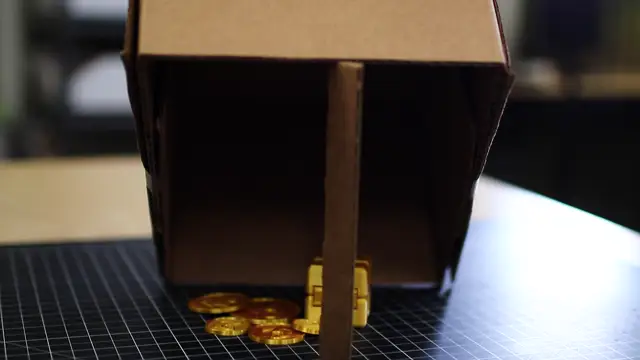
Do, about 45 minutesHacer, unos 45 minutos
Build it at homeConstrúyalo en casa
StepsPasos
- Figure out the problem to solve, and write down its requirements and constraints.Averigüe el problema que va a resolver y escriba sus requisitos y restricciones.
- Brainstorm many ways to solve it, then narrow the list down.Piense en muchas formas de resolverlo y luego reduzca la lista.
- Design some solutions from the best ideas, and choose one to build. Here: a box propped up on a stick, with the gold underneath.Diseñe algunas soluciones con las mejores ideas y escoja una para construir. Aquí: una caja levantada sobre un palito, con el oro debajo.
- Measure and mark a stick on the cardboard with the ruler, and cut it out.Mida y marque un palito en el cartón con la regla, y recórtelo.
- Prop the box on the stick over the gold, and test it: does it stay up, and does it fall when the stick is moved?Levante la caja sobre el palito encima del oro y pruébela: ¿se sostiene, y se cae cuando se mueve el palito?
- Analyze the test. Having to reach right up to the box to spring it would give you away, so poke a hole in the stick, tie a string through it, and test again from across the table.Analice la prueba. Tener que acercarse hasta la caja para activarla lo delataría, así que haga un agujero en el palito, amarre una cuerda y pruebe otra vez desde el otro lado de la mesa.
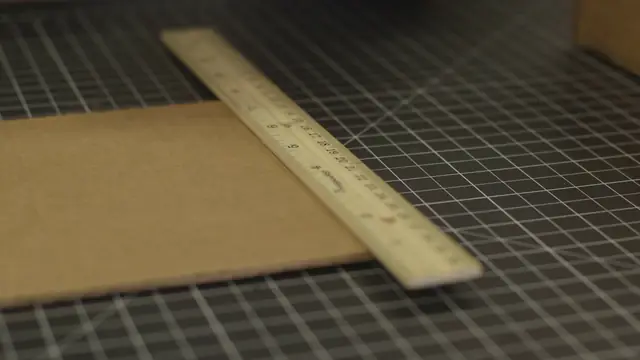
What you needLo que necesita
- Paper and a pencil, for ideas and designsPapel y un lápiz, para ideas y diseños
- A cardboard boxUna caja de cartón
- A piece of cardboard for the prop stick, a ruler and scissorsUn pedazo de cartón para el palito, una regla y tijeras
- StringCuerda
- Something shiny for bait, such as play gold coinsAlgo brillante como carnada, como monedas doradas de juguete
Things already at home.Cosas que ya hay en casa.
A grown-up handles the cutting and the poking. Ask a grown-up at home before you post your invention or results online.Una persona adulta se encarga de cortar y perforar. Pregunte a una persona adulta en casa antes de publicar su invento o sus resultados en internet.
Read, 2 minutesLeer, 2 minutos
The big ideaLa gran idea
Inventors follow a process. First figure out the problem to solve, and note its requirements and constraints: here, trap a small person, at least about six inches tall, using only things found at home. Then brainstorm ways to solve it, design some solutions from those ideas, choose one to build, and test the prototype. Finally, look at how it performed and improve it, again and again.Los inventores siguen un proceso. Primero averigüe el problema que va a resolver y anote sus requisitos y restricciones: aquí, atrapar a una persona pequeña, de al menos unas seis pulgadas de alto, usando solo cosas de la casa. Luego piense en formas de resolverlo, diseñe algunas soluciones a partir de esas ideas, escoja una para construir y pruebe el prototipo. Al final, vea cómo funcionó y mejórelo, una y otra vez.
Simulate, 5 minutesSimular, 5 minutos
The trap’s trigger: a stick held by gripEl gatillo de la trampa: un palito sostenido por el agarre
A box sits propped on a stick over the gold. Tie the string higher or lower, step back, and pull: find out which end of the stick lets go first, and how to spring the trap with the gentlest tug.Una caja está apoyada en un palito sobre el oro. Amarre la cuerda más arriba o más abajo, aléjese y jale: descubra qué extremo del palito se suelta primero, y cómo soltar la trampa con el jalón más suave.
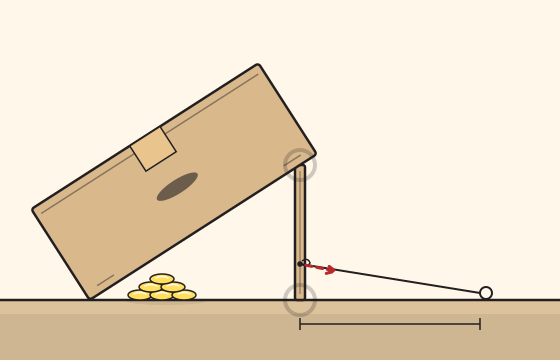
The drawing shows where it starts. It runs here once its script has loaded.El dibujo muestra dónde empieza. Funciona aquí una vez que carga su código.
Your challengeSu reto
- Spring the trap by sliding the stick’s foot out.Suelte la trampa haciendo que la base del palito se resbale. Not done yet.Todavía no.
- Spring the trap by sliding the stick’s top out from under the box.Suelte la trampa haciendo que la punta del palito se resbale de debajo de la caja. Not done yet.Todavía no.
- Put a book on the box and spring it with a pull of two newtons or less.Ponga un libro sobre la caja y suéltela con un jalón de dos newtons o menos. Not done yet.Todavía no.
Every challenge done. Now try it for real at home.Todos los retos logrados. Ahora pruébelo de verdad en casa.
Grip used at the topAgarre usado arriba
Grip used at the footAgarre usado abajo
It springs at a pull ofSe suelta con un jalón de
The string runs down from level byLa cuerda baja desde lo horizontal
Each red ring shows how much of a grip is in use: the top's, where the box presses on the stick, and the foot's, on the table. When a ring closes, that end slides and the trap springs. A newton is about the weight of a small apple held in your hand.Cada anillo rojo muestra cuánto agarre se está usando: el de la punta, donde la caja aprieta el palito, y el de la base, sobre la mesa. Cuando un anillo se cierra, ese extremo se resbala y la trampa se suelta. Un newton es más o menos el peso de una manzana pequeña en la mano.
What is happeningQué está pasando
Nothing glues the stick to the box or to the table. It stands up only because of grip, the friction where it touches: at its top, where the heavy box presses down on it, and at its foot, on the table. A heavier box presses harder, so both grips get stronger and the trap takes a bigger pull.Nada pega el palito a la caja ni a la mesa. Se sostiene solo por el agarre, la fricción donde toca: en su punta, donde la caja pesada lo aprieta, y en su base, sobre la mesa. Una caja más pesada aprieta más, así que los dos agarres se hacen más fuertes y la trampa necesita un jalón más grande.
A sideways pull on the stick is shared between its two grips, like a seesaw. Tie the string high and most of the pull lands on the top, so the top slides out from under the box. Tie it low and most lands on the foot, so the foot slides out across the table. Tie it in the middle and the pull is shared, so it takes the most pull of all.Un jalón de lado sobre el palito se reparte entre sus dos agarres, como un subibaja. Amarre la cuerda arriba y la mayor parte del jalón cae en la punta, así que la punta se resbala de debajo de la caja. Amárrela abajo y la mayor parte cae en la base, así que la base se resbala por la mesa. Amárrela en el centro y el jalón se reparte, así que hace falta el jalón más grande de todos.
Only the sideways part of your pull slides the stick. From close by, the string runs steeply down to your hand, and the downward part presses the foot into the table and makes its grip stronger. From across the room the string runs almost flat, so nearly all of your pull goes sideways.Solo la parte de lado de su jalón resbala el palito. De cerca, la cuerda baja empinada hasta su mano, y la parte hacia abajo aprieta la base contra la mesa y hace más fuerte su agarre. Desde el otro lado del cuarto la cuerda va casi plana, así que casi todo su jalón va hacia un lado.
Things to tryCosas para probar
- Leave everything as it is and press Pull slowly. Which ring closes first?Deje todo como está y presione Jalar despacio. ¿Qué anillo se cierra primero?
- Tie the string near the foot, in the middle, then near the top, and compare the pull each one needs.Amarre la cuerda cerca de la base, en el centro y luego cerca de la punta, y compare el jalón que necesita cada una.
- Stand close with the string tied low, then step back across the room, and watch the angle of the string.Párese cerca con la cuerda amarrada abajo, luego aléjese al otro lado del cuarto, y observe el ángulo de la cuerda.
- Put a book on the box: what do you have to change to spring it gently now?Ponga un libro sobre la caja: ¿qué tiene que cambiar para soltarla con suavidad ahora?
A simple model: the stick stands straight and has no width, the box puts half its weight on the stick, and each grip is the same friction, four tenths of the push on it, a value near what paperboard measures. Real sticks lean, rock on the corner of their foot and bend, and real grips change with the surfaces, so your own trap will need a different pull.Un modelo sencillo: el palito está derecho y no tiene grosor, la caja pone la mitad de su peso en el palito, y cada agarre es la misma fricción, cuatro décimas del empuje que recibe, un valor cercano a lo que mide el cartón. Los palitos reales se inclinan, se mecen sobre la esquina de su base y se doblan, y los agarres reales cambian con las superficies, así que su trampa necesitará otro jalón.
Open the simulation on its own pageAbrir la simulación en su propia páginaSimple machines: trade force for distanceMáquinas simples: cambie fuerza por distancia
Your engineering challengeSu reto de ingeniería
Engineer a trap. Start by choosing what you are going to trap, then use the engineering design process to create your invention.Diseñe una trampa. Empiece por escoger qué va a atrapar y luego use el proceso de diseño de ingeniería para crear su invento.
Make it an experimentConviértalo en un experimento
Science is about changing one thing and watching what happens. Write down your guess, your hypothesis, before you start.La ciencia se trata de cambiar una cosa y observar qué pasa. Escriba su suposición, su hipótesis, antes de empezar.
- Test the prototype: does the box stay up on its stick until you spring it?Pruebe el prototipo: ¿la caja se queda sobre su palito hasta que usted la activa?
- Test how far away you can be and still spring the trap.Pruebe qué tan lejos puede estar y aún activar la trampa.
Use it, share it, adapt itÚsela, compártala, adáptela
The credit to copyEl crédito para copiar
Free BYRD, CC BY. “Engineer a leprechaun trap” from the Byrd Academy STEM Curriculum by Byrd EDU, byrdathome.org.Free BYRD, CC BY. “Diseñe una trampa para duendes”, del Currículo STEM de Byrd Academy, de Byrd EDU, byrdathome.org.
This is free to use, share and adapt, even commercially, under the Creative Commons Attribution 4.0 International license (CC BY 4.0), with this credit. What Free BYRD means.Esto es libre de usar, compartir y adaptar, incluso con fines comerciales, bajo la licencia Creative Commons Atribución 4.0 Internacional (CC BY 4.0), con este crédito. Qué significa Free BYRD.
Keep goingSiga adelante
What to do nextQué hacer después
Make it harderHágalo más difícil
Tie the string higher up the stick and stand farther back: how far away can you be and still spring it with a gentle pull?Amarre la cuerda más arriba en el palito y aléjese más: ¿qué tan lejos puede estar y todavía soltarla con un jalón suave?
For a younger onePara alguien más pequeño
Set the box up for them over a favorite toy, and let them pull the string and watch it drop.Arme la caja sobre un juguete favorito y deje que jale la cuerda y vea cómo cae.
Try this nextPruebe esto después
The trap’s trigger: a stick held by gripEl gatillo de la trampa: un palito sostenido por el agarre
A box sits propped on a stick over the gold. Tie the string higher or lower, step back, and pull: find out which end of the stick lets go first, and how to spring the trap with the gentlest tug.Una caja está apoyada en un palito sobre el oro. Amarre la cuerda más arriba o más abajo, aléjese y jale: descubra qué extremo del palito se suelta primero, y cómo soltar la trampa con el jalón más suave.
- Ways in:Formas de empezar:
- SimulateSimular
Best for ages 6 and upIdeal desde los 6 años
ManufacturingManufacturaDesignDiseño
Free BYRD, CC BYSimulationSimulación
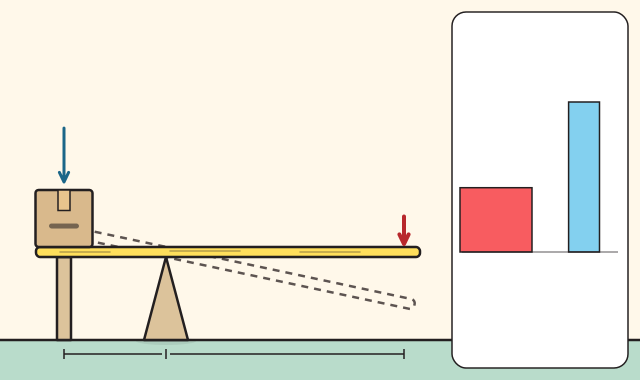 SIM-0007
 Simple machines: trade force for distanceMáquinas simples: cambie fuerza por distancia
Lift a load with a lever, pulleys and a ramp. Each one lets you use less force, but you move farther, and the work stays the same.Levante una carga con una palanca, poleas y una rampa. Cada una le deja usar menos fuerza, pero usted recorre más distancia, y el trabajo sigue igual.
- Ways in:Formas de empezar:
- SimulateSimular
Best for ages 6 and upIdeal desde los 6 años
ManufacturingManufacturaDesignDiseño
Free BYRD, CC BYSimulationSimulación
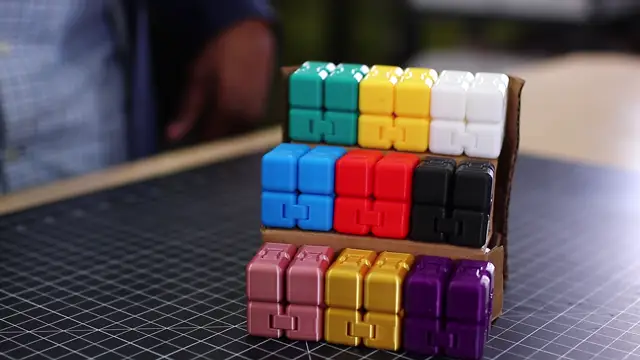 BH-0005
 Invent a two-in-one block standInvente un soporte dos en uno para bloques
For International Women's Day, follow inventor Sarah E. Goode and design something that does two jobs: a cardboard case that carries your blocks and shows them off.Para el Día Internacional de la Mujer, siga a la inventora Sarah E. Goode y diseñe algo que haga dos trabajos: un estuche de cartón que lleva sus bloques y los exhibe.
- Ways in:Formas de empezar:
- ReadLeer
- DoHacer
Best for ages 8 and upIdeal desde los 8 años
ManufacturingManufacturaDesignDiseño
Free BYRD, CC BYLessonLección
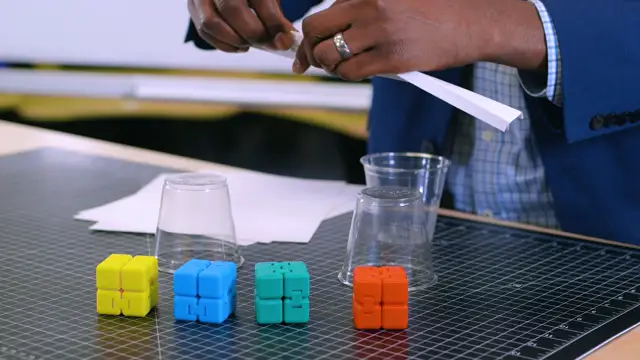 BH-0003
 One sheet of paper, many triesUna hoja de papel, muchos intentos
Keep a cup of blocks off the table with only one sheet of paper, by improving your design one try at a time.Mantenga un vaso con bloques lejos de la mesa con una sola hoja de papel, mejorando su diseño intento tras intento.
- Ways in:Formas de empezar:
- ReadLeer
- DoHacer
- SimulateSimular
Best for ages 5 and upIdeal desde los 5 años
ManufacturingManufacturaDesignDiseño
Free BYRD, CC BYLessonLección