

ExploreExplorarBH-0062
Build a sand and gravel water filter, never to drinkConstruya un filtro de agua con arena y grava, nunca para tomar
Layer gravel, sand and cloth in a cut bottle, pour muddy water through, and see how much clearer it comes out, then learn why clear water is still not safe to drink.Ponga capas de grava, arena y tela en una botella cortada, pase agua lodosa por ellas y vea qué tan clara sale, y luego aprenda por qué el agua clara todavía no es segura para tomar.
- Ways in:Formas de empezar:
- Read, 3 minutesLeer, 3 minutos
- Do, 40 minutesHacer, 40 minutos
- Simulate, 8 minutesSimular, 8 minutos
- AgesEdades
- Every age. Best for ages 8 and up.Todas las edades. Ideal desde los 8 años.
- CostCosto
- Under a few dollarsMenos de unos pocos dólares
The MESH'D components this item uses:Los componentes MESH'D que usa:ManufacturingManufacturaHolistic DesignDiseño integral
Do, about 40 minutesHacer, unos 40 minutos
Build it at homeConstrúyalo en casa
StepsPasos
- A grown-up cuts the bottom off the bottle and covers the cut edge with tape. Take off the cap.Una persona adulta corta el fondo de la botella y cubre el borde cortado con cinta. Quite la tapa.
- Cover the bottle's mouth with the coffee filter or cloth, held on with the rubber band, and stand the bottle upside down in the jar.Cubra la boca de la botella con el filtro de café o la tela, sujeta con la liga, y ponga la botella de cabeza dentro del frasco.
- Add a layer of gravel, then a thicker layer of sand, then a little more gravel on top so pouring does not dig a hole.Agregue una capa de grava, luego una capa más gruesa de arena, y encima un poco más de grava para que el agua no haga un hoyo al echarla.
- Pour clean tap water through first to rinse the layers, and throw that water away.Pase primero agua limpia de la llave para enjuagar las capas, y tire esa agua.
- Stir the muddy water, and save a little in a clear cup to compare.Revuelva el agua lodosa y guarde un poco en un vaso transparente para comparar.
- Pour the muddy water slowly into the filter and wait for it to drip through.Eche despacio el agua lodosa en el filtro y espere a que escurra.
- Hold both cups in front of the white card and compare how clear they look.Ponga los dos vasos frente a la tarjeta blanca y compare qué tan claros se ven.
- Pour all of the water onto the garden, never into a mouth, and wash your hands.Tire toda el agua en el jardín, nunca a la boca, y lávese las manos.
What you needLo que necesita
- A clear plastic bottle, with its bottom cut off by a grown-upUna botella de plástico transparente, con el fondo cortado por una persona adulta
- A coffee filter, a paper towel or a scrap of clean cotton cloth, and a rubber bandUn filtro de café, una toalla de papel o un pedazo de tela de algodón limpia, y una liga
- Clean sand and small gravel or pebbles, rinsedArena limpia y grava fina o piedritas, enjuagadas
- A tall glass or jar to catch the waterUn vaso alto o un frasco para recibir el agua
- Muddy water: a cup of water stirred with a spoonful of garden soilAgua lodosa: una taza de agua revuelta con una cucharada de tierra de jardín
- A white card, gloves if you have them, and tapeUna tarjeta blanca, guantes si tiene, y cinta adhesiva
Under a few dollars.Menos de unos pocos dólares.
Never drink the water from your filter, even when it looks clear: a sand filter cannot kill germs, and in an emergency only water that has been boiled or properly disinfected is safe. Use soil from a clean garden bed, not from where pets or wild animals go. A grown-up cuts the bottle and tapes the sharp edge. Wear gloves if you have them, wash hands after touching soil and muddy water, and stay within arm's reach of little ones around the water.Nunca tome el agua de su filtro, aunque se vea clara: un filtro de arena no puede matar los gérmenes, y en una emergencia solo es segura el agua que se ha hervido o desinfectado bien. Use tierra de un jardín limpio, no de donde andan mascotas o animales silvestres. Una persona adulta corta la botella y cubre con cinta el borde filoso. Use guantes si tiene, lávese las manos después de tocar la tierra y el agua lodosa, y quédese al alcance de su brazo de los más pequeños cuando haya agua.
Read, 3 minutesLeer, 3 minutos
The big ideaLa gran idea
A water treatment plant cleans water in steps. First, chemicals make tiny bits of dirt stick together into heavier clumps that settle to the bottom. Then the water runs through filters made of materials such as sand, gravel and charcoal, which catch particles and many germs. Last comes disinfection, often with chlorine, to kill the germs that remain. A home filter of gravel and sand copies only the filtering step. It can make muddy water look much clearer, but it does not disinfect, so germs can pass through, and it cannot take out dissolved salts or chemicals. That is why clear water from your filter is still never safe to drink.Una planta de tratamiento limpia el agua por pasos. Primero, unos químicos hacen que las partículas pequeñas de tierra se peguen en grumos más pesados que se van al fondo. Luego el agua pasa por filtros hechos de materiales como arena, grava y carbón, que atrapan partículas y muchos gérmenes. Al final viene la desinfección, muchas veces con cloro, para matar los gérmenes que quedan. Un filtro casero de grava y arena copia solo el paso de filtrar. Puede hacer que el agua lodosa se vea mucho más clara, pero no desinfecta, así que los gérmenes pueden pasar, y no puede quitar las sales ni los químicos disueltos. Por eso el agua clara de su filtro nunca es segura para tomar.
Explore, 8 minutesExplorar, 8 minutos
The water cycleEl ciclo del agua
Turn up the sun and the warmth, then follow water from the sea into a cloud, down onto a mountain as rain or snow, and back to the sea.Suba el sol y el calor, y siga el agua del mar a una nube, de ahí a una montaña como lluvia o nieve, y de regreso al mar.
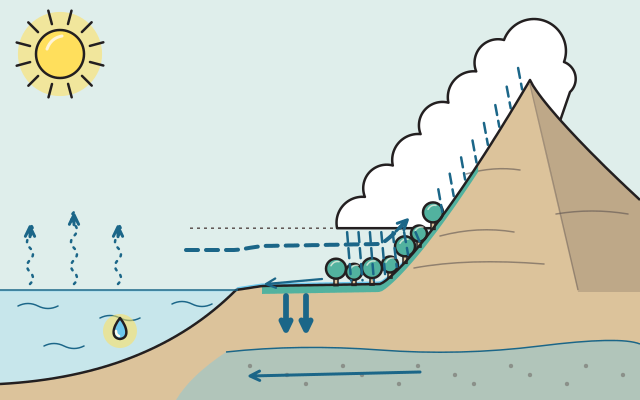
The drawing shows where it starts. It runs here once its script has loaded.El dibujo muestra dónde empieza. Funciona aquí una vez que carga su código.
Your challengeSu reto
- Make the sea give off more than five millimeters of water a day.Haga que el mar suelte más de cinco milímetros de agua al día. Not done yet.Todavía no.
- Make it snow on the mountain top.Haga que nieve en la cima de la montaña. Not done yet.Todavía no.
- Follow a drop all the way around and back to the sea.Siga una gota en todo su recorrido hasta que regrese al mar. Not done yet.Todavía no.
- Bring a heavy snowfall to the mountain top: more than twenty-five millimeters of water a day.Lleve una nevada fuerte a la cima: más de veinticinco milímetros de agua al día. Not done yet.Todavía no.
Every challenge done. Now try it for real at home.Todos los retos logrados. Ahora pruébelo de verdad en casa.
Water the sea gives offAgua que suelta el mar
Water that falls on the mountainsideAgua que cae en la ladera
It fallsCae
Cloud base:Base de la nube:
Snow line:Límite de nieve:
Rain on the land:Lluvia en la tierra:
Blue arrows are water on the move: vapor rising from the sea, the wind carrying it up the mountain, rain running off or soaking in. Dashed lines mark the cloud base and the snow line.Las flechas azules son agua en movimiento: vapor que sube del mar, el viento que lo lleva montaña arriba, lluvia que escurre o se filtra. Las líneas punteadas marcan la base de la nube y el límite de nieve.
What is happeningQué está pasando
The sun drives the water cycle. Its energy makes water evaporate from the sea as vapor, a gas you cannot see. Stronger sunshine and warmer water make it evaporate faster.El sol mueve el ciclo del agua. Su energía hace que el agua del mar se evapore como vapor, un gas que no se ve. Con más sol y agua más cálida, se evapora más rápido.
The wind carries the moist air over the land and pushes it up the mountain. Air that rises spreads out and cools. Once it has cooled to its dew point, the vapor condenses on tiny specks of dust into droplets, and a cloud appears.El viento lleva el aire húmedo sobre la tierra y lo empuja montaña arriba. El aire que sube se expande y se enfría. Cuando se enfría hasta su punto de rocío, el vapor se condensa en partículas diminutas de polvo y forma gotitas, y aparece una nube.
Droplets bump together and grow until they are heavy enough to fall. Where the air is below freezing the water falls as snow, which is why a high mountain can wear snow while the land below gets rain. The far side of the mountain stays dry, because the air has already let go of its water.Las gotitas chocan y crecen hasta pesar lo suficiente para caer. Donde el aire está bajo cero, el agua cae como nieve, y por eso una montaña alta puede tener nieve mientras la tierra de abajo recibe lluvia. El otro lado de la montaña se queda seco, porque el aire ya soltó su agua.
On the ground, rain soaks in or runs off. A forest floor drinks most of it; pavement and roofs send most of it into the river. Rivers and groundwater carry the water back to the sea, and the cycle goes on.En el suelo, la lluvia se filtra o escurre. El suelo de un bosque absorbe casi toda; el pavimento y los techos mandan casi toda al río. Los ríos y el agua subterránea regresan el agua al mar, y el ciclo continúa.
Things to tryCosas para probar
- Slide the sunshine from winter to summer and watch the vapor arrows and the rain grow.Mueva el sol de invierno a verano y vea cómo crecen las flechas de vapor y la lluvia.
- Cool the air one degree at a time and watch the snow line come down the mountain.Enfríe el aire de grado en grado y vea cómo baja el límite de nieve por la montaña.
- Change the land from forest to a city and compare how much of the rain runs off.Cambie la tierra de bosque a ciudad y compare cuánta lluvia escurre.
- Press the drop button again and again, and read what moves the water at each step.Presione el botón de la gota una y otra vez, y lea qué mueve el agua en cada paso.
This is a model. Its equations for evaporation, clouds and cooling are real, but how much moisture the air carries, the steady wind and the share of a cloud’s water that falls are set by assumptions, and the sea is taken to be as warm as the air. Real storms vary a great deal, and plants give off water too, which the model leaves out.Este es un modelo. Sus ecuaciones de la evaporación, las nubes y el enfriamiento son reales, pero la humedad que lleva el aire, el viento constante y la parte del agua de una nube que cae son supuestos, y el mar se toma tan cálido como el aire. Las tormentas reales cambian mucho, y las plantas también sueltan agua, algo que el modelo deja fuera.
Open the simulation on its own pageAbrir la simulación en su propia página
Your engineering challengeSu reto de ingeniería
Engineer the clearest water. Using the same muddy water each time, change the order and thickness of your layers, judge each result against a white card, and try to beat your first filter.Diseñe el agua más clara. Con la misma agua lodosa cada vez, cambie el orden y el grosor de sus capas, juzgue cada resultado contra una tarjeta blanca e intente superar su primer filtro.
Make it an experimentConviértalo en un experimento
Science is about changing one thing and watching what happens. Write down your guess, your hypothesis, before you start.La ciencia se trata de cambiar una cosa y observar qué pasa. Escriba su suposición, su hipótesis, antes de empezar.
- Change only the order: gravel on top of sand, then sand on top of gravel, with the same amounts of each.Cambie solo el orden: grava sobre arena y luego arena sobre grava, con la misma cantidad de cada una.
- Change only the sand: a thin layer, then one twice as deep, and compare how clear and how fast the water comes out.Cambie solo la arena: una capa delgada y luego una del doble de alto, y compare qué tan clara y qué tan rápido sale el agua.
- Change only the number of passes: pour the same water through once, then pour it through a second time, and compare.Cambie solo el número de pasadas: pase la misma agua una vez, luego pásela una segunda vez, y compare.
Use it, share it, adapt itÚsela, compártala, adáptela
The credit to copyEl crédito para copiar
Free BYRD, CC BY. “Build a sand and gravel water filter, never to drink” from the Byrd Academy STEM Curriculum by Byrd EDU, byrdathome.org.Free BYRD, CC BY. “Construya un filtro de agua con arena y grava, nunca para tomar”, del Currículo STEM de Byrd Academy, de Byrd EDU, byrdathome.org.
This is free to use, share and adapt, even commercially, under the Creative Commons Attribution 4.0 International license (CC BY 4.0), with this credit. What Free BYRD means.Esto es libre de usar, compartir y adaptar, incluso con fines comerciales, bajo la licencia Creative Commons Atribución 4.0 Internacional (CC BY 4.0), con este crédito. Qué significa Free BYRD.