
Virtual toursRecorridos virtualesTOUR-0009

TOUR-0009

Virtual tour, 8 minutes, 8 stopsRecorrido virtual, 8 minutos, 8 paradas

A water treatment plant: from the lake to your tapUna planta de tratamiento de agua: del lago a su llave

Follow lake and river water through a treatment plant, where screens, sticky clumps, sand and a germ killer make it safe to drink, and workers test it all along the way.Siga el agua de lagos y ríos por una planta de tratamiento, donde rejillas, grumos pegajosos, arena y un desinfectante la vuelven segura para beber, y el personal la analiza en todo el camino.

AgesEdades
Every age. Best for ages 5 and up.Todas las edades. Ideal desde los 5 años.
TopicTema
Matter and chemistryMateria y química
HowCómo
Tap the ring, or use Go deeper or the arrow keys.Toque el anillo, o use Más adentro o las flechas del teclado.

The MESH'D components this tour shows:Los componentes MESH'D que muestra:ManufacturingManufactura

The stopsLas paradas

Look forBusque

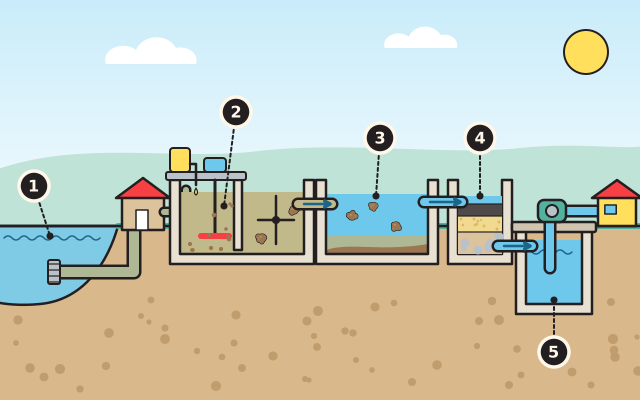
  1. The lakeEl lago
  2. The mixing tanksLos tanques de mezcla
  3. The settling basinEl tanque de sedimentación
  4. The filterEl filtro
  5. The clean water tankEl tanque de agua limpia

Stop 1Parada 1

The treatment plantLa planta de tratamiento

Water utilities pipe water from a lake, a river or under the ground to a treatment plant, which cleans it so it is safe to drink.Los servicios de agua llevan el agua por tubos desde un lago, un río o el subsuelo hasta una planta de tratamiento, que la limpia para que sea segura para beber.

Most plants use a series of steps: coagulation, flocculation, sedimentation, filtration and disinfection. Big words, simple ideas: make the dirt clump, let it sink, filter the water, then kill the germs.La mayoría de las plantas siguen una serie de pasos: coagulación, floculación, sedimentación, filtración y desinfección. Palabras grandes, ideas sencillas: hacer que la suciedad se junte, dejar que se hunda, filtrar el agua y luego matar los gérmenes.

Water from lakes and rivers usually needs more cleaning than water from under the ground, because it carries more sand, clay, germs and chemicals.El agua de lagos y ríos suele necesitar más limpieza que el agua del subsuelo, porque trae más arena, arcilla, gérmenes y sustancias químicas.

Try this at homePruébelo en casaThe water cycleEl ciclo del agua
Learn more: Centers for Disease Control and Prevention, How Water Treatment WorksMás información: Centers for Disease Control and Prevention, How Water Treatment Works

Next: Water comes inSiguiente: El agua entra

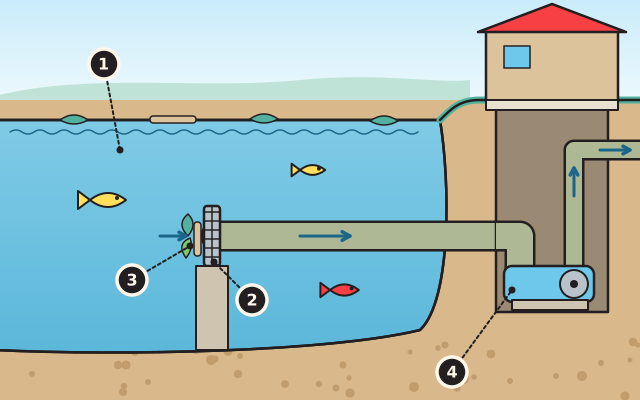
Look forBusque

  1. The lakeEl lago
  2. The screenLa rejilla
  3. Sticks and leaves it stopsPalos y hojas que detiene
  4. The raw water pumpLa bomba de agua cruda

Stop 2Parada 2

Water comes inEl agua entra

Water that has not been treated yet is called raw water. At one city's plant, raw water from a lake is screened first, to take out large floating things like sticks and leaves.El agua que todavía no se ha tratado se llama agua cruda. En la planta de una ciudad, el agua cruda de un lago pasa primero por rejillas que sacan las cosas grandes que flotan, como palos y hojas.

Then raw water pumps move it on into the plant. This plant cleans water to meet national standards for safe drinking water, enforced by the federal Environmental Protection Agency.Después, las bombas de agua cruda la llevan a la planta. Esta planta limpia el agua para cumplir las normas nacionales de agua potable, que hace cumplir la Agencia de Protección Ambiental federal.

Try this at homePruébelo en casaBuild a size gate and sort what fits throughConstruya una puerta de tamaños y clasifique lo que pasa por ella

Learn more: City of Concord, New Hampshire, Water TreatmentMás información: City of Concord, New Hampshire, Water Treatment

Next: CoagulationSiguiente: Coagulación

Look forBusque

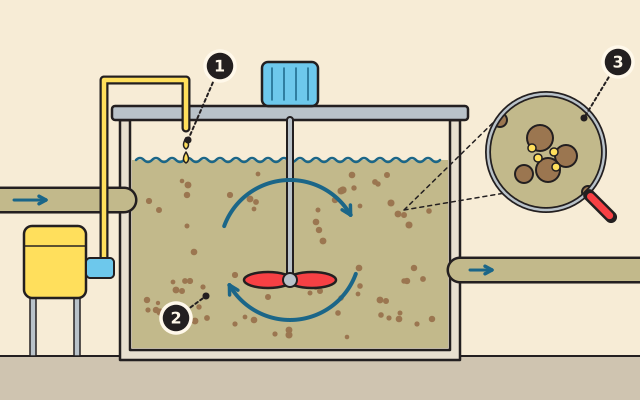
  1. The chemicals going inLas sustancias químicas que entran
  2. Tiny bits of dirtPedacitos diminutos de tierra
  3. Bits starting to stickPedacitos que empiezan a pegarse

Stop 3Parada 3

CoagulationCoagulación

Coagulation is often the first step of the cleaning. Workers add chemicals that help dirt and other tiny particles stick together.La coagulación suele ser el primer paso de la limpieza. El personal agrega sustancias químicas que ayudan a que la tierra y otras partículas diminutas se peguen entre sí.

The chemicals they use most are certain kinds of salts, aluminum or iron. With them, the tiny bits begin to bind together.Las sustancias más comunes son ciertos tipos de sales, aluminio o hierro. Con ellas, los pedacitos diminutos empiezan a unirse.

Learn more: Centers for Disease Control and Prevention, How Water Treatment WorksMás información: Centers for Disease Control and Prevention, How Water Treatment Works

Next: FlocculationSiguiente: Floculación

Look forBusque

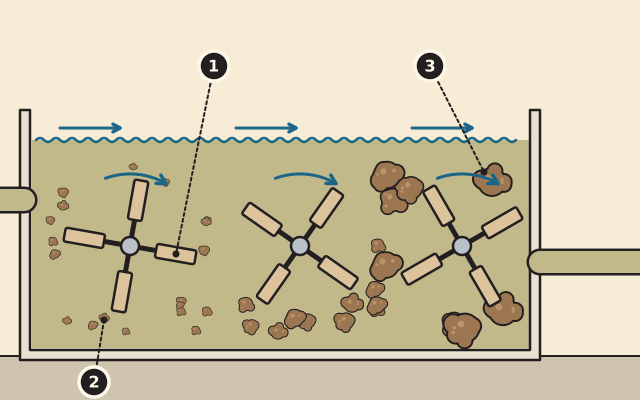
  1. The slow paddlesLas paletas lentas
  2. Small flocsFlóculos pequeños
  3. Big, heavy flocsFlóculos grandes y pesados

Stop 4Parada 4

FlocculationFloculación

Flocculation is gentle, slow mixing of the water. As it turns, the sticky bits gather into larger, heavier clumps called flocs.La floculación es mezclar el agua con calma, despacio. Mientras gira, los pedacitos pegajosos se juntan en grumos más grandes y pesados llamados flóculos.

Workers often add more chemicals here to help the flocs form. Watch them grow from left to right, from specks to fluffy clumps.Muchas veces el personal agrega aquí más sustancias químicas para ayudar a que se formen los flóculos. Mire cómo crecen de izquierda a derecha, de puntitos a grumos esponjosos.

Learn more: Centers for Disease Control and Prevention, How Water Treatment WorksMás información: Centers for Disease Control and Prevention, How Water Treatment Works

Next: SedimentationSiguiente: Sedimentación

Look forBusque

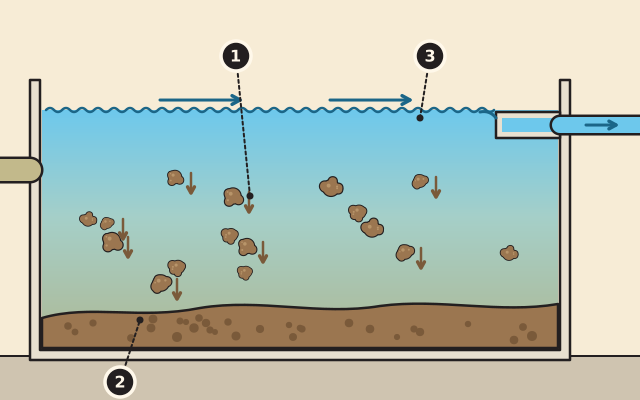
  1. Flocs sinkingFlóculos que se hunden
  2. Flocs settled on the bottomFlóculos asentados en el fondo
  3. Clear water on topAgua clara arriba

Stop 5Parada 5

SedimentationSedimentación

Sedimentation separates the solids from the water. Flocs are heavier than water, so in this basin they settle to the bottom.La sedimentación separa los sólidos del agua. Los flóculos pesan más que el agua, así que en este tanque se asientan en el fondo.

Once the flocs have settled, the clear water on top flows on to the filters. Look at the color change from the murky bottom to the blue top.Cuando los flóculos ya se asentaron, el agua clara de arriba sigue hacia los filtros. Observe el cambio de color, del fondo turbio a la parte azul de arriba.

Try this at homePruébelo en casaFind out where the salt went, then catch a gasDescubra adónde se fue la sal y luego atrape un gas

Learn more: Centers for Disease Control and Prevention, How Water Treatment WorksMás información: Centers for Disease Control and Prevention, How Water Treatment Works

Next: FiltrationSiguiente: Filtración

Look forBusque

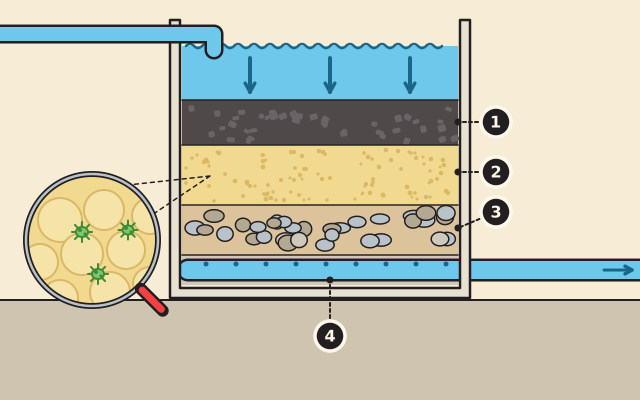
  1. CharcoalCarbón
  2. SandArena
  3. GravelGrava
  4. The pipe that collects the clean waterEl tubo que recoge el agua limpia

Stop 6Parada 6

FiltrationFiltración

Next the water flows through filters made of materials such as sand, gravel and charcoal. Each has holes of a different size.Luego el agua pasa por filtros hechos de materiales como arena, grava y carbón. Cada uno tiene huecos de distinto tamaño.

Filters catch germs such as parasites, bacteria and viruses, and other tiny particles. Activated carbon, a kind of charcoal, takes away bad smells.Los filtros atrapan gérmenes como parásitos, bacterias y virus, y otras partículas diminutas. El carbón activado, un tipo de carbón, quita los malos olores.

Try this at homePruébelo en casaBuild a sand and gravel water filter, never to drinkConstruya un filtro de agua con arena y grava, nunca para tomar

Learn more: Centers for Disease Control and Prevention, How Water Treatment WorksMás información: Centers for Disease Control and Prevention, How Water Treatment Works

Next: DisinfectionSiguiente: Desinfección

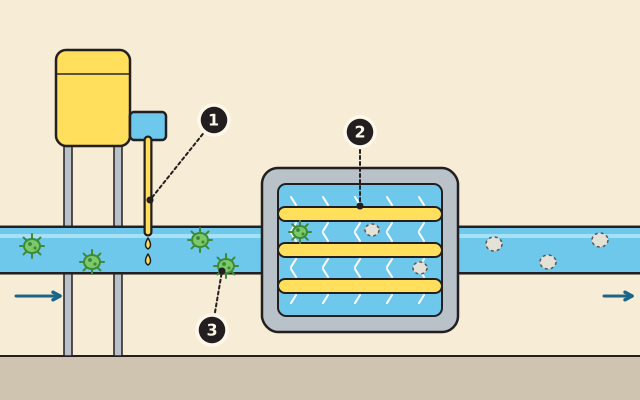
Look forBusque

  1. Chlorine going inEl cloro que entra
  2. Ultraviolet lampsLámparas de luz ultravioleta
  3. GermsGérmenes

Stop 7Parada 7

DisinfectionDesinfección

Disinfection is often the last step. Workers add a disinfectant, such as chlorine, to kill any germs that are left.La desinfección suele ser el último paso. El personal agrega un desinfectante, como el cloro, para matar los gérmenes que queden.

A little of it stays in the water on purpose, and keeps killing germs in the pipes between the plant and your tap.Un poco se queda en el agua a propósito y sigue matando gérmenes en los tubos entre la planta y su llave.

Some plants also shine ultraviolet light through the water. It kills germs well inside the plant, but it does not keep working in the pipes.Algunas plantas también hacen pasar luz ultravioleta por el agua. Esa luz mata bien los gérmenes dentro de la planta, pero no sigue funcionando en los tubos.

Learn more: Centers for Disease Control and Prevention, How Water Treatment WorksMás información: Centers for Disease Control and Prevention, How Water Treatment Works

Next: Testing, and the trip homeSiguiente: Las pruebas y el viaje a casa

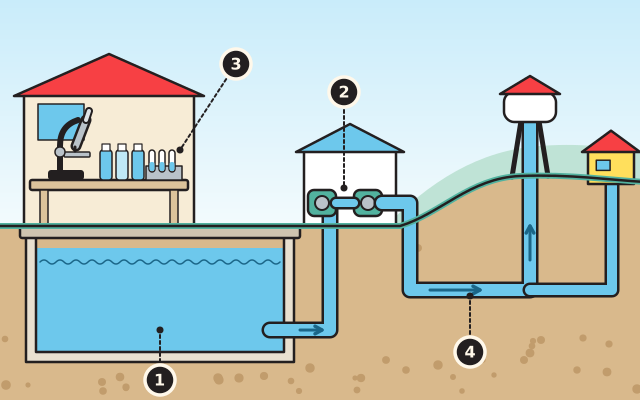
The last stop cut open: a big tank of clean blue water under the ground, a lab above it with sample bottles, test tubes and a microscope, a pump house with two pumps, and blue pipes to a water tower and a house on the hill.

Look forBusque

  1. The clearwellEl tanque de agua clara
  2. The pumpsLas bombas
  3. The labEl laboratorio
  4. The pipes to townLos tubos hacia el pueblo

Stop 8Parada 8

Testing, and the trip homeLas pruebas y el viaje a casa

The clean water waits in a big tank called a clearwell. Then pumps push it out into the pipes that carry it to homes.El agua limpia espera en un tanque grande llamado tanque de agua clara. Luego unas bombas la empujan hacia los tubos que la llevan a las casas.

All along the way, the plant checks its work. Workers test water samples from each step every day in the plant's own lab, and outside labs run more tests.En todo el camino, la planta revisa su trabajo. El personal analiza muestras de agua de cada paso todos los días en el laboratorio de la planta, y otros laboratorios hacen más pruebas.

Trained, certified operators watch the plant all day and all night, every day of the year.Operadores capacitados y certificados vigilan la planta de día y de noche, todos los días del año.

Learn more: City of Anacortes, Washington, Treatment ProcessMás información: City of Anacortes, Washington, Treatment Process

Where the facts come fromDe dónde vienen los datos

To learn more about every stop. The drawings are byrd@home's own, simplified to show how the parts work.Para saber más de cada parada. Los dibujos son de byrd@home, simplificados para mostrar cómo funcionan las partes.

Use it, share it, adapt itÚsela, compártala, adáptela

The credit to copyEl crédito para copiar

Free BYRD, CC BY. “A water treatment plant: from the lake to your tap” from the Byrd Academy STEM Curriculum by Byrd EDU, byrdathome.org.Free BYRD, CC BY. “Una planta de tratamiento de agua: del lago a su llave”, del Currículo STEM de Byrd Academy, de Byrd EDU, byrdathome.org.

This is free to use, share and adapt, even commercially, under the Creative Commons Attribution 4.0 International license (CC BY 4.0), with this credit. What Free BYRD means.Esto es libre de usar, compartir y adaptar, incluso con fines comerciales, bajo la licencia Creative Commons Atribución 4.0 Internacional (CC BY 4.0), con este crédito. Qué significa Free BYRD.

Keep goingSiga adelante

What to do nextQué hacer después

Make it harderHágalo más difícil

Chlorine keeps killing germs in the pipes, but ultraviolet light does not. Explain why a plant might use both. Then, from memory, put the five steps in order and say what each one takes out of the water.El cloro sigue matando gérmenes en los tubos, pero la luz ultravioleta no. Explique por qué una planta podría usar los dos. Luego, de memoria, ponga los cinco pasos en orden y diga qué quita cada uno del agua.

For a younger onePara alguien más pequeño

Stir a spoonful of garden dirt into a clear jar of water, then watch without touching. What sinks first? What keeps the water cloudy? Treatment plants make those tiny cloudy bits clump so they sink too. Look, and do not drink it.Mezcle una cucharada de tierra del jardín en un frasco transparente con agua y observe sin tocar. ¿Qué se hunde primero? ¿Qué deja el agua turbia? Las plantas de tratamiento hacen que esos pedacitos que enturbian se junten para que también se hundan. Mire, y no la beba.

Try this nextPruebe esto después

SIM-0022

The water cycleEl ciclo del agua

Turn up the sun and the warmth, then follow water from the sea into a cloud, down onto a mountain as rain or snow, and back to the sea.Suba el sol y el calor, y siga el agua del mar a una nube, de ahí a una montaña como lluvia o nieve, y de regreso al mar.

  • Ways in:Formas de empezar:
  • SimulateSimular

Best for ages 5 and upIdeal desde los 5 años

DesignDiseño

Free BYRD, CC BYSimulationSimulación

STEMGrades 3 to 5Grados 3 a 5 What is stuff made of?¿De qué están hechas las cosas? STEM-ES-05

Kitchen ChemistryQuímica en la cocina

Explore solids, liquids and gases, find out what dissolving really means, and catch a reaction's gas in a balloon. Goggles on, and taste nothing.Explore sólidos, líquidos y gases, descubra qué significa de verdad disolver y atrape en un globo el gas de una reacción. Con lentes de seguridad puestos, y sin probar nada.

  • Ways in:Formas de empezar:
  • ReadLeer
  • DoHacer
  • SimulateSimular

Grades 3 to 5Grados 3 a 5

ManufacturingManufactura

Free BYRD, CC BYCurriculum unitUnidad del currículo

BH-0012

Find out where the salt went, then catch a gasDescubra adónde se fue la sal y luego atrape un gas

Stir salt, sugar and sand into water and find evidence of where they went, then catch the gas from baking soda and vinegar in a balloon.Mezcle sal, azúcar y arena en agua y busque pruebas de adónde se fueron, y luego atrape en un globo el gas del bicarbonato con vinagre.

  • Ways in:Formas de empezar:
  • ReadLeer
  • DoHacer
  • SimulateSimular

Best for ages 5 to 12Ideal de 5 a 12 años

ManufacturingManufactura

Free BYRD, CC BYHome activityActividad en casa

BH-0046

Break a trade into tasks and brief someone who does itDivida un oficio en tareas y presente su análisis a alguien que lo ejerce

Pick a trade in your region, list its real tasks, sort each one as something AI could automate, assist or never replace, with reasons, then brief a family member or neighbor in that trade and take their hardest question.Elija un oficio de su región, haga la lista de sus tareas reales, clasifique cada una como algo que la IA podría automatizar, asistir o nunca reemplazar, con razones, y luego presente su análisis a un familiar o vecino de ese oficio y reciba su pregunta más difícil.

  • Ways in:Formas de empezar:
  • ReadLeer
  • DoHacer

Best for ages 13 and upIdeal desde los 13 años

DesignDiseño

Free BYRD, CC BYHome activityActividad en casa

Explore everythingExplorar todo