
ExploreExplorarBH-0073
Balance a ruler seesaw with toy blocksEquilibre un subibaja de regla con bloques de juguete
Rest a ruler on a cardboard tube, set blocks on each side, and slide them in and out until the seesaw balances.Apoye una regla sobre un tubo de cartón, ponga bloques de cada lado y muévalos hacia adentro y hacia afuera hasta que el subibaja quede en equilibrio.
- Ways in:Formas de empezar:
- Read, 3 minutesLeer, 3 minutos
- Do, 15 minutesHacer, 15 minutos
- AgesEdades
- Every age. Best for ages 3 to 6.Todas las edades. Ideal de 3 a 6 años.
- CostCosto
- Things already at homeCosas que ya hay en casa
The MESH'D components this item uses:Los componentes MESH'D que usa:ManufacturingManufactura
Do, about 15 minutesHacer, unos 15 minutos
Build it at homeConstrúyalo en casa
StepsPasos
- Tape the cardboard tube to the floor or a low table so it cannot roll.Pegue con cinta el tubo de cartón al piso o a una mesa baja para que no ruede.
- Lay the ruler across the tube and slide it until it rests level by itself. That spot is the pivot.Ponga la regla atravesada sobre el tubo y deslícela hasta que quede nivelada sola. Ese lugar es el pivote.
- Set one block on each end. Does it still balance?Ponga un bloque en cada extremo. ¿Sigue en equilibrio?
- Your child slides one block in toward the middle. Watch which way the ruler tips, and say it: the far block wins.La niña o el niño mueve un bloque hacia el centro. Vean hacia dónde se inclina la regla, y díganlo: gana el bloque que está más lejos.
- Stack two blocks halfway between the middle and one end. Ask: where should one block go on the other side to balance them? Your child tries spots until it holds.Ponga dos bloques, uno sobre otro, a medio camino entre el centro y un extremo. Pregunte: ¿dónde debe ir un solo bloque del otro lado para equilibrarlos? La niña o el niño prueba lugares hasta que se sostenga.
- Mark the balancing spots with small pieces of tape, and test them again.Marquen con pedacitos de cinta los lugares donde se equilibra, y pruébenlos otra vez.
- Say what you found: far from the middle pushes harder.Digan lo que descubrieron: lejos del centro empuja más fuerte.
What you needLo que necesita
- A ruler, a paint stirrer or a stiff strip of cardboardUna regla, un palo para revolver pintura o una tira de cartón firme
- A sturdy cardboard tube, like the one inside a roll of foilUn tubo de cartón firme, como el que trae por dentro un rollo de papel de aluminio
- TapeCinta adhesiva
- Several matching blocks, each too big to fit through a toilet-paper tubeVarios bloques iguales, cada uno demasiado grande para caber dentro de un tubo de papel higiénico
- One heavier toy, for the testUn juguete más pesado, para la prueba
Things already at home.Cosas que ya hay en casa.
Stay in the room and watch. Build on the floor or a low table so nothing falls far, and keep fingers and toes out from under the ruler's ends. Tape the tube down so it cannot roll. Use blocks and toys that are too big to fit through a toilet-paper tube, never coins, for a child under three or one who still puts things in their mouth, and do the same when a baby or toddler is nearby. A seesaw on a screen may use coins; a real one at home uses blocks.Quédese en el cuarto y observe. Armen todo en el piso o en una mesa baja para que nada caiga desde muy alto, y mantengan los dedos de manos y pies fuera de debajo de las puntas de la regla. Pegue el tubo con cinta para que no ruede. Use bloques y juguetes demasiado grandes para caber dentro de un tubo de papel higiénico, nunca monedas, para un niño menor de tres años o que todavía se lleva cosas a la boca, y haga lo mismo si hay un bebé o un niño pequeño cerca. Un subibaja en una pantalla puede usar monedas; uno de verdad en casa usa bloques.
Read, 3 minutesLeer, 3 minutos
The big ideaLa gran idea
A seesaw is a lever: a stiff bar that turns on a balance point called the pivot. Whether it tips depends on two things together: how heavy a load is and how far from the pivot it sits. A load far out on the bar turns it harder than the same load near the middle. That is why a small child at the very end of a playground seesaw can balance a bigger person sitting closer in. When the turning on one side matches the turning on the other, the bar rests level and still. Builders use this when they hang the counterweight on a crane, and you use it every time you carry a heavy bag close to your body, where it is easier to hold.Un subibaja es una palanca: una barra firme que gira sobre un punto de apoyo llamado pivote. Que se incline o no depende de dos cosas juntas: qué tan pesada es una carga y qué tan lejos del pivote está. Una carga en la punta de la barra la hace girar con más fuerza que la misma carga cerca del centro. Por eso un niño pequeño sentado en la mera punta de un subibaja puede equilibrar a una persona más grande sentada más cerca del centro. Cuando el giro de un lado es igual al giro del otro, la barra se queda nivelada y quieta. Quienes construyen usan esta idea al colgar el contrapeso de una grúa, y usted la usa cada vez que carga una bolsa pesada pegada al cuerpo, donde es más fácil sostenerla.
Your engineering challengeSu reto de ingeniería
Stack two matching blocks halfway out on one side. Where does a single block have to go on the other side to balance them? Mark the spots with tape and see whether your marks still work tomorrow.Ponga dos bloques iguales, uno sobre otro, a la mitad de un lado. ¿Dónde tiene que ir un solo bloque del otro lado para equilibrarlos? Marque los lugares con cinta y vea si sus marcas todavía funcionan mañana.
Make it an experimentConviértalo en un experimento
Science is about changing one thing and watching what happens. Write down your guess, your hypothesis, before you start.La ciencia se trata de cambiar una cosa y observar qué pasa. Escriba su suposición, su hipótesis, antes de empezar.
- Keep one block on each end and slide just one of them toward the middle. Which way does the ruler tip?Deje un bloque en cada extremo y mueva solo uno de ellos hacia el centro. ¿Hacia dónde se inclina la regla?
- Keep the blocks where they are and slide the tube away from the middle of the ruler. What do you have to change now to make it balance?Deje los bloques donde están y mueva el tubo lejos del centro de la regla. ¿Qué tiene que cambiar ahora para que se equilibre?
- Keep the spots the same and swap one block for a heavier toy. Where must the block on the other side move to balance it again?Deje los mismos lugares y cambie un bloque por un juguete más pesado. ¿Adónde debe moverse el bloque del otro lado para equilibrarlo otra vez?
Use it, share it, adapt itÚsela, compártala, adáptela
The credit to copyEl crédito para copiar
Free BYRD, CC BY. “Balance a ruler seesaw with toy blocks” from the Byrd Academy STEM Curriculum by Byrd EDU, byrdathome.org.Free BYRD, CC BY. “Equilibre un subibaja de regla con bloques de juguete”, del Currículo STEM de Byrd Academy, de Byrd EDU, byrdathome.org.
This is free to use, share and adapt, even commercially, under the Creative Commons Attribution 4.0 International license (CC BY 4.0), with this credit. What Free BYRD means.Esto es libre de usar, compartir y adaptar, incluso con fines comerciales, bajo la licencia Creative Commons Atribución 4.0 Internacional (CC BY 4.0), con este crédito. Qué significa Free BYRD.
Keep goingSiga adelante
What to do nextQué hacer después
Make it harderHágalo más difícil
Balance the heavier toy with blocks: count how many blocks it takes at the far end, then move the toy halfway in toward the middle and count again. What do you notice about the two counts?Equilibre el juguete pesado con bloques: cuente cuántos bloques hacen falta en la punta, luego mueva el juguete a medio camino hacia el centro y cuente otra vez. ¿Qué nota en las dos cuentas?
For a younger onePara alguien más pequeño
Use one block on each end and play tip and level: your little one moves a block, the ruler tips, and you both say tip. Then fix it together and say level.Use un bloque en cada extremo y jueguen a se inclina y nivelado: su pequeño mueve un bloque, la regla se inclina y los dos dicen se inclina. Luego arréglenla juntos y digan nivelado.
Try this nextPruebe esto después
The Wobble TowerLa torre que tiembla
Your child builds the tallest block tower that can survive a table bump, then rebuilds it stronger.Su niño o niña construye la torre de bloques más alta que aguante un golpecito a la mesa, y luego la vuelve a construir más fuerte.
- Ways in:Formas de empezar:
- DoHacer
about four to five yearsde cuatro a cinco años, más o menos
Free BYRD, CC BYAges zero to fiveDe cero a cinco años
Big and Little BasketCanasta de grande y chico
Your child pairs big and little versions of the same things, and you say big and little every time.Su niño junta versiones grandes y chicas de las mismas cosas, y usted dice grande y chico cada vez.
- Ways in:Formas de empezar:
- DoHacer
about one to two yearsde uno a dos años, más o menos
Free BYRD, CC BYAges zero to fiveDe cero a cinco años
 SIM-0015
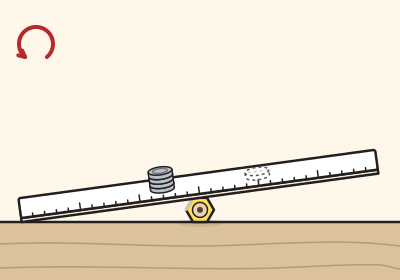
 Balance a ruler seesawEquilibre un subibaja de regla
Stack coins on a ruler resting on a pencil, see which side turns harder, and balance a big stack with one coin far out.Apile monedas sobre una regla apoyada en un lápiz, vea qué lado gira más fuerte y equilibre una pila grande con una sola moneda lejos del lápiz.
- Ways in:Formas de empezar:
- SimulateSimular
Best for ages 6 and upIdeal desde los 6 años
ManufacturingManufacturaDesignDiseño
Free BYRD, CC BYSimulationSimulación
 SIM-0007
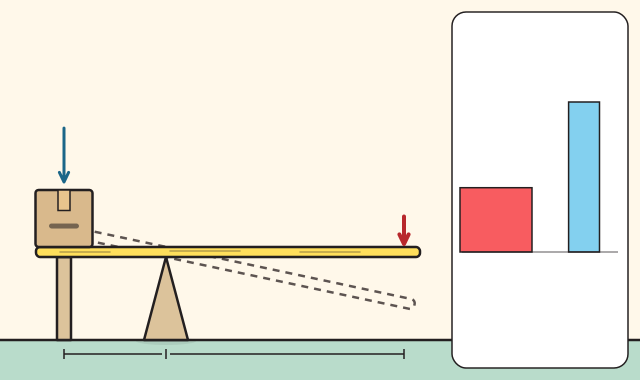
 Simple machines: trade force for distanceMáquinas simples: cambie fuerza por distancia
Lift a load with a lever, pulleys and a ramp. Each one lets you use less force, but you move farther, and the work stays the same.Levante una carga con una palanca, poleas y una rampa. Cada una le deja usar menos fuerza, pero usted recorre más distancia, y el trabajo sigue igual.
- Ways in:Formas de empezar:
- SimulateSimular
Best for ages 6 and upIdeal desde los 6 años
ManufacturingManufacturaDesignDiseño
Free BYRD, CC BYSimulationSimulación