

SimulationsSimulacionesSIM-0029
Simulate, 10 minutesSimular, 10 minutos
Red cabbage color testLa prueba de color de la col morada
Red cabbage juice changes color with acids and bases. Test kitchen liquids in it, read their pH by color, then stir baking soda water into vinegar and watch the fizz pull the color back toward neutral purple.El jugo de col morada cambia de color con los ácidos y las bases. Pruebe líquidos de la cocina en él, lea su pH por el color, y luego agregue agua con bicarbonato al vinagre y vea cómo la efervescencia regresa el color hacia el morado neutro.
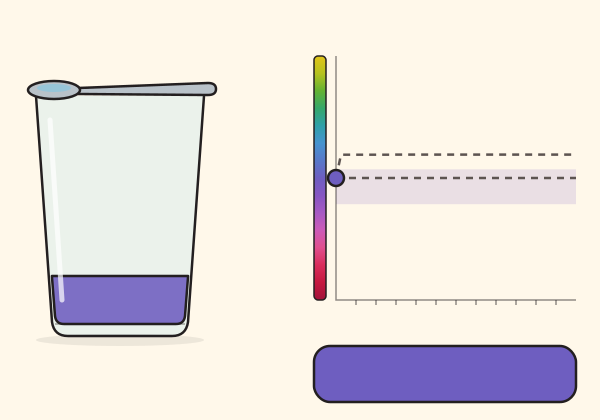
The drawing shows where it starts. It runs here once its script has loaded.El dibujo muestra dónde empieza. Funciona aquí una vez que carga su código.
Your challengeSu reto
- Turn the cabbage juice pink or red with an acid.Ponga el jugo de col rosa o rojo con un ácido. Not done yet.Todavía no.
- Find the liquid that turns the juice green.Encuentre el líquido que pone el jugo verde. Not done yet.Todavía no.
- Stir baking soda water into lemon juice or vinegar until the juice is purple again.Agregue agua con bicarbonato al jugo de limón o al vinagre hasta que el jugo vuelva a estar morado. Not done yet.Todavía no.
- With washing soda water in the cup, stir in vinegar a quarter tablespoon at a time until it is purple.Con agua con carbonato de sodio en el vaso, agregue vinagre de un cuarto de cucharada en un cuarto hasta que esté morado. Not done yet.Todavía no.
Every challenge done. Now try it for real at home.Todos los retos logrados. Ahora pruébelo de verdad en casa.
pH in the cuppH en el vaso
pH of that liquid alonepH de ese líquido solo
Gas fizzed outGas que salió
The color scale beside the curve is the cabbage’s own: acid at the bottom, base at the top, and the shaded band is its purple, near neutral. Goggles on at home, a grown-up handles anything stronger than baking soda, and nothing is ever tasted.La escala de color junto a la curva es la de la col: ácido abajo, base arriba, y la franja sombreada es su morado, cerca de neutro. En casa, con lentes de seguridad puestos, un adulto maneja todo lo que sea más fuerte que el bicarbonato, y nunca se prueba nada.
What is happeningQué está pasando
Red cabbage gets its color from pigments called anthocyanins, and they change color with how acidic or basic a liquid is. That makes cabbage juice an indicator: a liquid that tells you about another by its color.La col morada debe su color a unos pigmentos llamados antocianinas, que cambian de color según qué tan ácido o básico es un líquido. Eso hace del jugo de col un indicador: un líquido que dice algo de otro por su color.
The pH scale runs from zero to fourteen. Below seven is an acid, like lemon juice and vinegar; seven is neutral, like pure water; above seven is a base, like baking soda water. Each step is ten times stronger than the one before. Cabbage juice turns red or pink in an acid, stays purple near neutral, and goes blue, then green, then yellow in stronger and stronger bases.La escala de pH va de cero a catorce. Debajo de siete es un ácido, como el jugo de limón y el vinagre; siete es neutro, como el agua pura; arriba de siete es una base, como el agua con bicarbonato. Cada paso es diez veces más fuerte que el anterior. El jugo de col se pone rojo o rosa con un ácido, se queda morado cerca de neutro, y se pone azul, luego verde y luego amarillo con bases cada vez más fuertes.
An acid and a base use each other up when they mix, so the mix moves toward neutral. Baking soda does it with a fizz: the reaction makes carbon dioxide, the same gas that fills a balloon over a bottle of vinegar and baking soda.Un ácido y una base se gastan uno al otro al mezclarse, así que la mezcla se acerca a neutro. El bicarbonato lo hace con efervescencia: la reacción forma dióxido de carbono, el mismo gas que infla un globo sobre una botella de vinagre con bicarbonato.
Safety first, at home and here: wear goggles, let a grown-up handle anything stronger than baking soda, like washing soda, and never taste anything, even though it all comes from the kitchen.Primero la seguridad, en casa y aquí: use lentes de seguridad, deje que un adulto maneje todo lo que sea más fuerte que el bicarbonato, como el carbonato de sodio, y nunca pruebe nada, aunque todo venga de la cocina.
Things to tryCosas para probar
- Test every liquid in the cup and put them in order, from the reddest to the greenest.Pruebe cada líquido en el vaso y ordénelos, del más rojo al más verde.
- With vinegar in the cup, stir in baking soda water a little at a time. When does it turn purple again?Con vinagre en el vaso, agregue agua con bicarbonato poco a poco. ¿Cuándo vuelve a ponerse morado?
- Compare lemon juice and vinegar: which one takes more baking soda water to reach purple?Compare el jugo de limón y el vinagre: ¿cuál necesita más agua con bicarbonato para llegar al morado?
- Watch the gas: how much fizzes out before the color stops changing?Observe el gas: ¿cuánto sale antes de que el color deje de cambiar?
This is a model. The colors follow published cabbage color charts, but real juice is paler or darker with how strongly it was brewed, and real liquids vary: dish soaps run from about neutral to fairly basic, so the soap here stands in for many. In a real glass the fizz keeps going for a while, and the model lets all the extra gas out at once.Esto es un modelo. Los colores siguen tablas de color de la col publicadas, pero el jugo de verdad sale más claro o más oscuro según qué tan concentrado se preparó, y los líquidos de verdad varían: los jabones para trastes van de casi neutros a bastante básicos, así que el jabón de aquí representa a muchos. En un vaso de verdad la efervescencia dura un rato, y el modelo deja salir todo el gas de más de una vez.
Use it, share it, adapt itÚsela, compártala, adáptela
The credit to copyEl crédito para copiar
Free BYRD, CC BY. “Red cabbage color test” from the Byrd Academy STEM Curriculum by Byrd EDU, byrdathome.org.Free BYRD, CC BY. “La prueba de color de la col morada”, del Currículo STEM de Byrd Academy, de Byrd EDU, byrdathome.org.
This is free to use, share and adapt, even commercially, under the Creative Commons Attribution 4.0 International license (CC BY 4.0), with this credit. What Free BYRD means.Esto es libre de usar, compartir y adaptar, incluso con fines comerciales, bajo la licencia Creative Commons Atribución 4.0 Internacional (CC BY 4.0), con este crédito. Qué significa Free BYRD.