
Virtual toursRecorridos virtualesTOUR-0007

TOUR-0007

Virtual tour, 8 minutes, 8 stopsRecorrido virtual, 8 minutos, 8 paradas

Inside a carDentro de un carro

Open up a car, stop by stop: the engine that burns fuel, the battery and motor of an electric car, the gears, the tires and the brakes, and the sensors, belts and air bags that help keep everyone safe.Abra un carro, parada por parada: el motor que quema combustible, la batería y el motor de un carro eléctrico, los engranajes, las llantas y los frenos, y los sensores, cinturones y bolsas de aire que ayudan a proteger a todos.

AgesEdades
Every age. Best for ages 8 and up.Todas las edades. Ideal desde los 8 años.
TopicTema
Forces and motionFuerzas y movimiento
HowCómo
Tap the ring, or use Go deeper or the arrow keys.Toque el anillo, o use Más adentro o las flechas del teclado.

The MESH'D components this tour shows:Los componentes MESH'D que muestra:ManufacturingManufacturaElectronicsElectrónicaSoftwareSoftware

The stopsLas paradas

Look forBusque

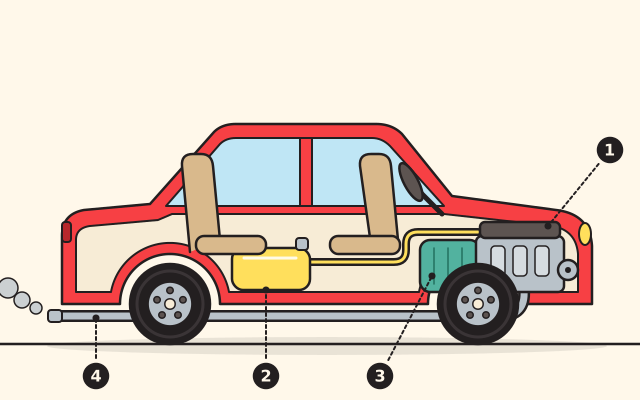
  1. The engineEl motor
  2. The fuel tankEl tanque de combustible
  3. The transmissionLa transmisión
  4. The exhaust pipeEl tubo de escape

Stop 1Parada 1

The whole carEl carro completo

A gas car keeps its fuel in a tank. A pump sends the fuel through a fuel line to the engine, where it burns mixed with air.Un carro de gasolina guarda su combustible en un tanque. Una bomba lleva el combustible por una línea hasta el motor, donde se quema mezclado con aire.

The transmission carries the engine's power to the wheels, and the exhaust pipe carries the burned gases out the back. A small battery starts the engine and powers the car's electronics, and a computer called the control module watches over it all.La transmisión lleva la fuerza del motor a las ruedas, y el tubo de escape saca los gases quemados por atrás. Una batería pequeña arranca el motor y da energía a la electrónica del carro, y una computadora llamada módulo de control lo vigila todo.
Learn more: US Department of Energy, Alternative Fuels Data Center, How Do Gasoline Cars Work?Más información: US Department of Energy, Alternative Fuels Data Center, How Do Gasoline Cars Work?

Next: The engineSiguiente: El motor

Look forBusque

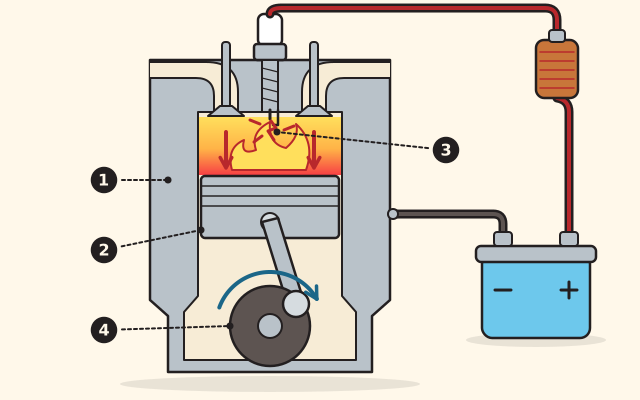
  1. The cylinderEl cilindro
  2. The pistonEl pistón
  3. The sparkLa chispa
  4. The crankshaftEl cigüeñal

Stop 2Parada 2

The engineEl motor

Inside the engine, a piston slides up and down in a cylinder, and the fuel burns right there, inside the engine itself.Dentro del motor, un pistón sube y baja en un cilindro, y el combustible se quema ahí mismo, dentro del motor.

It works in four strokes. Intake lets in fuel mixed with air. Compression squeezes it. A spark sets it burning, and the hot gases push the piston down: that is the power stroke. Exhaust sends the burned gases out.Funciona en cuatro tiempos. La admisión deja entrar el combustible mezclado con aire. La compresión lo aprieta. Una chispa lo enciende, y los gases calientes empujan el pistón hacia abajo: ese es el tiempo de fuerza. El escape saca los gases quemados.

The piston turns the crankshaft, and through gears that turning drives the wheels.El pistón hace girar el cigüeñal, y por medio de engranajes ese giro mueve las ruedas.

Try this at homePruébelo en casaAir pressure in a bottleLa presión del aire en una botella

Learn more: US Department of Energy, Internal Combustion Engine BasicsMás información: US Department of Energy, Internal Combustion Engine Basics

Next: The electric carSiguiente: El carro eléctrico

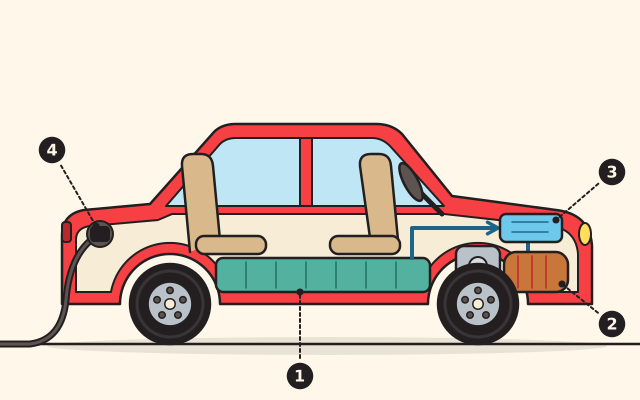
Look forBusque

  1. The battery packEl paquete de baterías
  2. The electric motorEl motor eléctrico
  3. The controllerEl controlador
  4. The charge portEl puerto de carga

Stop 3Parada 3

The electric carEl carro eléctrico

An electric car has an electric motor in place of an engine. A large battery pack stores the electricity, and the motor uses it to drive the wheels. A controller sets how fast the motor turns.Un carro eléctrico tiene un motor eléctrico en lugar de un motor de gasolina. Un paquete grande de baterías guarda la electricidad, y el motor la usa para mover las ruedas. Un controlador decide qué tan rápido gira el motor.

To charge, the car plugs into a wall outlet or a charger at its charge port. It has no fuel tank and burns nothing, so no exhaust comes out of a tailpipe.Para cargarse, el carro se conecta a un enchufe de pared o a un cargador por su puerto de carga. No tiene tanque de combustible ni quema nada, así que no sale escape por ningún tubo.

Try this at homePruébelo en casaLight up a paper circuit cardIlumine una tarjeta con un circuito de papel

Learn more: US Department of Energy, Alternative Fuels Data Center, How Do All-Electric Cars Work?Más información: US Department of Energy, Alternative Fuels Data Center, How Do All-Electric Cars Work?

Next: Gears and steeringSiguiente: Engranajes y dirección

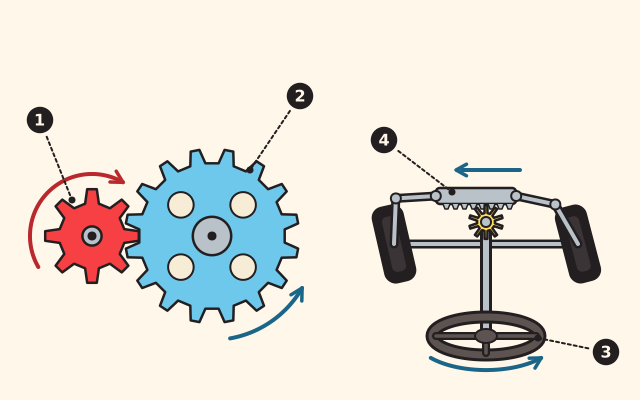
Look forBusque

  1. The small gearEl engranaje pequeño
  2. The big gearEl engranaje grande
  3. The steering wheelEl volante
  4. The rackLa cremallera

Stop 4Parada 4

Gears and steeringEngranajes y dirección

Gears trade speed for turning force. When a small gear turns a big one, the big gear turns slower but with more force. Count the teeth: a gear with twice as many teeth turns half as fast.Los engranajes cambian rapidez por fuerza de giro. Cuando un engranaje pequeño hace girar uno grande, el grande gira más despacio pero con más fuerza. Cuente los dientes: un engranaje con el doble de dientes gira a la mitad de rapidez.

Almost every car transmission is full of gears with slanted teeth, which run more smoothly and quietly. Steering uses gears too: the steering wheel turns a small gear that pushes a toothed bar, the rack, to the right or the left.Casi todas las transmisiones de carro están llenas de engranajes con dientes inclinados, que funcionan con más suavidad y menos ruido. La dirección también usa engranajes: el volante hace girar un engranaje pequeño que empuja una barra con dientes, la cremallera, a la derecha o a la izquierda.

Try this at homePruébelo en casaGears: faster or strongerEngranajes: más rápido o más fuerte

Learn more: University of Florida, Mechanical and Aerospace Engineering Design Lab, Gears and gearingMás información: University of Florida, Mechanical and Aerospace Engineering Design Lab, Gears and gearing

Next: The tiresSiguiente: Las llantas

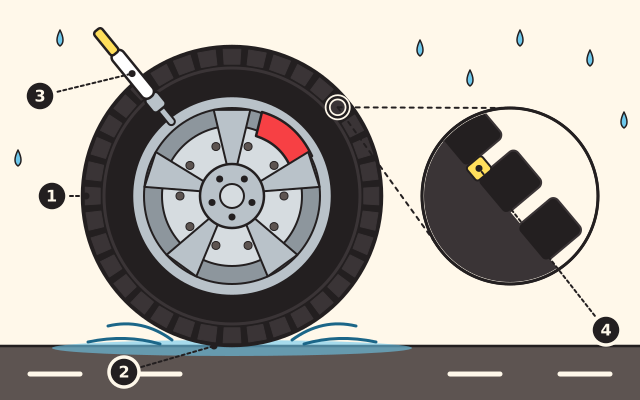
Look forBusque

  1. The treadLa banda de rodamiento
  2. Where the tire meets the roadDonde la llanta toca el camino
  3. The pressure gauge on the valveEl medidor de presión en la válvula
  4. The wear barLa barra de desgaste

Stop 5Parada 5

The tiresLas llantas

The only thing between a car and the road is its tires. The tread, the pattern of blocks and grooves, gives the grip that keeps a car from slipping and sliding, most of all on wet or icy roads.Lo único entre un carro y el camino son sus llantas. La banda de rodamiento, el dibujo de bloques y canales, da el agarre que evita que el carro resbale y se deslice, sobre todo en un camino mojado o con hielo.

Tires need the right amount of air, shown on a label by the driver's door. Check it each month with a gauge, after the car has sat for three hours or more. When the tread wears level with the little bars in its grooves, it is time for new tires.Las llantas necesitan la cantidad justa de aire, que aparece en una etiqueta junto a la puerta del conductor. Revísela cada mes con un medidor, cuando el carro lleve tres horas o más sin moverse. Cuando la banda se gasta hasta quedar al nivel de las barritas de sus canales, es hora de llantas nuevas.

Try this at homePruébelo en casaRace ramp racers with a fair testHaga carreras en rampa con una prueba justa

Learn more: National Highway Traffic Safety Administration, TiresMás información: National Highway Traffic Safety Administration, Tires

Next: The brakesSiguiente: Los frenos

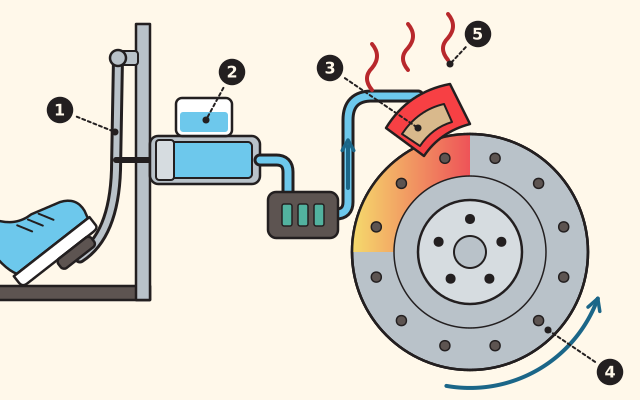
Look forBusque

  1. The brake pedalEl pedal del freno
  2. The brake fluidEl líquido de frenos
  3. The brake padLa pastilla de freno
  4. The disc, or rotorEl disco, o rotor
  5. The heatEl calor

Stop 6Parada 6

The brakesLos frenos

Press the brake pedal and it pushes a small piston into brake fluid. The fluid carries that push to pistons at the wheels, and they press the brake pads against a disc, the rotor, that spins with the wheel.Al pisar el pedal del freno, este empuja un pistón pequeño dentro del líquido de frenos. El líquido lleva ese empuje a pistones en las ruedas, y estos aprietan las pastillas contra un disco, el rotor, que gira con la rueda.

The rubbing, called friction, turns the spinning wheel's energy into heat, and the car slows and stops. Brake fluid barely squeezes, so a short push on the pedal presses hard on the pads. Air squeezes easily, so air in the brakes makes the pedal go much farther.El roce, llamado fricción, convierte la energía de la rueda que gira en calor, y el carro se frena y se detiene. El líquido de frenos casi no se comprime, así que un empuje corto en el pedal aprieta fuerte las pastillas. El aire se comprime fácilmente, así que el aire en los frenos hace que el pedal baje mucho más.

Try this at homePruébelo en casaHeat on the move: spoons and cupsEl calor en movimiento: cucharas y vasos

Learn more: University of Illinois Physics Van, How Hydraulic Brakes WorkMás información: University of Illinois Physics Van, How Hydraulic Brakes Work

Next: The sensorsSiguiente: Los sensores

Look forBusque

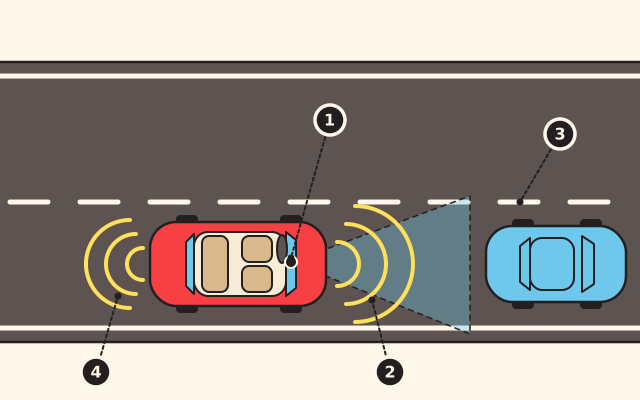
  1. The cameraLa cámara
  2. The front sensorEl sensor delantero
  3. The lane linesLas líneas del carril
  4. The rear sensorsLos sensores traseros

Stop 7Parada 7

The sensorsLos sensores

Many cars help their drivers watch the road. A camera can see the lane lines and warn a driver who drifts out of the lane. Front sensors track the car's speed, the speed of the car ahead and the distance between them, and warn if they get too close.Muchos carros ayudan a sus conductores a vigilar el camino. Una cámara puede ver las líneas del carril y avisar al conductor que se sale de su carril. Los sensores delanteros siguen la rapidez del carro, la del carro de adelante y la distancia entre ellos, y avisan si se acercan demasiado.

Automatic emergency braking presses the brakes by itself when a crash is about to happen. Backing up, a camera and parking sensors watch behind. Still, the driver is in charge, and must steer, brake and speed up.El frenado automático de emergencia pisa los frenos por sí solo cuando está por ocurrir un choque. En reversa, una cámara y sensores de estacionamiento vigilan atrás. Aun así, el conductor está a cargo y debe dirigir, frenar y acelerar.

Try this at homePruébelo en casaClock a walk and find your speed on a graphCronometre una caminata y encuentre su velocidad en una gráfica

Learn more: National Highway Traffic Safety Administration, Driver Assistance TechnologiesMás información: National Highway Traffic Safety Administration, Driver Assistance Technologies

Next: Belts and air bagsSiguiente: Cinturones y bolsas de aire

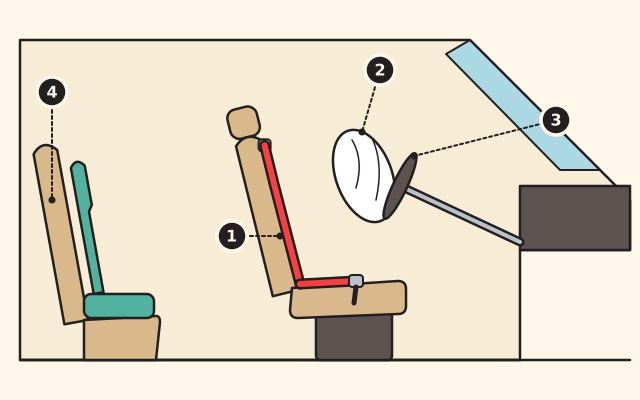
Inside a car with no one in it: the front seat with its seat belt buckled, down the seat back and low across the cushion, an air bag puffed out of the steering wheel's hub, and an empty booster seat on the back seat.

Look forBusque

  1. The seat beltEl cinturón de seguridad
  2. The air bagLa bolsa de aire
  3. The steering wheelEl volante
  4. The back seatEl asiento trasero

Stop 8Parada 8

Belts and air bagsCinturones y bolsas de aire

Seat belts are always the best protection in a crash, and air bags are made to work with them, never in place of them. An air bag keeps the head and upper body from hitting the inside of the car.Los cinturones de seguridad son siempre la mejor protección en un choque, y las bolsas de aire están hechas para funcionar con ellos, nunca en su lugar. Una bolsa de aire evita que la cabeza y la parte de arriba del cuerpo golpeen el interior del carro.

In a moderate to severe crash, a control unit signals the air bag, and a chemical reaction fills it with a harmless gas in less than one twentieth of a second. So sit well back from the steering wheel, and children under thirteen ride in the back seat.En un choque de moderado a fuerte, una unidad de control activa la bolsa, y una reacción química la llena de un gas inofensivo en menos de una vigésima de segundo. Por eso siéntese bien atrás del volante, y los niños menores de trece años viajan en el asiento trasero.

Learn more: National Highway Traffic Safety Administration, Vehicle Air Bags and Injury PreventionMás información: National Highway Traffic Safety Administration, Vehicle Air Bags and Injury Prevention

Use it, share it, adapt itÚsela, compártala, adáptela

The credit to copyEl crédito para copiar

Free BYRD, CC BY. “Inside a car” from the Byrd Academy STEM Curriculum by Byrd EDU, byrdathome.org.Free BYRD, CC BY. “Dentro de un carro”, del Currículo STEM de Byrd Academy, de Byrd EDU, byrdathome.org.

This is free to use, share and adapt, even commercially, under the Creative Commons Attribution 4.0 International license (CC BY 4.0), with this credit. What Free BYRD means.Esto es libre de usar, compartir y adaptar, incluso con fines comerciales, bajo la licencia Creative Commons Atribución 4.0 Internacional (CC BY 4.0), con este crédito. Qué significa Free BYRD.

Keep goingSiga adelante

What to do nextQué hacer después

Make it harderHágalo más difícil

Use the gear trade. A small gear with ten teeth turns a big gear with thirty: how many times must the small gear turn for the big one to turn once? Then find the gears on a bicycle, count their teeth, and work out which gear choice makes pedaling up a hill easier.Use el cambio de los engranajes. Un engranaje pequeño de diez dientes hace girar uno grande de treinta: ¿cuántas veces debe girar el pequeño para que el grande gire una vez? Luego busque los engranajes de una bicicleta, cuente sus dientes y descubra qué combinación hace más fácil pedalear cuesta arriba.

For a younger onePara alguien más pequeño

Visit a parked car with a grown-up. Run a finger along the tread of a tire and find its grooves, find the door for the fuel or the charge cable, and count the seats and the seat belts. Is there a belt for every seat?Visite un carro estacionado con una persona adulta. Pase un dedo por la banda de una llanta y encuentre sus canales, busque la tapa del combustible o del cable de carga, y cuente los asientos y los cinturones. ¿Hay un cinturón para cada asiento?

Try this nextPruebe esto después

SIM-0017

Gears: faster or strongerEngranajes: más rápido o más fuerte

Mesh two or three gears, choose their teeth and turn the crank. See the trade between speed and turning force, and how an idler gear flips the direction.Acople dos o tres engranajes, escoja sus dientes y gire la manivela. Vea el cambio entre velocidad y fuerza de giro, y cómo un engranaje intermedio voltea el sentido.

  • Ways in:Formas de empezar:
  • SimulateSimular

Best for ages 8 and upIdeal desde los 8 años

ManufacturingManufacturaDesignDiseño

Free BYRD, CC BYSimulationSimulación

SIM-0007

Simple machines: trade force for distanceMáquinas simples: cambie fuerza por distancia

Lift a load with a lever, pulleys and a ramp. Each one lets you use less force, but you move farther, and the work stays the same.Levante una carga con una palanca, poleas y una rampa. Cada una le deja usar menos fuerza, pero usted recorre más distancia, y el trabajo sigue igual.

  • Ways in:Formas de empezar:
  • SimulateSimular

Best for ages 6 and upIdeal desde los 6 años

ManufacturingManufacturaDesignDiseño

Free BYRD, CC BYSimulationSimulación

SIM-0028

Heat on the move: spoons and cupsEl calor en movimiento: cucharas y vasos

Stand a steel, a wooden and a plastic spoon in a hot drink, then pour the drink into three kinds of cup, and see where the heat goes, safely.Ponga una cuchara de acero, una de madera y una de plástico en una bebida caliente, luego sirva la bebida en tres tipos de vaso, y vea a dónde va el calor, sin peligro.

  • Ways in:Formas de empezar:
  • SimulateSimular

Best for ages 6 and upIdeal desde los 6 años

ManufacturingManufacturaDesignDiseño

Free BYRD, CC BYSimulationSimulación

STEMGrades 6 to 8Grados 6 a 8 How fast is fast?¿Qué tan rápido es rápido? STEM-JH-05

Physics of MotionLa física del movimiento

Build timing gates, graph distance against time, fit a line by hand and find out that the slope is the speed.Construya compuertas de cronometraje, grafique la distancia contra el tiempo, trace una recta a mano y descubra que la pendiente es la rapidez.

  • Ways in:Formas de empezar:
  • ReadLeer
  • DoHacer
  • SimulateSimular

Grades 6 to 8Grados 6 a 8

ManufacturingManufacturaElectronicsElectrónicaSoftwareSoftware

Free BYRD, CC BYCurriculum unitUnidad del currículo

Explore everythingExplorar todo