
Virtual toursRecorridos virtualesTOUR-0006

TOUR-0006

Virtual tour, 8 minutes, 8 stopsRecorrido virtual, 8 minutos, 8 paradas

Pipelines: how water, oil and gas travel under the groundTuberías: cómo viajan el agua, el petróleo y el gas bajo tierra

Follow water from a tall tower to your tap, then follow oil and gas across the country, past the pumps, the valves, the tool that rides inside the pipe and the people who watch it all.Siga el agua desde una torre alta hasta su llave, y luego siga el petróleo y el gas por todo el país, pasando por las bombas, las válvulas, la herramienta que viaja dentro del tubo y las personas que lo vigilan todo.

AgesEdades
Every age. Best for ages 4 and up.Todas las edades. Ideal desde los 4 años.
TopicTema
Matter and chemistryMateria y química
HowCómo
Tap the ring, or use Go deeper or the arrow keys.Toque el anillo, o use Más adentro o las flechas del teclado.

The MESH'D components this tour shows:Los componentes MESH'D que muestra:ManufacturingManufacturaElectronicsElectrónica

The stopsLas paradas

Look forBusque

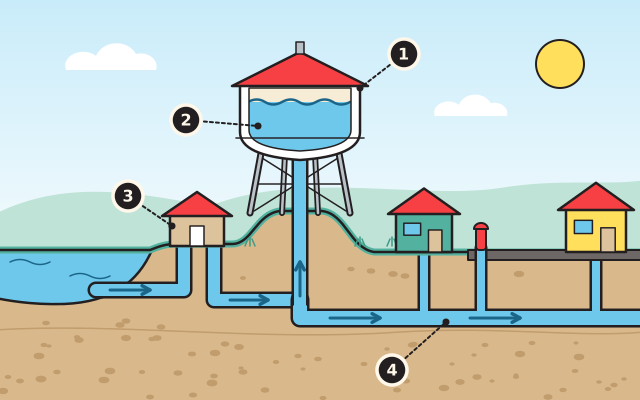
  1. The tank, high on its towerEl tanque, en lo alto de su torre
  2. The water insideEl agua de adentro
  3. The pump houseLa casa de bombas
  4. The water main under the streetLa tubería principal bajo la calle

Stop 1Parada 1

The water towerLa torre de agua

A water tower uses gravity: the weight of the water high in its tank pushes water through the town's pipes below.Una torre de agua usa la gravedad: el peso del agua que está arriba, en su tanque, empuja el agua por las tuberías del pueblo.

Each foot of height adds almost half a pound of push on every square inch. Towns usually keep the push between fifty and one hundred pounds per square inch, so they build the tower just tall enough.Cada pie de altura agrega casi media libra de empujón sobre cada pulgada cuadrada. Los pueblos suelen mantener ese empujón entre cincuenta y cien libras por pulgada cuadrada, así que construyen la torre con la altura justa.

A tower often holds a day's water, so taps run even when the power goes out. When many families shower in the morning, it helps the pumps keep up.Una torre suele guardar el agua de un día, así que las llaves funcionan aunque se vaya la luz. Cuando muchas familias se bañan en la mañana, ayuda a las bombas.
Learn more: Indiana University Public Media, A Moment of Science: The Physics of Water TowersMás información: Indiana University Public Media, A Moment of Science: The Physics of Water Towers

Next: Under the streetSiguiente: Bajo la calle

Look forBusque

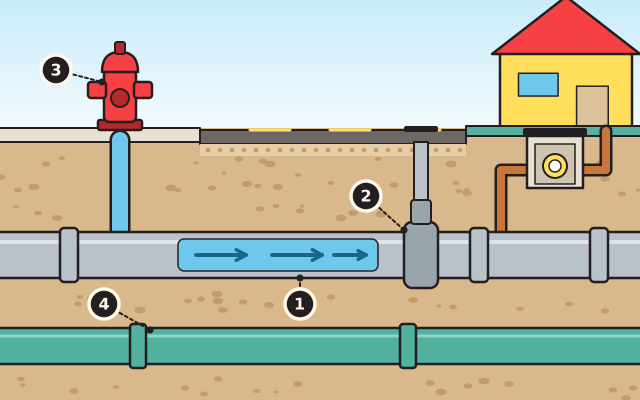
  1. The water mainLa tubería principal
  2. A valveUna válvula
  3. A fire hydrantUn hidrante para incendios
  4. A sewer pipe, kept apartUn tubo del drenaje, separado

Stop 2Parada 2

Under the streetBajo la calle

The big pipe under a street is a water main. In every water system, crews build, repair and replace mains all the time.El tubo grande bajo una calle es una tubería principal de agua. En todos los sistemas de agua, las cuadrillas construyen, reparan y cambian estas tuberías todo el tiempo.

Along a main, builders place fire hydrants and valves. Valves can close off one piece of the main completely, so when a crew fixes it, dirty water cannot spread into the rest of the pipes.A lo largo de la tubería principal se colocan hidrantes para incendios y válvulas. Las válvulas pueden cerrar por completo un tramo, para que, cuando una cuadrilla lo repara, el agua sucia no se extienda al resto de los tubos.

Before a new or repaired main carries drinking water, crews clean it with disinfectant and flush it. Guides also say to keep water mains about ten feet to the side of sewer pipes.Antes de que una tubería nueva o reparada lleve agua potable, las cuadrillas la limpian con desinfectante y la enjuagan. Las guías también dicen que las tuberías de agua deben ir a unos diez pies, hacia un lado, de los tubos del drenaje.

Learn more: US Environmental Protection Agency, New or Repaired Water Mains, a distribution system issue paperMás información: US Environmental Protection Agency, New or Repaired Water Mains, a distribution system issue paper

Next: The meter at your homeSiguiente: El medidor de su casa

Look forBusque

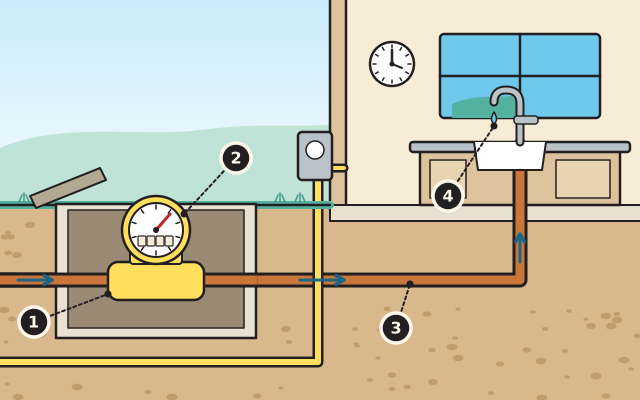
  1. The water meterEl medidor de agua
  2. Its dialSu carátula
  3. The pipe into the houseEl tubo que entra a la casa
  4. A faucetUna llave

Stop 3Parada 3

The meter at your homeEl medidor de su casa

On its way into your home, water passes through a meter, which counts how much flows in.Antes de entrar a su casa, el agua pasa por un medidor, que cuenta cuánta agua entra.

You can use the meter as a leak detective. Read it, then use no water at all for two hours, and read it again. If the meter changed at all, water is probably leaking somewhere.Puede usar el medidor como detective de fugas. Léalo, luego no use nada de agua durante dos horas y léalo otra vez. Si el medidor cambió aunque sea un poco, es probable que haya una fuga en algún lugar.

Leaks add up. Across the country, household leaks can waste nearly one trillion gallons of water a year.Las fugas suman mucho. En todo el país, las fugas de los hogares pueden desperdiciar casi un billón de galones de agua al año.

Learn more: US Environmental Protection Agency, WaterSense: Fix a Leak WeekMás información: US Environmental Protection Agency, WaterSense: Fix a Leak Week

Next: Oil and gas on the moveSiguiente: El petróleo y el gas en camino

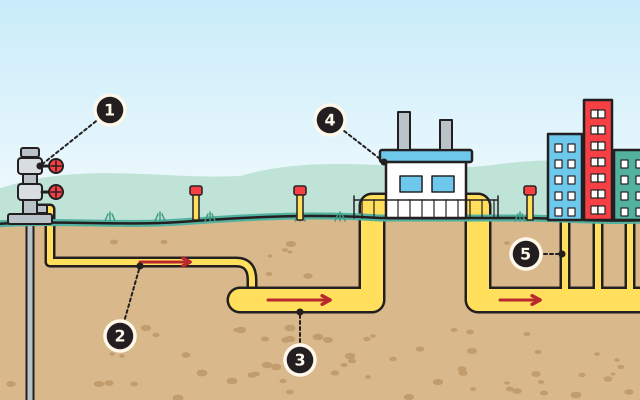
Look forBusque

  1. A gas wellUn pozo de gas
  2. A gathering lineUna línea de recolección
  3. The big transmission line, buriedLa gran línea de transmisión, enterrada
  4. A compressor stationUna estación de compresión
  5. A city's distribution linesLas líneas de distribución de una ciudad

Stop 4Parada 4

Oil and gas on the moveEl petróleo y el gas en camino

Pipelines carry natural gas, and liquids like crude oil, gasoline and jet fuel. Small gathering lines collect them from wells. Big transmission lines carry them long distances, and smaller distribution lines bring gas to homes.Las tuberías llevan gas natural y líquidos como petróleo crudo, gasolina y combustible para aviones. Las líneas de recolección, pequeñas, los juntan desde los pozos. Las líneas de transmisión, grandes, los llevan muy lejos, y las líneas de distribución, más pequeñas, llevan el gas a las casas.

Along the way, pump stations push liquids and compressor stations push gas. If a pipeline breaks, the drop in pressure normally sets off systems that close valves and shut off that piece of line.En el camino, las estaciones de bombeo empujan los líquidos y las estaciones de compresión empujan el gas. Si una tubería se rompe, la caída de presión normalmente activa sistemas que cierran válvulas y aíslan ese tramo.

A modest pipeline moves as much as about seven hundred fifty tanker trucks a day, one every two minutes, day and night.Una tubería modesta mueve lo mismo que unos setecientos cincuenta camiones cisterna al día, uno cada dos minutos, de día y de noche.

Learn more: Pipeline and Hazardous Materials Safety Administration, General Pipeline FAQsMás información: Pipeline and Hazardous Materials Safety Administration, General Pipeline FAQs

Next: Pumps and compressorsSiguiente: Bombas y compresores

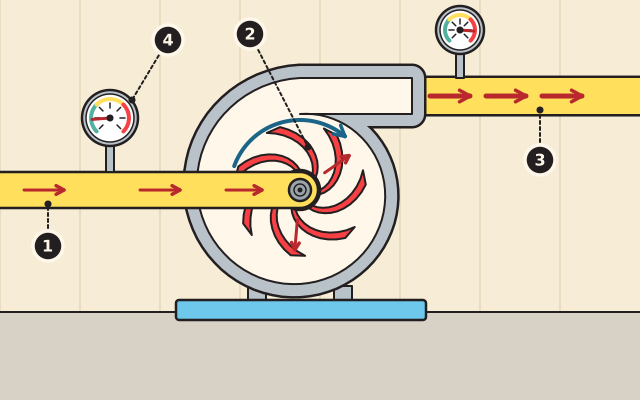
Look forBusque

  1. The pipe coming inEl tubo que entra
  2. The impeller, spinningEl impulsor, girando
  3. The pipe going out, with more pushEl tubo que sale, con más empuje
  4. Pressure gauges, low and highManómetros, baja y alta presión

Stop 5Parada 5

Pumps and compressorsBombas y compresores

Oil and gas move because of pressure, a push from behind. Rubbing along the inside of the pipe slowly uses up that push, so along the way they need a new one.El petróleo y el gas se mueven por la presión, un empujón desde atrás. El roce con el interior del tubo va gastando ese empujón, así que en el camino necesitan uno nuevo.

Pumps push liquids, and compressors push gas. Inside each one, a spinning wheel with blades, called an impeller, raises the pressure at the outlet.Las bombas empujan líquidos y los compresores empujan gas. Dentro de cada uno, una rueda con aspas que gira, llamada impulsor, sube la presión a la salida.

Pump stations sit about every twenty to one hundred miles, and compressor stations about every forty to one hundred miles. Hilly ground needs them closer together.Las estaciones de bombeo están más o menos cada veinte a cien millas, y las de compresión, cada cuarenta a cien millas. En terreno con colinas tienen que estar más cerca.

Try this at homePruébelo en casaAir pressure in a bottleLa presión del aire en una botella

Learn more: Pipeline and Hazardous Materials Safety Administration, Fact Sheet: Pump and Compressor StationsMás información: Pipeline and Hazardous Materials Safety Administration, Fact Sheet: Pump and Compressor Stations

Next: A tool that rides insideSiguiente: Una herramienta que viaja por dentro

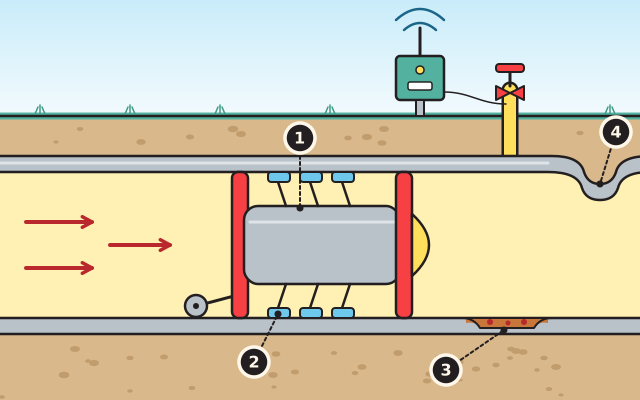
Look forBusque

  1. The smart pigEl diablo instrumentado
  2. Its sensors, touching the wallSus sensores, que tocan la pared
  3. A rusty, thin spotUn punto oxidado y delgado
  4. A dentUna abolladura

Stop 6Parada 6

A tool that rides insideUna herramienta que viaja por dentro

Crews send tools called pigs through pipelines. Simple pigs scrape and clean the inside. Smart pigs carry sensors that record rust, cracks and dents as they ride.Las cuadrillas mandan por dentro de las tuberías unas herramientas llamadas diablos. Los diablos sencillos raspan y limpian el interior. Los diablos instrumentados llevan sensores que registran el óxido, las grietas y las abolladuras mientras avanzan.

A smart pig goes in at a station, and the flow of oil or gas pushes it down the line. Far away, it is taken out and its data is read.Un diablo instrumentado entra en una estación, y el flujo de petróleo o gas lo empuja por la línea. Muy lejos de ahí, se saca y se leen sus datos.

Some smart pigs use strong magnets to find thin, worn spots in the steel wall. Others use sound too high to hear to measure how thick the wall is.Algunos usan imanes potentes para encontrar puntos delgados y gastados en la pared de acero. Otros usan sonidos tan agudos que no se oyen para medir el grosor de la pared.

Learn more: Pipeline and Hazardous Materials Safety Administration, Fact Sheet: In-Line Inspections (Smart Pig)Más información: Pipeline and Hazardous Materials Safety Administration, Fact Sheet: In-Line Inspections (Smart Pig)

Next: The control centerSiguiente: El centro de control

Look forBusque

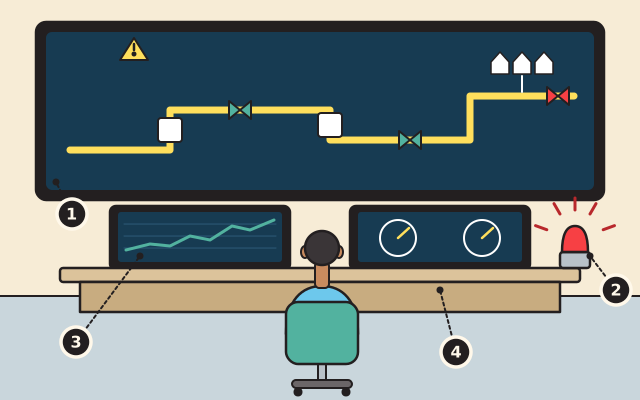
  1. The big map of the pipelineEl gran mapa de la tubería
  2. An alarm lightUna luz de alarma
  3. Pressure over time, on a graphLa presión con el tiempo, en una gráfica
  4. The controller's deskEl escritorio del controlador

Stop 7Parada 7

The control centerEl centro de control

Most pipelines are run from a control center far away. Sensors along the line measure pressure, flow and temperature, and their readings arrive by phone line or satellite, often every five or fifteen seconds.La mayoría de las tuberías se manejan desde un centro de control lejano. Los sensores a lo largo de la línea miden la presión, el flujo y la temperatura, y sus lecturas llegan por línea telefónica o por satélite, muchas veces cada cinco o quince segundos.

On big screens, the controllers see the whole pipeline: which pumps are on, and which valves are open or closed. Alarms warn them when something looks wrong.En pantallas grandes, los controladores ven toda la tubería: qué bombas están encendidas y qué válvulas están abiertas o cerradas. Las alarmas les avisan cuando algo parece estar mal.

From their desks, controllers can start or stop pumps and open or close valves miles away. The flow runs day and night, so people are always on watch.Desde su escritorio, los controladores pueden encender o apagar bombas y abrir o cerrar válvulas a muchas millas. El flujo sigue de día y de noche, así que siempre hay personas vigilando.

Learn more: Pipeline and Hazardous Materials Safety Administration, Fact Sheet: Remote Control CentersMás información: Pipeline and Hazardous Materials Safety Administration, Fact Sheet: Remote Control Centers

Next: Call eight one oneSiguiente: Llame al ocho uno uno

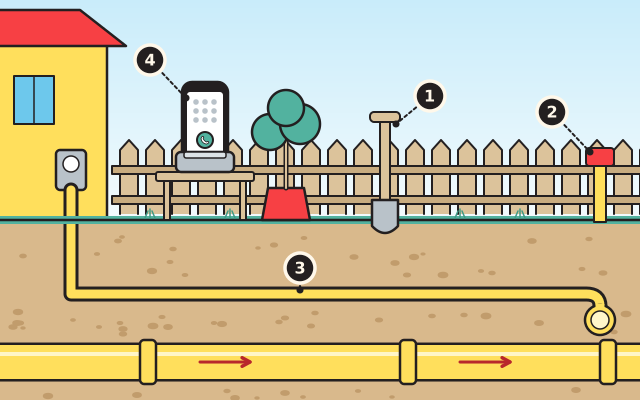
A backyard cut open: a little tree in a pot and a shovel ready to dig, a phone ready to call, a yellow pipeline marker by the fence, and below the grass a yellow gas line from the house and a big yellow pipeline deeper down.

Look forBusque

  1. A shovel, ready to digUna pala, lista para excavar
  2. A pipeline markerUn letrero de tubería
  3. A gas line, buried out of sightUna línea de gas, enterrada y escondida
  4. A phone to make the callUn teléfono para hacer la llamada

Stop 8Parada 8

Call eight one oneLlame al ocho uno uno

Most gas and oil pipelines are buried, and so are the smaller gas lines that run under streets into homes. From above, you cannot see where they go.La mayoría de las tuberías de gas y de petróleo están enterradas, igual que las líneas de gas más pequeñas que pasan bajo las calles y entran a las casas. Desde arriba no se ve por dónde van.

Brightly colored pipeline markers show that a big pipeline is near, but not exactly where it runs.Los letreros de colores brillantes avisan que hay una tubería grande cerca, pero no dicen exactamente por dónde pasa.

So before anyone digs, even to plant a tree or put in a fence or a mailbox, a grown-up calls eight one one, the call before you dig number in every state. The law asks for the call two to three days ahead.Por eso, antes de excavar, aunque sea para plantar un árbol o poner una cerca o un buzón, una persona adulta llama al ocho uno uno, el número para llamar antes de excavar en todos los estados. La ley pide llamar de dos a tres días antes.

Learn more: Pipeline and Hazardous Materials Safety Administration, Pipeline BasicsMás información: Pipeline and Hazardous Materials Safety Administration, Pipeline Basics

Use it, share it, adapt itÚsela, compártala, adáptela

The credit to copyEl crédito para copiar

Free BYRD, CC BY. “Pipelines: how water, oil and gas travel under the ground” from the Byrd Academy STEM Curriculum by Byrd EDU, byrdathome.org.Free BYRD, CC BY. “Tuberías: cómo viajan el agua, el petróleo y el gas bajo tierra”, del Currículo STEM de Byrd Academy, de Byrd EDU, byrdathome.org.

This is free to use, share and adapt, even commercially, under the Creative Commons Attribution 4.0 International license (CC BY 4.0), with this credit. What Free BYRD means.Esto es libre de usar, compartir y adaptar, incluso con fines comerciales, bajo la licencia Creative Commons Atribución 4.0 Internacional (CC BY 4.0), con este crédito. Qué significa Free BYRD.

Keep goingSiga adelante

What to do nextQué hacer después

Make it harderHágalo más difícil

Each foot of a water tower adds almost half a pound of push on every square inch. About how tall must the water stand to push with fifty pounds? Then explain why a pipeline over hills needs its pump stations closer together than one on flat ground.Cada pie de una torre de agua agrega casi media libra de empujón sobre cada pulgada cuadrada. ¿Más o menos qué tan alta debe estar el agua para empujar con cincuenta libras? Luego explique por qué una tubería que cruza colinas necesita sus estaciones de bombeo más cerca que una en terreno plano.

For a younger onePara alguien más pequeño

Over a sink, have a grown-up poke one small hole low on the side of a plastic cup and one high up. Fill it with water. Which stream pushes out harder? The low hole has more water above it pushing down, just like a tall water tower.Sobre un fregadero, pida a una persona adulta que haga un hoyito abajo en un lado de un vaso de plástico y otro más arriba. Llénelo de agua. ¿Qué chorro sale con más fuerza? El hoyito de abajo tiene más agua encima que empuja, igual que una torre de agua alta.

Try this nextPruebe esto después

SIM-0001

Air pressure in a bottleLa presión del aire en una botella

Pull air out of a bottle through its straw and watch what the air outside does to a balloon on top of the bottle, or inside it.Saque aire de una botella por su popote y vea lo que el aire de afuera le hace a un globo sobre la botella, o dentro de ella.

  • Ways in:Formas de empezar:
  • SimulateSimular

Best for ages 4 to 12Ideal de 4 a 12 años

ManufacturingManufacturaDesignDiseño

Free BYRD, CC BYSimulationSimulación

BH-0001

Make a vacuumHaga un vacío

Pull the air out of a water bottle through a straw and watch a balloon shrink, then grow.Saque el aire de una botella de agua con un popote y vea cómo un globo se encoge y luego crece.

  • Ways in:Formas de empezar:
  • ReadLeer
  • WatchVer
  • DoHacer
  • SimulateSimular

Best for ages 4 to 12Ideal de 4 a 12 años

ManufacturingManufacturaDesignDiseño

Free BYRD, CC BYLessonLección

STEMGrades 6 to 8Grados 6 a 8 How does a machine sense the world?¿Cómo percibe el mundo una máquina? STEM-JH-02

Sensors and SignalsSensores y señales

Read light and temperature sensors, use proportion math to turn raw numbers into real units, and build a live sensor dashboard.Lea sensores de luz y de temperatura, use proporciones para convertir números sin procesar en unidades reales y construya un tablero de sensores en vivo.

  • Ways in:Formas de empezar:
  • ReadLeer
  • DoHacer

Grades 6 to 8Grados 6 a 8

ElectronicsElectrónicaSoftwareSoftware

Free BYRD, CC BYCurriculum unitUnidad del currículo

BH-0046

Break a trade into tasks and brief someone who does itDivida un oficio en tareas y presente su análisis a alguien que lo ejerce

Pick a trade in your region, list its real tasks, sort each one as something AI could automate, assist or never replace, with reasons, then brief a family member or neighbor in that trade and take their hardest question.Elija un oficio de su región, haga la lista de sus tareas reales, clasifique cada una como algo que la IA podría automatizar, asistir o nunca reemplazar, con razones, y luego presente su análisis a un familiar o vecino de ese oficio y reciba su pregunta más difícil.

  • Ways in:Formas de empezar:
  • ReadLeer
  • DoHacer

Best for ages 13 and upIdeal desde los 13 años

DesignDiseño

Free BYRD, CC BYHome activityActividad en casa

Explore everythingExplorar todo