

CurriculumCurrículoSTEMGrades 3 to 5Grados 3 a 5STEM-ES-07
Weather StationEstación meteorológica
Build weather instruments from household stuff, log readings every day, and learn that a forecast comes from patterns, not guesses.Construya instrumentos del clima con cosas de la casa, anote lecturas cada día y aprenda que un pronóstico sale de patrones, no de adivinar.
- Ways in:Formas de empezar:
- Read, 1 minuteLeer, 1 minuto
- Do, 270 minutesHacer, 270 minutos
- Simulate, 5 minutesSimular, 5 minutos
- GradesGrados
- Grades 3 to 5, and any learner ready for itGrados 3 a 5, y cualquier persona lista para ello
- TimeTiempo
- 6 sessions of about 45 minutes6 sesiones de unos 45 minutos
- CostCosto
- Under a few dollarsMenos de unos pocos dólares
The MESH'D components this unit uses:Los componentes MESH'D que usa esta unidad:ManufacturingManufacturaSoftwareSoftware
The driving questionLa pregunta central
Can we see tomorrow's weather coming?¿Podemos ver venir el tiempo de mañana?
Instruments made from household stuff, a daily data habit, and a discovery: a forecast is built from patterns, not guessing.Instrumentos hechos con cosas de la casa, el hábito de anotar datos cada día y un descubrimiento: un pronóstico se construye con patrones, no adivinando.
Learners will be able toAl terminar se podrá
- Build and read simple weather instruments.Construir y leer instrumentos sencillos del clima.
- Keep a clean daily data log.Llevar un registro diario de datos limpio y ordenado.
- Name one pattern in your own data and use it to predict.Nombrar un patrón en sus propios datos y usarlo para predecir.
Where the math isDónde están las matemáticas
Collecting data every day, pictographs and bar graphs, and comparing each prediction with what really happened.Reunir datos cada día, pictogramas y gráficas de barras, y comparar cada predicción con lo que de verdad pasó.
Texas standards, strand levelEstándares de Texas, por componente
- Science: Earth and SpaceCiencias: Tierra y espacio
- Math: Data AnalysisMatemáticas: Análisis de datos
Session by sessionSesión por sesión
What to doQué hacer
- Instruments from household stuff: a bottle rain gauge, a cup wind spinner, a wind flag, and reading a thermometer.Instrumentos con cosas de la casa: un pluviómetro de botella, un anemómetro de vasos, un banderín de viento y la lectura de un termómetro.
- Set up the instruments and a routine: same time, same place, every day, with each reading logged.Instale los instrumentos y una rutina: a la misma hora, en el mismo lugar, todos los días, anotando cada lectura.
- Graph the first week of readings and talk about patterns.Haga una gráfica con las lecturas de la primera semana y platiquen sobre los patrones.
- The forecast game: predict tomorrow's weather, then log whether you were right.El juego del pronóstico: prediga el tiempo de mañana y luego anote si acertó.
- Build a forecast versus reality board.Construya un tablero de pronóstico contra realidad.
- Give live weather reports and get ready to show the board.Den reportes del tiempo en vivo y prepárense para mostrar el tablero.
What you needLo que necesita
- Plastic bottlesBotellas de plástico
- Paper cupsVasos de papel
- Drinking strawsPopotes
- MarkersMarcadores
- Chart paperPliegos de papel
EquipmentEquipo
- A thermometerUn termómetro
Under a few dollars.Menos de unos pocos dólares.
An adult supervises whenever learners are outdoors setting up or reading instruments.Un adulto supervisa siempre que los estudiantes estén afuera instalando o leyendo los instrumentos.
What learners make and showLo que se hace y se muestra
A forecast versus reality board and a live weather report: the instruments work, the graph is easy to read, and a pattern is named and used to predict.Un tablero de pronóstico contra realidad y un reporte del tiempo en vivo: los instrumentos funcionan, la gráfica se lee con facilidad y se nombra un patrón que se usa para predecir.
Mix-ups to expectConfusiones que esperar
- Prediction is guessing. A forecast uses patterns in data: the daily log shows what tends to come next.Predecir es adivinar. Un pronóstico usa patrones en los datos: el registro diario muestra lo que suele venir después.
- A wrong forecast means bad science. Forecasts deal in chances, so a careful forecast can still miss; the log shows how often it is right.Un pronóstico equivocado es mala ciencia. Los pronósticos trabajan con probabilidades, así que un pronóstico cuidadoso puede fallar; el registro muestra qué tan seguido acierta.
At homeEn casa
Try it at the kitchen tablePruébelo en la mesa de la cocina
Make a rain gauge from a clear bottle at home. Set it in the same open spot outside and read it at the same time each day.Haga en casa un pluviómetro con una botella transparente. Colóquelo siempre en el mismo lugar abierto afuera y léalo a la misma hora cada día.
Explore, 6 minutesExplorar, 6 minutos
Why we have seasonsPor qué hay estaciones
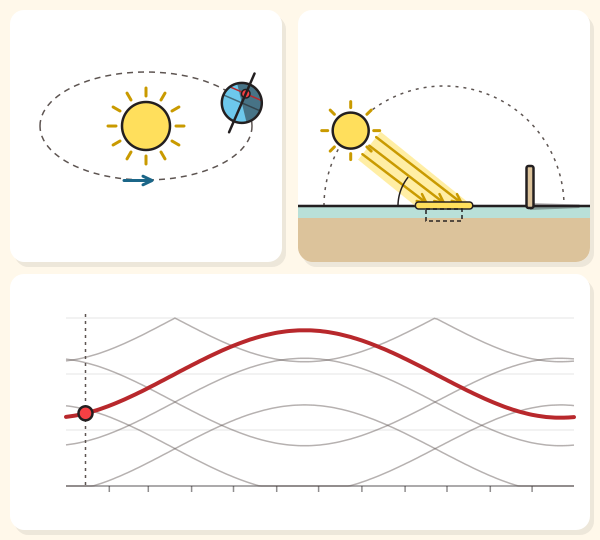
Pick a place and a day, and see how the tilted Earth sets the noon sun’s height, the length of the day and the sunlight each square of ground gets.Elija un lugar y un día, y vea cómo la Tierra inclinada fija la altura del sol del mediodía, la duración del día y la luz que recibe cada cuadro de suelo.
The drawing shows where it starts. It runs here once its script has loaded.El dibujo muestra dónde empieza. Funciona aquí una vez que carga su código.
Your challengeSu reto
- In Texas, find the day of the year when the noon sun climbs highest.En Texas, encuentre el día del año en que el sol del mediodía sube más alto. Not done yet.Todavía no.
- Find a place and a day where the same beam spreads over twice as much ground as under an overhead sun.Encuentre un lugar y un día en que el mismo haz se reparte en el doble de suelo que con el sol justo arriba. Not done yet.Todavía no.
- Find a place and a day where the sun never rises.Encuentre un lugar y un día en que el sol nunca sale. Not done yet.Todavía no.
- Put the noon sun straight overhead.Ponga el sol del mediodía justo arriba. Not done yet.Todavía no.
Every challenge done. Now try it for real at home.Todos los retos logrados. Ahora pruébelo de verdad en casa.
Height of the sun at noon, of straight overheadAltura del sol al mediodía, comparada con justo arriba
Length of the day, sunrise to sunsetDuración del día, de la salida a la puesta del sol
Sunlight on a square of ground at noon, of the sun straight overheadLuz del sol sobre un cuadro de suelo al mediodía, comparada con el sol justo arriba
- The same beam lights a patch wider byEl mismo haz ilumina un área más ancha por
- Noon shadow of a stick one meter tallSombra al mediodía de un palo de un metro
- The season hereLa estación aquí
- Earth to sun todayDe la Tierra al sol hoy
- The noon sun is straight overhead atEl sol del mediodía está justo arriba en
Top left, the Earth goes around the sun with its axis tilted about twenty-three point four degrees, always the same way; the red dot is this place. Top right, the noon sun seen from the side: its beam is always as wide, so the lower the sun, the wider the patch it lights; the dashed box is one square of ground, and the stick is one meter tall. Below, the height of the noon sun all year here, and, faint, at the other places.Arriba a la izquierda, la Tierra gira alrededor del sol con su eje inclinado unos veintitrés coma cuatro grados, siempre hacia el mismo lado; el punto rojo es este lugar. Arriba a la derecha, el sol del mediodía visto de lado: su haz siempre es igual de ancho, así que entre más bajo el sol, más ancha el área que ilumina; el cuadro punteado es un cuadro de suelo, y el palo mide un metro. Abajo, la altura del sol del mediodía todo el año aquí, y, tenues, en los otros lugares.
What is happeningQué está pasando
The Earth’s axis is tilted about twenty-three point four degrees, and it keeps pointing the same way all year. So for part of the year your half of the Earth leans toward the sun, and for part of the year it leans away.El eje de la Tierra está inclinado unos veintitrés coma cuatro grados, y sigue apuntando hacia el mismo lado todo el año. Así, durante una parte del año su mitad de la Tierra se inclina hacia el sol, y durante otra parte se inclina lejos de él.
Leaning toward the sun, the noon sun climbs high and the day is long. The solar oven’s rule shows why height matters: light that hits straight on brings the most energy, and the same beam at a slant spreads over a bigger patch, so each square of ground gets less. A low sun also casts long shadows, which you can measure with a stick.Cuando se inclina hacia el sol, el sol del mediodía sube alto y el día es largo. La regla del horno solar muestra por qué importa la altura: la luz que llega de frente trae más energía, y el mismo haz inclinado se reparte en un área más grande, así que cada cuadro de suelo recibe menos. Un sol bajo también hace sombras largas, que puede medir con un palo.
It is not the distance. The Earth is closest to the sun in early January, during the northern winter. The tilt makes summer and winter, which is why the seasons are opposite in the north and the south.No es la distancia. La Tierra está más cerca del sol a principios de enero, durante el invierno del norte. La inclinación causa el verano y el invierno, y por eso las estaciones son opuestas en el norte y en el sur.
Seasons are a pattern you can see in weather data: the noon sun’s height and the length of the day predict the warm and cold times of the year, even though each day’s weather still changes.Las estaciones son un patrón que se ve en los datos del clima: la altura del sol del mediodía y la duración del día predicen las épocas cálidas y frías del año, aunque el tiempo de cada día siga cambiando.
Things to tryCosas para probar
- Play the year in Texas and watch the noon sun climb and fall, and the stick’s shadow shrink and grow.Recorra el año en Texas y vea cómo sube y baja el sol del mediodía, y cómo se acorta y se alarga la sombra del palo.
- Choose far north in December, then far south in December. What changes, and why?Elija muy al norte en diciembre, y luego muy al sur en diciembre. ¿Qué cambia, y por qué?
- Set the latitude where you live and watch the distance to the sun. Is the Earth closer in your summer or your winter?Ponga la latitud donde vive y observe la distancia al sol. ¿La Tierra está más cerca en su verano o en su invierno?
- At noon outside, measure the shadow of a stick one meter tall and compare it with the one shown for today.Al mediodía, afuera, mida la sombra de un palo de un metro y compárela con la que se muestra para hoy.
This is a model. The sun’s place and the day’s length come from the standard formulas astronomers publish, but they leave out the air’s dimming of sunlight, clouds, hills and buildings on a real horizon, and leap years. Real sunlight is weaker than shown, most of all when the sun is low, and noon here means when the sun is highest, not twelve on the clock.Esto es un modelo. El lugar del sol y la duración del día vienen de las fórmulas comunes que publican los astrónomos, pero no toman en cuenta cómo el aire apaga la luz del sol, las nubes, los cerros y edificios de un horizonte real, ni los años bisiestos. La luz real del sol es más débil de lo que se muestra, sobre todo cuando el sol está bajo, y el mediodía aquí es cuando el sol está más alto, no las doce en el reloj.
Open the simulation on its own pageAbrir la simulación en su propia páginaThe water cycleEl ciclo del aguaThe phases of the MoonLas fases de la Luna
Use it, share it, adapt itÚsela, compártala, adáptela
The credit to copyEl crédito para copiar
Free BYRD, CC BY. “Weather Station” from the Byrd Academy STEM Curriculum by Byrd EDU, byrdathome.org.Free BYRD, CC BY. “Estación meteorológica”, del Currículo STEM de Byrd Academy, de Byrd EDU, byrdathome.org.
This is free to use, share and adapt, even commercially, under the Creative Commons Attribution 4.0 International license (CC BY 4.0), with this credit. What Free BYRD means.Esto es libre de usar, compartir y adaptar, incluso con fines comerciales, bajo la licencia Creative Commons Atribución 4.0 Internacional (CC BY 4.0), con este crédito. Qué significa Free BYRD.
Keep goingSiga adelante
What to do nextQué hacer después
Make it harderHágalo más difícil
Keep ten days of clean readings, then check how often your forecasts came true and whether your pattern held.Lleve diez días de lecturas limpias y luego revise qué tan seguido se cumplieron sus pronósticos y si su patrón se mantuvo.
For a younger onePara alguien más pequeño
Put a clear cup or bottle outside, and after it rains, mark the water level with a marker. Compare the marks from day to day.Ponga afuera un vaso o una botella transparente y, después de que llueva, marque el nivel del agua con un marcador. Compare las marcas de un día a otro.
Try this nextPruebe esto después
Build a rain gauge and keep a weather logConstruya un pluviómetro y lleve un registro del clima
Turn a plastic bottle into a rain gauge, read it at the same time every day, and use the patterns in your log to forecast tomorrow.Convierta una botella de plástico en un pluviómetro, léalo a la misma hora cada día y use los patrones de su registro para pronosticar el día siguiente.
- Ways in:Formas de empezar:
- ReadLeer
- DoHacer
- SimulateSimular
Best for ages 5 and upIdeal desde los 5 años
ManufacturingManufacturaSoftwareSoftware
Free BYRD, CC BYHome activityActividad en casa
Why we have seasonsPor qué hay estaciones
Pick a place and a day, and see how the tilted Earth sets the noon sun’s height, the length of the day and the sunlight each square of ground gets.Elija un lugar y un día, y vea cómo la Tierra inclinada fija la altura del sol del mediodía, la duración del día y la luz que recibe cada cuadro de suelo.
- Ways in:Formas de empezar:
- SimulateSimular
Best for ages 5 and upIdeal desde los 5 años
DesignDiseño
Free BYRD, CC BYSimulationSimulación
 SIM-0022
 The water cycleEl ciclo del agua
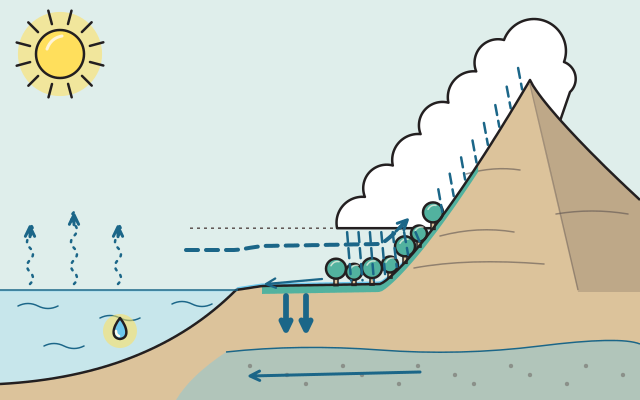
Turn up the sun and the warmth, then follow water from the sea into a cloud, down onto a mountain as rain or snow, and back to the sea.Suba el sol y el calor, y siga el agua del mar a una nube, de ahí a una montaña como lluvia o nieve, y de regreso al mar.
- Ways in:Formas de empezar:
- SimulateSimular
Best for ages 5 and upIdeal desde los 5 años
DesignDiseño
Free BYRD, CC BYSimulationSimulación
 SIM-0025
 The phases of the MoonLas fases de la Luna
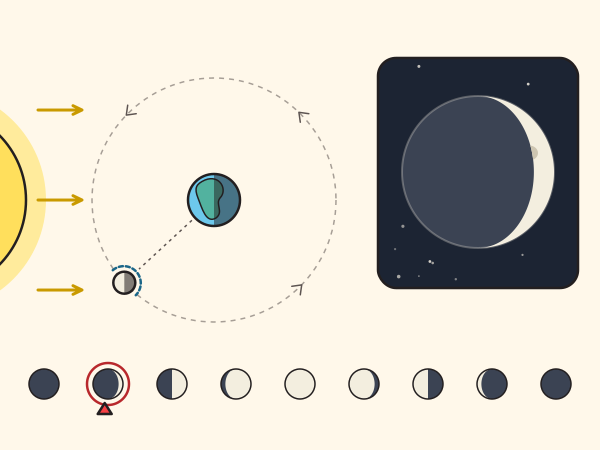
Move through a month and watch the Moon go around the Earth in the Sun's light, beside the Moon as it looks from home each night.Avance por un mes y vea a la Luna girar alrededor de la Tierra bajo la luz del Sol, junto a la Luna como se ve desde casa cada noche.
- Ways in:Formas de empezar:
- SimulateSimular
Best for ages 5 and upIdeal desde los 5 años
DesignDiseño
Free BYRD, CC BYSimulationSimulación