

ExploreExplorarBH-0066
Freeze colored ice and watch the cold water sinkCongele hielo de color y observe cómo se hunde el agua fría
Float a block of colored ice in a clear tub of warm water and watch the cold meltwater fall in slow ribbons, because cold water is heavier than the same amount of warm water.Ponga a flotar un bloque de hielo de color en una tina transparente con agua tibia y observe cómo el agua fría que se derrite baja en listones lentos, porque el agua fría pesa más que la misma cantidad de agua tibia.
- Ways in:Formas de empezar:
- Read, 3 minutesLeer, 3 minutos
- Do, 20 minutesHacer, 20 minutos
- AgesEdades
- Every age. Best for ages 3 to 6.Todas las edades. Ideal de 3 a 6 años.
- CostCosto
- Things already at homeCosas que ya hay en casa
The MESH'D components this item uses:Los componentes MESH'D que usa:ManufacturingManufactura
Do, about 20 minutesHacer, unos 20 minutos
Build it at homeConstrúyalo en casa
StepsPasos
- The night before, stir a few drops of food coloring into a plastic cup of water and freeze it.La noche anterior, revuelva unas gotas de colorante en un vaso de plástico con agua y congélelo.
- Set the clear tub on a towel where your child can see it from the side, and fill it about halfway with warm water. Test it on your wrist: warm, not hot.Ponga la tina transparente sobre una toalla donde la niña o el niño la pueda ver de lado, y llénela más o menos a la mitad con agua tibia. Pruébela en su muñeca: tibia, no caliente.
- Wait a moment until the water stops swirling.Espere un momento hasta que el agua deje de moverse.
- Run the cup under warm water so the block slides out, and set the block gently on the water.Pase el vaso por agua tibia para que salga el bloque, y póngalo con cuidado sobre el agua.
- Watch from the side together. Ask: does it float? Where is the color going?Observen juntos desde un lado. Pregunte: ¿flota? ¿Adónde se va el color?
- Name what you see: the cold color is sinking like a slow waterfall and piling up at the bottom.Nombre lo que ven: el color frío se hunde como una cascada lenta y se junta en el fondo.
- When the block is gone, dip a clean finger at the top of the water and then at the bottom. Where is it colder?Cuando el bloque se acabe, meta un dedo limpio arriba del agua y luego en el fondo. ¿Dónde está más fría?
- Empty the tub together and wash hands.Vacíen juntos la tina y lávense las manos.
What you needLo que necesita
- A plastic cup of water with a few drops of food coloring, frozen overnight into one blockUn vaso de plástico con agua y unas gotas de colorante para alimentos, congelado durante la noche en un solo bloque
- A clear plastic tub, bowl or storage boxUna tina, un tazón o una caja de plástico transparente
- Warm tap water, poured by the grown-upAgua tibia de la llave, que sirve la persona adulta
- A towel to go underneathUna toalla para poner debajo
- A second tub and cold water from the fridge, for the testUna segunda tina y agua fría del refrigerador, para la prueba
Things already at home.Cosas que ya hay en casa.
Stay within arm's reach the whole time, at any depth of water, and empty every tub together when you are done. Use warm water, never hot: you pour it, and you test it on your wrist first. Freeze each block in a plastic cup so even the smaller one is too big to fit through a toilet-paper tube, keep the ice in the tub and out of mouths, and use a clear plastic tub or bowl, never glass. Wash hands before and after. Contains: food coloring. Swap in: freeze the block with no color, then after a few minutes dip a clean finger at the top of the water and at the bottom to feel where the cold water went.Quédese al alcance de su brazo todo el tiempo, sin importar la profundidad del agua, y al terminar vacíen juntos cada tina. Use agua tibia, nunca caliente: usted la sirve y primero la prueba en su muñeca. Congele cada bloque en un vaso de plástico para que hasta el más chico sea demasiado grande para caber dentro de un tubo de papel higiénico, mantenga el hielo en la tina y fuera de la boca, y use una tina o un tazón de plástico transparente, nunca de vidrio. Lávense las manos antes y después. Contiene: colorante para alimentos. Puede usar en su lugar: congele el bloque sin color, y después de unos minutos meta un dedo limpio arriba del agua y en el fondo para sentir adónde se fue el agua fría.
Read, 3 minutesLeer, 3 minutos
The big ideaLa gran idea
Ice floats because it is a little lighter than the same amount of liquid water. As the ice melts, the water that drips off it is very cold, and cold water is heavier than the same amount of warm water. So the colored meltwater does not stay put: it sinks through the warm water in slow ribbons and gathers at the bottom. The same thing happens in the ocean on a giant scale. Near the poles, seawater loses its heat to the cold air, grows heavier and sinks to the bottom of the ocean, then flows slowly along the deep sea floor. Heat moves too, from the warm water into the ice, which is why the ice melts faster in warm water than in cold.El hielo flota porque pesa un poco menos que la misma cantidad de agua líquida. Cuando el hielo se derrite, el agua que gotea de él está muy fría, y el agua fría pesa más que la misma cantidad de agua tibia. Así que el agua de color no se queda quieta: se hunde en el agua tibia en listones lentos y se junta en el fondo. Lo mismo pasa en el océano, en tamaño gigante. Cerca de los polos, el agua de mar pierde su calor con el aire frío, se vuelve más pesada y se hunde hasta el fondo del océano, y luego fluye despacio por el fondo del mar profundo. El calor también se mueve, del agua tibia hacia el hielo, y por eso el hielo se derrite más rápido en agua tibia que en agua fría.
Your engineering challengeSu reto de ingeniería
Before the ice goes in, draw where you think the color will be after a few minutes: at the top, in the middle or at the bottom. Then watch, draw what really happened, and explain the difference in one sentence.Antes de meter el hielo, dibuje dónde cree que estará el color después de unos minutos: arriba, en medio o en el fondo. Luego observe, dibuje lo que de verdad pasó y explique la diferencia en una oración.
Make it an experimentConviértalo en un experimento
Science is about changing one thing and watching what happens. Write down your guess, your hypothesis, before you start.La ciencia se trata de cambiar una cosa y observar qué pasa. Escriba su suposición, su hipótesis, antes de empezar.
- Fill a second tub with cold water from the fridge and add the same kind of ice block. Does the color still dive to the bottom, or does it spread near the top?Llene una segunda tina con agua fría del refrigerador y ponga el mismo tipo de bloque de hielo. ¿El color todavía baja hasta el fondo, o se extiende cerca de la superficie?
- Freeze the colored water in a smaller cup and in a bigger cup, and float each block in the same warm water. Which one is gone first?Congele el agua de color en un vaso más chico y en uno más grande, y ponga cada bloque a flotar en la misma agua tibia. ¿Cuál se acaba primero?
- Float two matching blocks in two tubs of warm water, and stir one tub gently with a spoon while the other stays still. Does stirring speed up the melting?Ponga a flotar dos bloques iguales en dos tinas con agua tibia, y revuelva una tina suavemente con una cuchara mientras la otra se queda quieta. ¿Revolver hace que se derrita más rápido?
Use it, share it, adapt itÚsela, compártala, adáptela
The credit to copyEl crédito para copiar
Free BYRD, CC BY. “Freeze colored ice and watch the cold water sink” from the Byrd Academy STEM Curriculum by Byrd EDU, byrdathome.org.Free BYRD, CC BY. “Congele hielo de color y observe cómo se hunde el agua fría”, del Currículo STEM de Byrd Academy, de Byrd EDU, byrdathome.org.
This is free to use, share and adapt, even commercially, under the Creative Commons Attribution 4.0 International license (CC BY 4.0), with this credit. What Free BYRD means.Esto es libre de usar, compartir y adaptar, incluso con fines comerciales, bajo la licencia Creative Commons Atribución 4.0 Internacional (CC BY 4.0), con este crédito. Qué significa Free BYRD.
Keep goingSiga adelante
What to do nextQué hacer después
Make it harderHágalo más difícil
Set the fridge-cold tub and the warm tub side by side and time how long each block lasts. Then draw a slice of the ocean, from the warm surface to the cold deep, with arrows showing which way the cold water moves.Ponga lado a lado la tina con agua del refrigerador y la de agua tibia, y mida cuánto dura cada bloque. Luego dibuje un corte del océano, de la superficie tibia al fondo frío, con flechas que muestren hacia dónde se mueve el agua fría.
For a younger onePara alguien más pequeño
Just watch the color fall, and tell it like a story: the ice is melting, the color is falling, and now it is sleeping at the bottom.Solo vean caer el color, y cuéntenlo como un cuento: el hielo se derrite, el color va cayendo y ahora está dormido en el fondo.
Try this nextPruebe esto después
Ice Melt RaceLa carrera del hielo
Your child guesses which of two ice cubes will melt first, one in the sun and one in the shade, then checks on the race.Su hijo adivina cuál de dos cubos de hielo se derretirá primero, uno al sol y otro a la sombra, y luego sigue la carrera.
- Ways in:Formas de empezar:
- DoHacer
about three to four yearsde tres a cuatro años, más o menos
Free BYRD, CC BYAges zero to fiveDe cero a cinco años
Ice RescueRescate en el hielo
Your child frees a toy frozen in ice with a spoon and warm water, and sees warmth make the ice smaller.Su niño libera un juguete congelado en hielo con una cuchara y agua tibia, y ve cómo el calor hace más pequeño el hielo.
- Ways in:Formas de empezar:
- DoHacer
about two to three yearsde dos a tres años, más o menos
Free BYRD, CC BYAges zero to fiveDe cero a cinco años
States of Matter DayEl día de los estados de la materia
Your child watches ice melt, water freeze overnight, and steam rise from your mug, then tells the whole water loop in order.Su niño o niña ve cómo el hielo se derrite, el agua se congela de noche y sale vapor de su taza, y luego cuenta en orden todo el ciclo del agua.
- Ways in:Formas de empezar:
- DoHacer
about four to five yearsde cuatro a cinco años, más o menos
Free BYRD, CC BYAges zero to fiveDe cero a cinco años
 SIM-0021
 Ice, water and steamHielo, agua y vapor
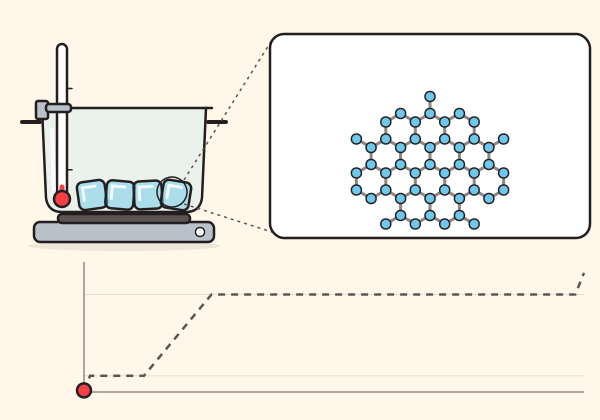
Add heat to ice straight from the freezer, or take it away, and watch it melt, boil and turn back: the particles up close, and the temperature on a heating curve with its flat steps.Agregue calor a un hielo recién salido del congelador, o quítelo, y vea cómo se derrite, hierve y vuelve atrás: las partículas de cerca, y la temperatura en una curva de calentamiento con sus escalones planos.
- Ways in:Formas de empezar:
- SimulateSimular
Best for ages 5 and upIdeal desde los 5 años
ManufacturingManufactura
Free BYRD, CC BYSimulationSimulación