

ExploreExplorarBH-0068
Put an ear to the table and hear sound travel through woodPonga el oído en la mesa y escuche cómo viaja el sonido por la madera
Scratch and tap softly at one end of a table while someone listens with an ear pressed to the other end, then lift the ear and listen again.Raspe y dé golpecitos suaves en un extremo de la mesa mientras alguien escucha con el oído pegado al otro extremo, y luego levante la cabeza y vuelva a escuchar.
- Ways in:Formas de empezar:
- Read, 3 minutesLeer, 3 minutos
- Do, 10 minutesHacer, 10 minutos
- AgesEdades
- Every age. Best for ages 2 to 5.Todas las edades. Ideal de 2 a 5 años.
- CostCosto
- Free, nothing to gatherGratis, sin nada que reunir
The MESH'D components this item uses:Los componentes MESH'D que usa:ElectronicsElectrónica
Do, about 10 minutesHacer, unos 10 minutos
Build it at homeConstrúyalo en casa
StepsPasos
- Your child sits at one end of the table and lays an ear flat on the wood, eyes closed.La niña o el niño se sienta en un extremo de la mesa y pega el oído a la madera, con los ojos cerrados.
- At the far end, scratch the table softly with a fingernail.En el otro extremo, raspe la mesa suavemente con la uña.
- Ask: did you hear it? Was it loud or quiet?Pregunte: ¿lo oíste? ¿Sonó fuerte o bajito?
- Now your child sits up, ear in the air, and you make the very same scratch.Ahora la niña o el niño se endereza, con el oído al aire, y usted hace exactamente el mismo raspón.
- Ask again: was it louder with the ear on the table, or in the air?Pregunte otra vez: ¿se oyó más fuerte con el oído en la mesa o en el aire?
- Trade places: your child scratches and taps softly while you listen and say what you hear.Cambien de lugar: la niña o el niño raspa y da golpecitos suaves mientras usted escucha y dice lo que oye.
- Say it together in one sentence: the sound traveled through the table.Díganlo juntos en una oración: el sonido viajó por la mesa.
What you needLo que necesita
- A table, wooden if you have oneUna mesa, de madera si tiene
- A wooden spoonUna cuchara de madera
- A wind-up kitchen timer, or a phone playing soft musicUn reloj de cocina de cuerda, o un teléfono con música suave
- A pillowUna almohada
Free, nothing to gather.Gratis, sin nada que reunir.
Stay in the room and watch. Every sound is soft, a scratch or a gentle tap, never a bang, and never close to the listener's head, so ears stay safe. The listener keeps fingers away from the spot where the tapping happens. Use a wind-up timer or a phone, never a gadget that runs on button or coin batteries. If your child is under three or still puts things in their mouth, the spoon and everything else on the table are too big to fit through a toilet-paper tube.Quédese en el cuarto y observe. Todos los sonidos son suaves, un raspón o un golpecito, nunca un golpe fuerte, y nunca cerca de la cabeza de quien escucha, para cuidar los oídos. Quien escucha mantiene los dedos lejos del lugar donde se dan los golpecitos. Use un reloj de cocina de cuerda o un teléfono, nunca un aparato que funcione con pilas de botón o de moneda. Si la niña o el niño tiene menos de tres años o todavía se lleva cosas a la boca, la cuchara y todo lo que esté en la mesa deben ser demasiado grandes para caber dentro de un tubo de papel higiénico.
Read, 3 minutesLeer, 3 minutos
The big ideaLa gran idea
Every sound starts with something shaking back and forth, a vibration, and the vibration has to travel to your ear through something. Usually that something is air. But sound also travels through liquids and solids, and it travels faster and farther through them than through air. When you scratch one end of a table, the wood itself carries the shaking all the way across. With your ear pressed to the wood, the sound goes straight from the table into your head, so a tiny scratch sounds loud and close. Lift your head and the same scratch has to leap into the air first, and most of it fades away. A cup phone works the same way: the string carries the sound.Todo sonido empieza con algo que se sacude de un lado a otro, una vibración, y esa vibración tiene que viajar hasta su oído a través de algo. Casi siempre ese algo es el aire. Pero el sonido también viaja por los líquidos y los sólidos, y viaja más rápido y más lejos por ellos que por el aire. Cuando usted raspa un extremo de la mesa, la madera misma lleva la sacudida hasta el otro lado. Con el oído pegado a la madera, el sonido pasa directo de la mesa a su cabeza, así que un raspón pequeñito suena fuerte y cercano. Si levanta la cabeza, el mismo raspón tiene que saltar primero al aire, y casi todo se pierde. Un teléfono de vasos funciona igual: el hilo lleva el sonido.
Your engineering challengeSu reto de ingeniería
Find the quietest sound your listener can still hear through the table. Then test whether the same sound comes through the floor, a door or a pillow.Encuentre el sonido más suave que su oyente todavía puede oír a través de la mesa. Luego pruebe si el mismo sonido pasa por el piso, una puerta o una almohada.
Make it an experimentConviértalo en un experimento
Science is about changing one thing and watching what happens. Write down your guess, your hypothesis, before you start.La ciencia se trata de cambiar una cosa y observar qué pasa. Escriba su suposición, su hipótesis, antes de empezar.
- Keep the scratch the same and change only what the ear rests on: the bare table, then a pillow laid on the table. Which one carries the sound better?Deje igual el raspón y cambie solo dónde se apoya el oído: la mesa sola, y luego una almohada puesta sobre la mesa. ¿Cuál lleva mejor el sonido?
- Keep the sound the same and change only where you make it: right beside the listener, in the middle, then at the far end.Deje igual el sonido y cambie solo dónde lo hace: junto a quien escucha, en medio y luego en el otro extremo.
- Keep the spot the same and change only what makes the sound: a fingernail scratch, a tap with a wooden spoon, then a ticking wind-up kitchen timer set on the table.Deje igual el lugar y cambie solo lo que hace el sonido: un raspón con la uña, un golpecito con una cuchara de madera y luego un reloj de cocina de cuerda con tic tac puesto sobre la mesa.
Use it, share it, adapt itÚsela, compártala, adáptela
The credit to copyEl crédito para copiar
Free BYRD, CC BY. “Put an ear to the table and hear sound travel through wood” from the Byrd Academy STEM Curriculum by Byrd EDU, byrdathome.org.Free BYRD, CC BY. “Ponga el oído en la mesa y escuche cómo viaja el sonido por la madera”, del Currículo STEM de Byrd Academy, de Byrd EDU, byrdathome.org.
This is free to use, share and adapt, even commercially, under the Creative Commons Attribution 4.0 International license (CC BY 4.0), with this credit. What Free BYRD means.Esto es libre de usar, compartir y adaptar, incluso con fines comerciales, bajo la licencia Creative Commons Atribución 4.0 Internacional (CC BY 4.0), con este crédito. Qué significa Free BYRD.
Keep goingSiga adelante
What to do nextQué hacer después
Make it harderHágalo más difícil
Make a sound map of your home: test a table, a door, a wall and the floor with the same soft scratch, and rank them from best to worst at carrying it. Then build a cup phone and compare a tight string with a loose one.Haga un mapa del sonido de su casa: pruebe una mesa, una puerta, una pared y el piso con el mismo raspón suave, y ordénelos del que mejor lo lleva al que peor. Luego construya un teléfono de vasos y compare un hilo tenso con uno flojo.
For a younger onePara alguien más pequeño
Play guess the sound: your little one rests an ear on the table while you scratch, tap or drum your fingers softly, and points to you each time a sound arrives.Jueguen a adivinar el sonido: su pequeño apoya el oído en la mesa mientras usted raspa, da golpecitos o tamborilea suavemente con los dedos, y le señala cada vez que llega un sonido.
Try this nextPruebe esto después
Little ones' noticing cardTarjeta de lo que notamos, para los más pequeños
A card for a little one and a grown-up: what we saw, what we heard and what we touched, in the child's own words.Una tarjeta para un pequeño y una persona adulta: lo que vimos, lo que oímos y lo que tocamos, con las palabras del niño.
- Ways in:Formas de empezar:
- DoHacer
Best for ages 0 to 5Ideal de 0 a 5 años
DesignDiseño
Free BYRD, CC BYPrintablePara imprimir
Switch the SoundCambia el sonido
Your child taps a wooden spoon on four things, picks the sounds, and plays them soft and loud.Su niño toca con una cuchara de madera cuatro cosas, escoge los sonidos y los toca suave y fuerte.
- Ways in:Formas de empezar:
- DoHacer
about one to two yearsde uno a dos años, más o menos
Free BYRD, CC BYAges zero to fiveDe cero a cinco años
Sound HuntA la caza de sonidos
Your child shakes four closed containers, gives each sound a word, and finds the one you shake behind your back.Su niño agita cuatro recipientes cerrados, le pone nombre a cada sonido y encuentra el que usted agita detrás de su espalda.
- Ways in:Formas de empezar:
- DoHacer
about two to three yearsde dos a tres años, más o menos
Free BYRD, CC BYAges zero to fiveDe cero a cinco años
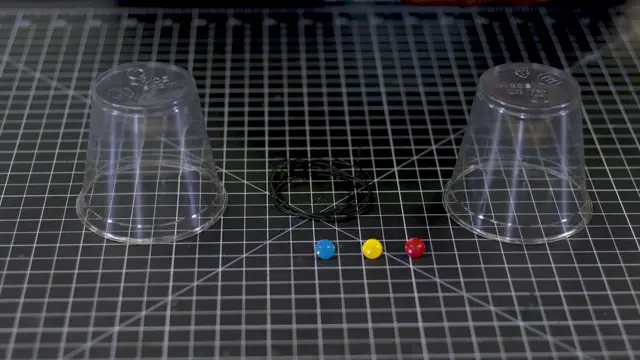 BH-0004
 Build a cup phoneConstruya un teléfono de vasos
Two cups and a string carry your voice across the room: see how sound travels as a vibration.Dos vasos y una cuerda llevan su voz de un lado a otro del cuarto: vea cómo el sonido viaja como una vibración.
- Ways in:Formas de empezar:
- ReadLeer
- DoHacer
- SimulateSimular
Best for ages 4 to 10Ideal de 4 a 10 años
ManufacturingManufacturaElectronicsElectrónica
Free BYRD, CC BYLessonLección