ExploreExplorarBH-0072
Shape a foil boat and load it with spoons until it sinksHaga un barco de papel de aluminio y cárguelo con cucharas hasta que se hunda
Fold a square of kitchen foil into a boat, float it in a tub, and add spoons one at a time to see how shape helps a boat carry a load.Doble un cuadro de papel de aluminio en forma de barco, póngalo a flotar en una tina y agréguele cucharas una por una para ver cómo la forma ayuda a un barco a llevar carga.
- Ways in:Formas de empezar:
- Read, 3 minutesLeer, 3 minutos
- Do, 20 minutesHacer, 20 minutos
- AgesEdades
- Every age. Best for ages 3 to 6.Todas las edades. Ideal de 3 a 6 años.
- CostCosto
- Things already at homeCosas que ya hay en casa
The MESH'D components this item uses:Los componentes MESH'D que usa:ManufacturingManufacturaHolistic DesignDiseño integral
Do, about 20 minutesHacer, unos 20 minutos
Build it at homeConstrúyalo en casa
StepsPasos
- Fill the tub about halfway with water and set it on a towel.Llene la tina con agua más o menos hasta la mitad y póngala sobre una toalla.
- Lay one flat square of foil on the water. Your child adds spoons one at a time. Count them out loud until it sinks.Ponga un cuadro plano de papel de aluminio sobre el agua. La niña o el niño agrega cucharas una por una. Cuéntenlas en voz alta hasta que se hunda.
- Take a new square and fold up its four edges to make walls, like a tray.Tome otro cuadro y doble hacia arriba sus cuatro orillas para hacer paredes, como una charola.
- Ask: will this boat hold more spoons than the flat sheet?Pregunte: ¿este barco cargará más cucharas que la hoja plana?
- Float the boat and add spoons one at a time, gently, counting each one.Ponga el barco a flotar y agregue cucharas una por una, con cuidado, contando cada una.
- Watch the boat sit lower in the water with each spoon. When water spills over a wall, it sinks. How many did it hold?Vean cómo el barco baja un poco más con cada cuchara. Cuando el agua se mete por una pared, se hunde. ¿Cuántas cargó?
- Fish out the spoons, make a new boat with one change your child picks, and test again.Saquen las cucharas, hagan un barco nuevo con un cambio que escoja la niña o el niño, y pruébenlo otra vez.
- Empty the tub together and dry hands.Vacíen juntos la tina y séquense las manos.
What you needLo que necesita
- A tub or a big bowl of water, set on a towelUna tina o un tazón grande con agua, sobre una toalla
- Kitchen foil, torn into squares about as wide as a sheet of paperPapel de aluminio, cortado en cuadros como del ancho de una hoja de papel
- A handful of metal spoons, all the same sizeUn puñado de cucharas de metal, todas del mismo tamaño
- A towel for spillsUna toalla para lo que se tire
Things already at home.Cosas que ya hay en casa.
Stay within arm's reach the whole time, at any depth of water, and empty the tub together when you are done. Foil edges can be sharp, so you tear the squares and fold their edges over. Use spoons for the cargo, never coins, beads or other small things: for a child under three or one who still puts things in their mouth, every loose piece is too big to fit through a toilet-paper tube. Wipe up spills so no one slips.Quédese al alcance de su brazo todo el tiempo, sin importar la profundidad del agua, y al terminar vacíen juntos la tina. Las orillas del papel de aluminio pueden cortar, así que usted corta los cuadros y dobla sus orillas. Use cucharas como carga, nunca monedas, cuentas ni otras cosas pequeñas: para un niño menor de tres años o que todavía se lleva cosas a la boca, cada pieza suelta debe ser demasiado grande para caber dentro de un tubo de papel higiénico. Limpie lo que se tire para que nadie se resbale.
Read, 3 minutesLeer, 3 minutos
The big ideaLa gran idea
A boat floats because it pushes water out of the way, and the water pushes back up. The more water a boat pushes aside, the harder the water pushes up. A flat sheet of foil pushes aside very little, so a few spoons sink it. Fold its edges up into walls and the same foil becomes a boat that sits lower and lower as you load it, pushing aside more and more water, until water spills over a wall and in it goes. Wide boats with tall enough walls usually carry the most, and spreading the load evenly keeps a boat from tipping. Real ships are made of steel, which sinks as a lump, yet they float for exactly this reason: their shape.Un barco flota porque aparta el agua de su camino, y el agua lo empuja de vuelta hacia arriba. Entre más agua aparta un barco, más fuerte lo empuja el agua hacia arriba. Una hoja plana de papel de aluminio aparta muy poca agua, así que unas cuantas cucharas la hunden. Si dobla sus orillas hacia arriba como paredes, el mismo papel se vuelve un barco que baja un poco más con cada carga, apartando más y más agua, hasta que el agua se mete por una pared y se va al fondo. Los barcos anchos con paredes bastante altas suelen cargar más, y repartir bien la carga evita que el barco se voltee. Los barcos de verdad son de acero, que en bola se hunde, y aun así flotan exactamente por esta razón: su forma.
Your engineering challengeSu reto de ingeniería
Design a boat from one square of foil that carries the most spoons. Then make it better: change one thing about its shape and test again.Diseñe con un solo cuadro de papel de aluminio el barco que cargue más cucharas. Luego mejórelo: cambie una cosa de su forma y pruébelo otra vez.
Make it an experimentConviértalo en un experimento
Science is about changing one thing and watching what happens. Write down your guess, your hypothesis, before you start.La ciencia se trata de cambiar una cosa y observar qué pasa. Escriba su suposición, su hipótesis, antes de empezar.
- Keep the foil square the same size and change only the walls: low walls on one boat, taller walls on another.Deje el cuadro de papel del mismo tamaño y cambie solo las paredes: paredes bajas en un barco y más altas en otro.
- Keep the boat the same and change only where the spoons go: all on one side, then spread out evenly.Deje el mismo barco y cambie solo dónde van las cucharas: todas de un lado, y luego repartidas por igual.
- Keep the shape the same and change only the size: fold the same kind of boat from a bigger square of foil. How many more spoons does it carry?Deje la misma forma y cambie solo el tamaño: doble el mismo tipo de barco con un cuadro de papel más grande. ¿Cuántas cucharas más carga?
Use it, share it, adapt itÚsela, compártala, adáptela
The credit to copyEl crédito para copiar
Free BYRD, CC BY. “Shape a foil boat and load it with spoons until it sinks” from the Byrd Academy STEM Curriculum by Byrd EDU, byrdathome.org.Free BYRD, CC BY. “Haga un barco de papel de aluminio y cárguelo con cucharas hasta que se hunda”, del Currículo STEM de Byrd Academy, de Byrd EDU, byrdathome.org.
This is free to use, share and adapt, even commercially, under the Creative Commons Attribution 4.0 International license (CC BY 4.0), with this credit. What Free BYRD means.Esto es libre de usar, compartir y adaptar, incluso con fines comerciales, bajo la licencia Creative Commons Atribución 4.0 Internacional (CC BY 4.0), con este crédito. Qué significa Free BYRD.
Keep goingSiga adelante
What to do nextQué hacer después
Make it harderHágalo más difícil
Hold a boat contest: everyone gets one square of foil and the same spoons. Draw each design before you test it, write how many spoons it held, and name what made the winner win.Hagan un concurso de barcos: cada quien recibe un cuadro de papel de aluminio y las mismas cucharas. Dibujen cada diseño antes de probarlo, anoten cuántas cucharas cargó y digan qué hizo ganar al ganador.
For a younger onePara alguien más pequeño
Float one foil boat and let your little one load big spoons, one at a time, saying in, in, in, then splash when it sinks.Pongan a flotar un barco de papel de aluminio y deje que su pequeño lo cargue con cucharas grandes, una por una, diciendo adentro, adentro, adentro, y luego chapuzón cuando se hunda.
Try this nextPruebe esto después
Sink or float chartTabla de ¿se hunde o flota?
Two big boxes for floaters and sinkers, a place for surprises, and the one idea that explains them all.Dos cuadros grandes para lo que flota y lo que se hunde, un lugar para las sorpresas y la idea que las explica todas.
- Ways in:Formas de empezar:
- DoHacer
Best for ages 3 and upIdeal desde los 3 años
DesignDiseño
Free BYRD, CC BYPrintablePara imprimir
Sink or Float HarborEl puerto: ¿se hunde o flota?
Your child guesses which things will sink or float, then tests each one in a tub of water.Su hijo adivina qué cosas se hunden o flotan y luego prueba cada una en una tina con agua.
- Ways in:Formas de empezar:
- DoHacer
about three to four yearsde tres a cuatro años, más o menos
Free BYRD, CC BYAges zero to fiveDe cero a cinco años
The Rain CupEl vaso de lluvia
Your child fills a cup with holes in the bottom and makes it rain over a tray of water.Su niño llena un vaso con hoyitos en el fondo y hace llover sobre una charola con agua.
- Ways in:Formas de empezar:
- DoHacer
about one to two yearsde uno a dos años, más o menos
Free BYRD, CC BYAges zero to fiveDe cero a cinco años
 BH-0003
 One sheet of paper, many triesUna hoja de papel, muchos intentos
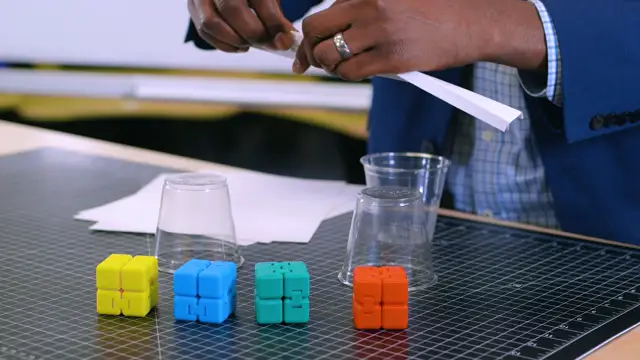
Keep a cup of blocks off the table with only one sheet of paper, by improving your design one try at a time.Mantenga un vaso con bloques lejos de la mesa con una sola hoja de papel, mejorando su diseño intento tras intento.
- Ways in:Formas de empezar:
- ReadLeer
- DoHacer
- SimulateSimular
Best for ages 5 and upIdeal desde los 5 años
ManufacturingManufacturaDesignDiseño
Free BYRD, CC BYLessonLección