
Virtual toursRecorridos virtualesTOUR-0001

TOUR-0001

Virtual tour, 8 minutes, 6 stopsRecorrido virtual, 8 minutos, 6 paradas

Inside a circuit, from the wall outlet to the chipDentro de un circuito, del tomacorriente al chip

Follow electricity from the outlet on your wall, through the wires and a phone charger, onto a circuit board and into a chip, where billions of tiny switches turn on and off.Siga la electricidad desde el tomacorriente de su pared, por los cables y un cargador de teléfono, hasta una placa de circuito y dentro de un chip, donde miles de millones de interruptores diminutos se encienden y se apagan.

AgesEdades
Every age. Best for ages 8 and up.Todas las edades. Ideal desde los 8 años.
TopicTema
Electricity and magnetsElectricidad e imanes
HowCómo
Tap the ring, or use Go deeper or the arrow keys.Toque el anillo, o use Más adentro o las flechas del teclado.

The MESH'D components this tour shows:Los componentes MESH'D que muestra:ElectronicsElectrónica

The stopsLas paradas

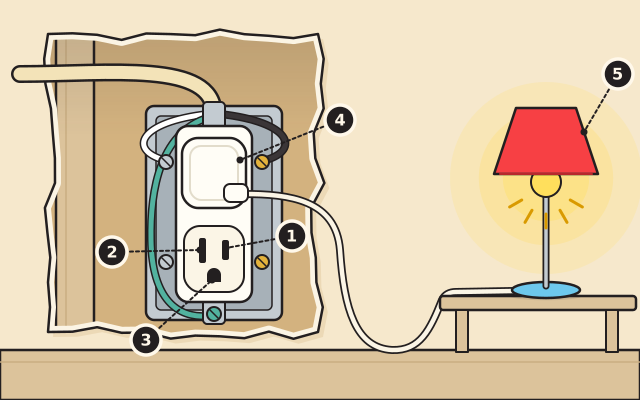
Look forBusque

  1. The hot slotLa ranura del vivo
  2. The neutral slotLa ranura del neutro
  3. The ground holeEl orificio de tierra
  4. The plug's three prongsLas tres patas de la clavija
  5. The lamp, where the current does its workLa lámpara, donde la corriente hace su trabajo

Stop 1Parada 1

The wall outletEl tomacorriente

Outlets in United States homes give one hundred ten to one hundred twenty volts. A plug has two upright prongs: one is the hot, and the other, sometimes longer, is the neutral.Los tomacorrientes de las casas en Estados Unidos dan de ciento diez a ciento veinte voltios. Una clavija tiene dos patas verticales: una es el vivo y la otra, a veces más larga, es el neutro.

Plug in a lamp, switch it on, and current flows between the hot and the neutral, through the lamp. The third prong is the ground. It protects you from a shock if something goes wrong in a device with a metal case.Conecte una lámpara, enciéndala, y la corriente fluye entre el vivo y el neutro, a través de la lámpara. La tercera pata es la tierra. Lo protege de una descarga si algo falla en un aparato con caja de metal.

Try this at homePruébelo en casaWire a circuitConecte un circuito

Learn more: U.S. Department of Energy, Electricity frequently asked questionsMás información: U.S. Department of Energy, Electricity frequently asked questions

Next: Wires and breakersSiguiente: Cables e interruptores automáticos
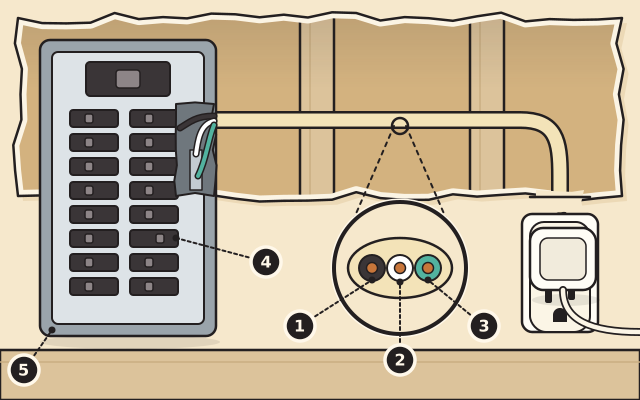
Look forBusque

  1. The hot wire, blackEl cable vivo, negro
  2. The neutral wire, whiteEl cable neutro, blanco
  3. The ground wire, greenEl cable de tierra, verde
  4. A circuit breakerUn interruptor automático
  5. The breaker panelEl tablero de interruptores

Stop 2Parada 2

Wires and breakersCables e interruptores automáticos

Behind the wall, wires carry the current to the outlet. Inside, they are metal, and each one is coated in plastic insulation. The hot wire is often black or red, the neutral white or gray, and the ground green or green with yellow stripes.Detrás de la pared, unos cables llevan la corriente al tomacorriente. Por dentro son de metal, y cada uno va cubierto de un aislante de plástico. El vivo suele ser negro o rojo, el neutro blanco o gris, y la tierra verde o verde con rayas amarillas.

Farther back, a circuit breaker guards the wires. If too much current flows, it trips and opens the circuit, so the wires do not overheat.Más atrás, un interruptor automático cuida los cables. Si pasa demasiada corriente, se dispara y abre el circuito, para que los cables no se sobrecalienten.

Try this at homePruébelo en casaVolts, ohms and amps: Ohm's lawVoltios, ohmios y amperios: la ley de Ohm

Learn more: U.S. Occupational Safety and Health Administration, Controlling Electrical HazardsMás información: U.S. Occupational Safety and Health Administration, Controlling Electrical Hazards

Next: The phone chargerSiguiente: El cargador del teléfono

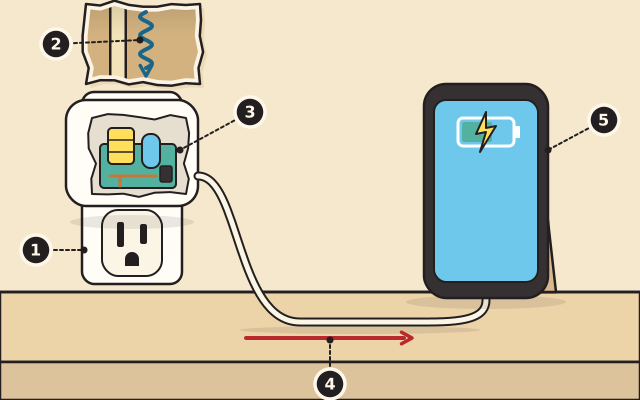
Look forBusque

  1. The outletEl tomacorriente
  2. Alternating current coming inLa corriente alterna que entra
  3. The adapter, opened upEl adaptador, abierto
  4. Direct current going out along the cordLa corriente continua que sale por el cable
  5. The phone, chargingEl teléfono, cargándose

Stop 3Parada 3

The phone chargerEl cargador del teléfono

Plug in a phone charger and its block goes to work. The block is a power adapter. It turns the alternating current from the wall outlet into direct current, the kind that powers electronic devices.Conecte un cargador de teléfono y su bloque se pone a trabajar. Ese bloque es un adaptador de corriente. Convierte la corriente alterna del tomacorriente en corriente continua, la que alimenta los aparatos electrónicos.

Adapters are everywhere. In 2005, there were already about five of them for every person in the United States.Los adaptadores están en todas partes. En 2005 ya había unos cinco por cada persona en Estados Unidos.

Try this at homePruébelo en casaRead the power labels and test a solar calculator by angleLea las etiquetas de potencia y pruebe una calculadora solar según el ángulo

Learn more: U.S. Environmental Protection Agency, news release on power adaptersMás información: U.S. Environmental Protection Agency, news release on power adapters

Next: The circuit boardSiguiente: La placa de circuito

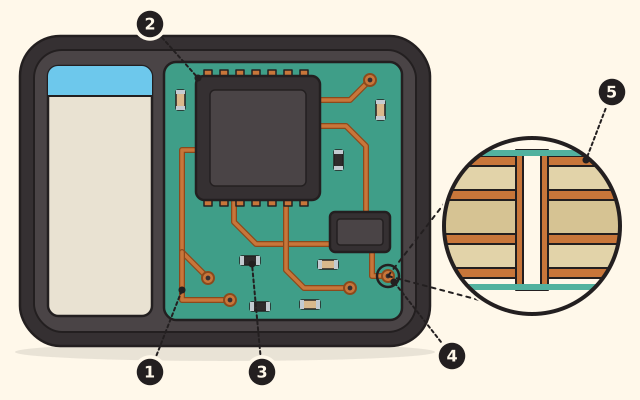
Look forBusque

  1. Copper pathsCaminos de cobre
  2. A chipUn chip
  3. Other small partsOtras piezas pequeñas
  4. A hole that links the layersUn agujero que une las capas
  5. The layers, cut openLas capas, en corte

Stop 4Parada 4

The circuit boardLa placa de circuito

Inside the phone, the chips sit on a flat board. The board is the link between the chips and the other electronic parts. It is made of glass and resin, which do not conduct electricity, and paths of copper etched from a thin sheet carry the current from part to part.Dentro del teléfono, los chips van sobre una placa plana. La placa es el enlace entre los chips y las demás piezas electrónicas. Está hecha de vidrio y resina, que no conducen la electricidad, y unos caminos de cobre, grabados en una lámina delgada, llevan la corriente de una pieza a otra.

Many boards stack layers of copper paths, often four, six or eight. Holes drilled through the board connect one layer to the next.Muchas placas apilan capas de caminos de cobre, a menudo cuatro, seis u ocho. Unos agujeros perforados en la placa unen una capa con la siguiente.

Try this at homePruébelo en casaLight up a paper circuit cardIlumine una tarjeta con un circuito de papel

Learn more: U.S. Environmental Protection Agency, Printed Wiring Board Cleaner Technologies Substitutes Assessment: Making Holes ConductiveMás información: U.S. Environmental Protection Agency, Printed Wiring Board Cleaner Technologies Substitutes Assessment: Making Holes Conductive

Next: The chipSiguiente: El chip

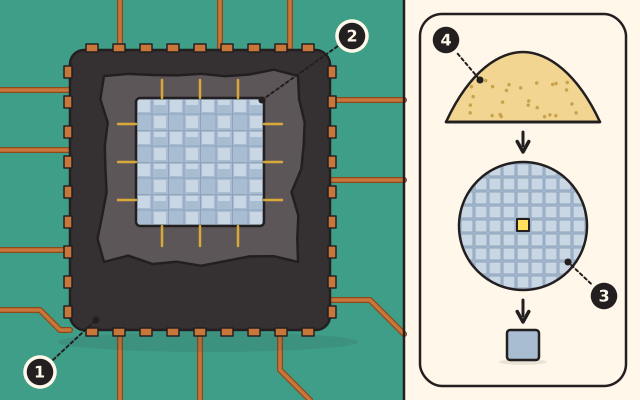
Look forBusque

  1. The package, broken openEl encapsulado, abierto
  2. The silicon insideEl silicio de adentro
  3. A wafer of many chipsUna oblea con muchos chips
  4. Sand, mostly silicon and oxygenArena, sobre todo silicio y oxígeno

Stop 5Parada 5

The chipEl chip

Chips start as silicon, one of the most common elements on Earth. Silicon and oxygen are the main ingredients of most beach sand. Makers begin with a wafer, a thin and often round slice, and build dozens of tiny circuits on it at once.Los chips empiezan como silicio, uno de los elementos más abundantes de la Tierra. El silicio y el oxígeno son los ingredientes principales de casi toda la arena de playa. Los fabricantes parten de una oblea, una rebanada delgada y a menudo redonda, y construyen docenas de circuitos diminutos sobre ella a la vez.

Then they cut the wafer apart and seal each piece in a package. That package is the chip you see on the board.Luego cortan la oblea en pedazos y sellan cada uno en un encapsulado. Ese encapsulado es el chip que usted ve en la placa.

Try this at homePruébelo en casaSilicon: How the World Makes a ChipSilicio: cómo el mundo fabrica un chip

Learn more: National Institute of Standards and Technology, Why NIST Is Putting Its CHIPS Into U.S. ManufacturingMás información: National Institute of Standards and Technology, Why NIST Is Putting Its CHIPS Into U.S. Manufacturing

Next: Billions of tiny switchesSiguiente: Incontables interruptores diminutos

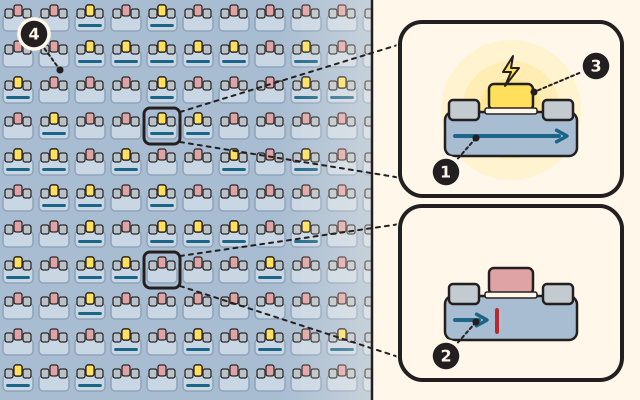
Silicon seen up close as rows of tiny cells, some lit. Two cells are magnified: in one the control is on and an arrow of current passes through; in the other the control is off and the arrow stops.

Look forBusque

  1. A switch turned on: current flowsUn interruptor encendido: la corriente pasa
  2. A switch turned off: current stopsUn interruptor apagado: la corriente se detiene
  3. The control that a small voltage setsEl control que mueve un pequeño voltaje
  4. Rows and rows of switchesFilas y filas de interruptores

Stop 6Parada 6

Billions of tiny switchesIncontables interruptores diminutos

Look closer at the silicon and you reach the transistors, tiny switches that turn on and off. A small voltage makes each one let current flow or stop it, with no moving parts.Mire más de cerca el silicio y llegará a los transistores, interruptores diminutos que se encienden y se apagan. Un pequeño voltaje hace que cada uno deje pasar la corriente o la detenga, sin piezas que se muevan.

A typical chip holds billions of them. Working together, they do complex tasks, from sending signals to processing information.Un chip típico tiene miles de millones. Trabajando juntos, hacen tareas complejas, desde enviar señales hasta procesar información.

Try this at homePruébelo en casaBits, switches and pixelsBits, interruptores y píxeles

Learn more: National Institute of Standards and Technology, Why NIST Is Putting Its CHIPS Into U.S. ManufacturingMás información: National Institute of Standards and Technology, Why NIST Is Putting Its CHIPS Into U.S. Manufacturing

Use it, share it, adapt itÚsela, compártala, adáptela

The credit to copyEl crédito para copiar

Free BYRD, CC BY. “Inside a circuit, from the wall outlet to the chip” from the Byrd Academy STEM Curriculum by Byrd EDU, byrdathome.org.Free BYRD, CC BY. “Dentro de un circuito, del tomacorriente al chip”, del Currículo STEM de Byrd Academy, de Byrd EDU, byrdathome.org.

This is free to use, share and adapt, even commercially, under the Creative Commons Attribution 4.0 International license (CC BY 4.0), with this credit. What Free BYRD means.Esto es libre de usar, compartir y adaptar, incluso con fines comerciales, bajo la licencia Creative Commons Atribución 4.0 Internacional (CC BY 4.0), con este crédito. Qué significa Free BYRD.

Keep goingSiga adelante

What to do nextQué hacer después

Make it harderHágalo más difícil

With a grown-up, read the small print on a charger block. Can you find what it says goes in and what comes out? Look for alternating current and direct current. Then find out why the wall uses one and the phone the other.Con una persona adulta, lea la letra pequeña de un cargador. ¿Encuentra lo que dice que entra y lo que sale? Busque la corriente alterna y la corriente continua. Luego averigüe por qué la pared usa una y el teléfono la otra.

For a younger onePara alguien más pequeño

Go on an outlet hunt in one room and count them together. Which ones have a third hole, for the ground? Remember: only plugs go into outlets, and only with a grown-up nearby.Salgan a buscar tomacorrientes en un cuarto y cuéntenlos juntos. ¿Cuáles tienen un tercer orificio, el de tierra? Recuerde: en un tomacorriente solo entran clavijas, y siempre con una persona adulta cerca.

Try this nextPruebe esto después

SIM-0006

Wire a circuitConecte un circuito

Lay wires between a battery, an LED, a resistor, a switch and a gap. Make a full loop and the LED lights; leave a break anywhere and nothing flows.Ponga cables entre una pila, un LED, una resistencia, un interruptor y un hueco. Haga un circuito completo y el LED se enciende; deje una interrupción en cualquier lugar y nada fluye.

  • Ways in:Formas de empezar:
  • SimulateSimular

Best for ages 8 and upIdeal desde los 8 años

ElectronicsElectrónica

Free BYRD, CC BYSimulationSimulación

SIM-0020

Volts, ohms and amps: Ohm's lawVoltios, ohmios y amperios: la ley de Ohm

Light a bulb from a battery, add a resistor in a row or side by side, and read the volts and amps on a multimeter, the way an electrician checks a circuit.Encienda un foco con una pila, agregue una resistencia en fila o lado a lado, y lea los voltios y amperios en un multímetro, como revisa un circuito un electricista.

  • Ways in:Formas de empezar:
  • SimulateSimular

Best for ages 8 and upIdeal desde los 8 años

ElectronicsElectrónica

Free BYRD, CC BYSimulationSimulación

STEMGrades 3 to 5Grados 3 a 5 How does electricity know where to go?¿Cómo sabe la electricidad a dónde ir? STEM-ES-03

Circuits AliveCircuitos vivos

Discover the loop that makes a light turn on, test what conducts, and build a light-up sign with your name or a message.Descubra el circuito cerrado que enciende una luz, pruebe qué materiales conducen y construya un letrero luminoso con su nombre o un mensaje.

  • Ways in:Formas de empezar:
  • ReadLeer
  • DoHacer
  • SimulateSimular

Grades 3 to 5Grados 3 a 5

ManufacturingManufacturaElectronicsElectrónica

Free BYRD, CC BYCurriculum unitUnidad del currículo

BH-0011

Light up a paper circuit cardIlumine una tarjeta con un circuito de papel

Lay copper tape on a card, add an LED and a coin cell, and fold the corner to close the loop and make it light.Ponga cinta de cobre en una tarjeta, agregue un LED y una pila de botón, y doble la esquina para cerrar el circuito y encender la luz.

  • Ways in:Formas de empezar:
  • ReadLeer
  • DoHacer
  • SimulateSimular

Best for ages 8 and upIdeal desde los 8 años

ManufacturingManufacturaElectronicsElectrónica

Free BYRD, CC BYHome activityActividad en casa

Explore everythingExplorar todo