

ExploreExplorarBH-0006
Build a solar ovenConstruya un horno solar
Turn a box, foil and clear plastic into an oven the sun heats, made for Pi Day to keep a pie warm.Convierta una caja, papel de aluminio y plástico transparente en un horno que calienta el sol, hecho para el Día de Pi para mantener caliente un pastel.
- Ways in:Formas de empezar:
- Read, 2 minutesLeer, 2 minutos
- Do, 45 minutesHacer, 45 minutos
- Simulate, 5 minutesSimular, 5 minutos
- AgesEdades
- Every age. Best for ages 8 and up.Todas las edades. Ideal desde los 8 años.
- CostCosto
- Things already at homeCosas que ya hay en casa
- EpisodeEpisodio
- Episode 6Episodio 6
The MESH'D components this item uses:Los componentes MESH'D que usa:ManufacturingManufacturaElectronicsElectrónica
WatchVea
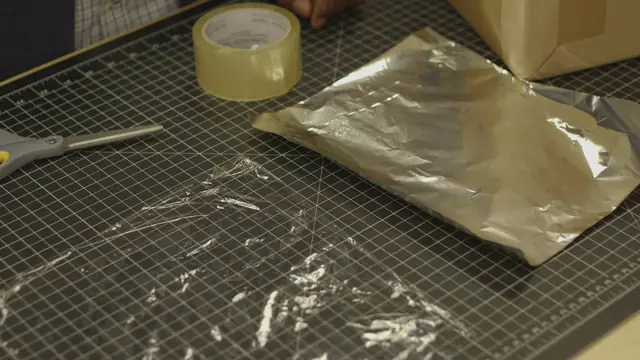
Do, about 45 minutesHacer, unos 45 minutos
Build it at homeConstrúyalo en casa
StepsPasos
- Tape the box closed: across the middle and along both edges, so it is secure.Cierre la caja con cinta: a lo largo del centro y de ambos bordes, para que quede firme.
- Cut a flap into the top of the box on three sides, leaving the fourth side as a hinge. The flap is the lid, and the opening under it is the window.Corte una solapa en la parte de arriba de la caja por tres lados, dejando el cuarto lado como bisagra. Esa solapa es la tapa, y la abertura de abajo es la ventana.
- Cover the inside of the box with aluminum foil, shiny side up, on every wall.Cubra el interior de la caja con papel de aluminio, con el lado brillante hacia arriba, en todas las paredes.
- Cover the inside of the lid with foil and tape it down so it stays in place.Cubra el interior de la tapa con papel de aluminio y péguelo para que no se mueva.
- Cover the window with clear plastic and tape it on all around.Cubra la ventana con plástico transparente y péguelo con cinta por todo el borde.
- Cut a door into the side of the box so you can put the food in, set the oven in the sun with the lid open toward the light, and wait.Corte una puerta en un lado de la caja para meter la comida, ponga el horno al sol con la tapa abierta hacia la luz, y espere.
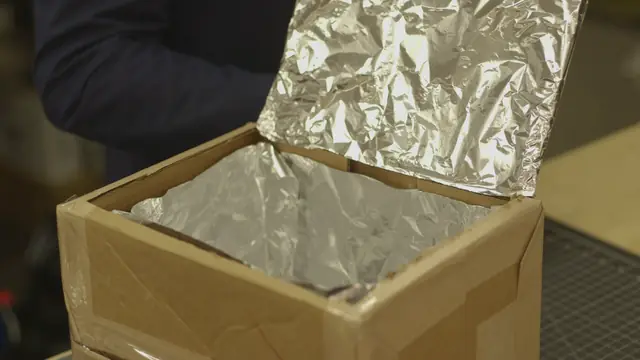
What you needLo que necesita
- A cardboard boxUna caja de cartón
- Aluminum foilPapel de aluminio
- Clear plastic, such as plastic wrapPlástico transparente, como envoltura plástica
- Tape, and clear tapeCinta adhesiva, y cinta transparente
- ScissorsTijeras
- Some food to warm, such as a slice of pieAlgo de comida para calentar, como una rebanada de pastel
Things already at home.Cosas que ya hay en casa.
A grown-up handles the cutting. The inside of the oven and the food can get hot, so let a grown-up take the food out. Ask a grown-up before you post your project or results online.Una persona adulta se encarga de cortar. El interior del horno y la comida pueden calentarse, así que deje que una persona adulta saque la comida. Pregunte a una persona adulta antes de publicar su proyecto o sus resultados en internet.
Read, 2 minutesLeer, 2 minutos
The big ideaLa gran idea
Sunlight comes into the box through the clear plastic window, and any sunlight that hits the foil-lined lid is reflected down into the box as well. All that energy from the sun warms the inside of the box, and the plastic traps the warm air so the heat cannot escape. The temperature inside keeps rising until it warms, and even cooks, whatever is inside.La luz del sol entra en la caja por la ventana de plástico transparente, y la luz que cae sobre la tapa forrada de aluminio también se refleja hacia adentro. Toda esa energía del sol calienta el interior de la caja, y el plástico atrapa el aire caliente para que el calor no se escape. La temperatura adentro sigue subiendo hasta calentar, y hasta cocinar, lo que haya adentro.
Simulate, 5 minutesSimular, 5 minutos
Heat in a solar ovenEl calor en un horno solar
Aim your oven at the sun, add foil, plastic and newspaper, and watch the temperature inside climb over an hour until the food is hot.Apunte su horno al sol, agregue papel de aluminio, plástico y periódico, y vea subir la temperatura adentro durante una hora hasta que la comida esté caliente.
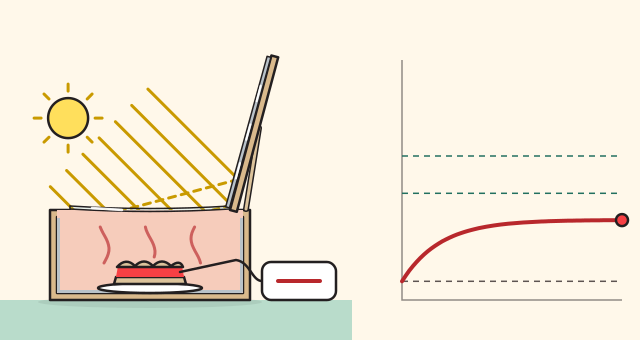
The drawing shows where it starts. It runs here once its script has loaded.El dibujo muestra dónde empieza. Funciona aquí una vez que carga su código.
Your challengeSu reto
- Take the plastic off the window and compare the new line with the last one.Quite el plástico de la ventana y compare la línea nueva con la anterior. Not done yet.Todavía no.
- Get the inside past one hundred forty degrees Fahrenheit (sixty Celsius) within the hour, hot enough to keep food hot.Haga que el interior pase de sesenta grados Celsius (ciento cuarenta Fahrenheit) dentro de la hora, lo bastante para mantener caliente la comida. Not done yet.Todavía no.
- Get the inside past one hundred sixty five degrees Fahrenheit (seventy four Celsius) within the hour, hot enough to reheat leftovers.Haga que el interior pase de setenta y cuatro grados Celsius (ciento sesenta y cinco Fahrenheit) dentro de la hora, lo bastante para recalentar sobras. Not done yet.Todavía no.
Every challenge done. Now try it for real at home.Todos los retos logrados. Ahora pruébelo de verdad en casa.
Sunlight getting into the ovenLuz del sol que entra al horno
Inside the ovenDentro del horno
The day outsideEl día afuera
Each yellow ray carries the same sunlight; a dashed one has bounced off the foil. On the graph, the solid line is this oven over the hour, the dashed line your last try, and the green lines the temperatures that keep food hot and that reheat leftovers.Cada rayo amarillo lleva la misma luz del sol; uno punteado rebotó en el aluminio. En la gráfica, la línea continua es este horno durante la hora, la punteada su intento anterior, y las líneas verdes las temperaturas que mantienen caliente la comida y que recalientan las sobras.
What is happeningQué está pasando
Sunlight carries energy. When it shines straight onto the window, the most light gets in; when it comes in at a slant, the same sunlight is spread out, so less of it reaches the window.La luz del sol lleva energía. Cuando brilla directo sobre la ventana, entra la mayor cantidad de luz; cuando llega inclinada, la misma luz se reparte, así que menos alcanza la ventana.
Foil on the lid bounces extra sunlight down through the window. The lid catches the most when the sun is a little to the front, so the best aim is a trade between the window and the lid.El papel de aluminio en la tapa rebota más luz del sol hacia la ventana. La tapa atrapa más cuando el sol está un poco al frente, así que la mejor posición es un equilibrio entre la ventana y la tapa.
Inside, the light turns into heat. Heat always leaks out of a warm box: plastic over the window keeps the warm air in, and newspaper in the walls slows the leak. The inside keeps warming until the heat leaking out matches the heat coming in.Adentro, la luz se convierte en calor. El calor siempre se escapa de una caja caliente: el plástico sobre la ventana mantiene adentro el aire caliente, y el periódico en las paredes frena la fuga. El interior se sigue calentando hasta que el calor que sale iguala al calor que entra.
Things to tryCosas para probar
- Turn the oven away from the sun and watch the rays thin out and the line flatten.Aleje el horno del sol y vea cómo los rayos se separan y la línea se aplana.
- Take the foil off the lid and see which rays stop.Quite el papel de aluminio de la tapa y vea qué rayos se detienen.
- Change one thing at a time and compare the new line with the last one.Cambie una cosa a la vez y compare la línea nueva con la anterior.
- Run the hour and watch how fast the inside warms at first, and how it slows down later.Corra la hora y vea qué tan rápido se calienta el interior al principio, y cómo se frena después.
This is a model of a box oven on a clear, sunny day with no wind: the light is counted in a flat slice through the oven, and how much heat leaks out comes from typical numbers for cardboard, newspaper and plastic, some of them estimates. A real box also has side walls, and clouds and wind change everything, so your own oven will heat differently. Use a food thermometer, and let a grown-up take the food out.Este es un modelo de un horno de caja en un día claro y soleado, sin viento: la luz se cuenta en un corte plano del horno, y cuánto calor se escapa sale de números típicos del cartón, el periódico y el plástico, algunos de ellos estimados. Una caja real también tiene paredes a los lados, y las nubes y el viento lo cambian todo, así que su horno se calentará de otra manera. Use un termómetro de cocina, y deje que una persona adulta saque la comida.
Open the simulation on its own pageAbrir la simulación en su propia páginaWhy we have seasonsPor qué hay estacionesHeat on the move: spoons and cupsEl calor en movimiento: cucharas y vasos
Your engineering challengeSu reto de ingeniería
Build a solar oven you can use to heat up some food.Construya un horno solar que sirva para calentar algo de comida.
Make it an experimentConviértalo en un experimento
Science is about changing one thing and watching what happens. Write down your guess, your hypothesis, before you start.La ciencia se trata de cambiar una cosa y observar qué pasa. Escriba su suposición, su hipótesis, antes de empezar.
- Change the size of the box.Cambie el tamaño de la caja.
- Change the size of the window.Cambie el tamaño de la ventana.
- Change where the box sits in the sun.Cambie el lugar donde pone la caja al sol.
Use it, share it, adapt itÚsela, compártala, adáptela
The credit to copyEl crédito para copiar
Free BYRD, CC BY. “Build a solar oven” from the Byrd Academy STEM Curriculum by Byrd EDU, byrdathome.org.Free BYRD, CC BY. “Construya un horno solar”, del Currículo STEM de Byrd Academy, de Byrd EDU, byrdathome.org.
This is free to use, share and adapt, even commercially, under the Creative Commons Attribution 4.0 International license (CC BY 4.0), with this credit. What Free BYRD means.Esto es libre de usar, compartir y adaptar, incluso con fines comerciales, bajo la licencia Creative Commons Atribución 4.0 Internacional (CC BY 4.0), con este crédito. Qué significa Free BYRD.
Keep goingSiga adelante
What to do nextQué hacer después
Make it harderHágalo más difícil
Put a thermometer inside, write down the temperature every ten minutes, then change one thing and compare the two lists.Ponga un termómetro adentro, anote la temperatura cada diez minutos, luego cambie una cosa y compare las dos listas.
For a younger onePara alguien más pequeño
Set two ice cubes on plates in the sun, one inside the oven and one beside it, and watch which one melts first.Ponga dos cubos de hielo en platos al sol, uno dentro del horno y otro al lado, y observen cuál se derrite primero.
Try this nextPruebe esto después
Heat in a solar ovenEl calor en un horno solar
Aim your oven at the sun, add foil, plastic and newspaper, and watch the temperature inside climb over an hour until the food is hot.Apunte su horno al sol, agregue papel de aluminio, plástico y periódico, y vea subir la temperatura adentro durante una hora hasta que la comida esté caliente.
- Ways in:Formas de empezar:
- SimulateSimular
Best for ages 8 and upIdeal desde los 8 años
ManufacturingManufacturaElectronicsElectrónica
Free BYRD, CC BYSimulationSimulación
 SIM-0012
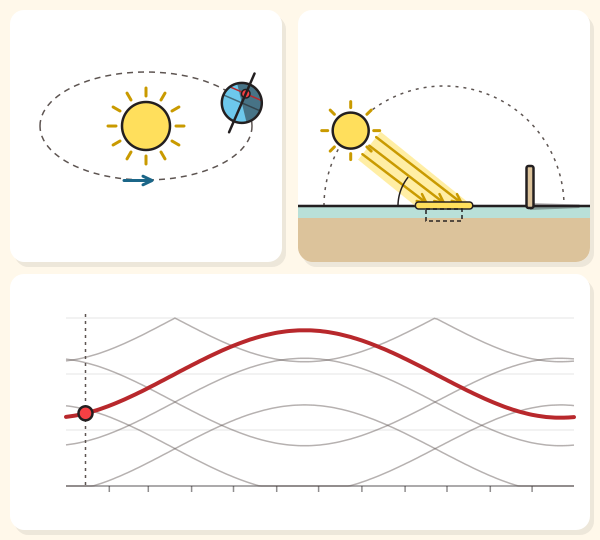
 Why we have seasonsPor qué hay estaciones
Pick a place and a day, and see how the tilted Earth sets the noon sun’s height, the length of the day and the sunlight each square of ground gets.Elija un lugar y un día, y vea cómo la Tierra inclinada fija la altura del sol del mediodía, la duración del día y la luz que recibe cada cuadro de suelo.
- Ways in:Formas de empezar:
- SimulateSimular
Best for ages 5 and upIdeal desde los 5 años
DesignDiseño
Free BYRD, CC BYSimulationSimulación
 SIM-0028
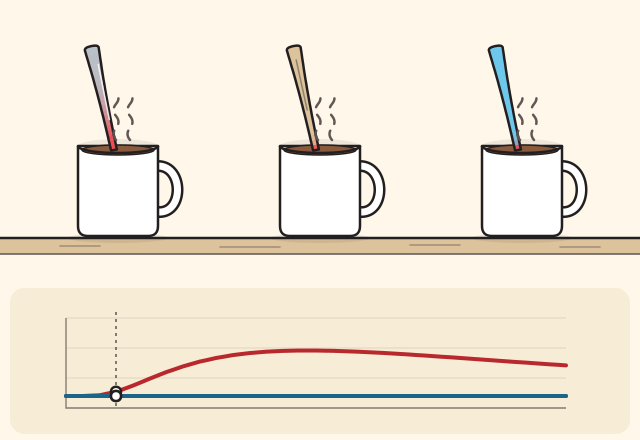
 Heat on the move: spoons and cupsEl calor en movimiento: cucharas y vasos
Stand a steel, a wooden and a plastic spoon in a hot drink, then pour the drink into three kinds of cup, and see where the heat goes, safely.Ponga una cuchara de acero, una de madera y una de plástico en una bebida caliente, luego sirva la bebida en tres tipos de vaso, y vea a dónde va el calor, sin peligro.
- Ways in:Formas de empezar:
- SimulateSimular
Best for ages 6 and upIdeal desde los 6 años
ManufacturingManufacturaDesignDiseño
Free BYRD, CC BYSimulationSimulación
 BH-0001
 Make a vacuumHaga un vacío
Pull the air out of a water bottle through a straw and watch a balloon shrink, then grow.Saque el aire de una botella de agua con un popote y vea cómo un globo se encoge y luego crece.
- Ways in:Formas de empezar:
- ReadLeer
- WatchVer
- DoHacer
- SimulateSimular
Best for ages 4 to 12Ideal de 4 a 12 años
ManufacturingManufacturaDesignDiseño
Free BYRD, CC BYLessonLección