

ExploreExplorarBH-0014
Make a straw flute and a rubber-band guitarHaga una flauta de popote y una guitarra de ligas
See sound as vibration, then cut a straw flute shorter and stretch rubber bands over a box to hear how length changes pitch.Vea el sonido como vibración, y luego corte una flauta de popote más corta y estire ligas sobre una caja para oír cómo el largo cambia el tono.
- Ways in:Formas de empezar:
- Read, 3 minutesLeer, 3 minutos
- Do, 30 minutesHacer, 30 minutos
- Simulate, 5 minutesSimular, 5 minutos
- AgesEdades
- Every age. Best for ages 5 to 12.Todas las edades. Ideal de 5 a 12 años.
- CostCosto
- Things already at homeCosas que ya hay en casa
- From the curriculumDel currículo
- STEM-ES-09
The MESH'D components this item uses:Los componentes MESH'D que usa:ManufacturingManufacturaElectronicsElectrónica
Do, about 30 minutesHacer, unos 30 minutos
Build it at homeConstrúyalo en casa
StepsPasos
- Stretch plastic wrap tight over a bowl, sprinkle a pinch of rice on top and tap the wrap. Watch the rice jump: that is vibration you can see.Estire bien el plástico sobre un tazón, ponga una pizca de arroz encima y dé golpecitos al plástico. Vea cómo brinca el arroz: es vibración que se puede ver.
- Put your fingers on your throat and hum. Feel the buzz.Ponga los dedos en su garganta y tararee. Sienta el zumbido.
- Press one end of your straw flat with your fingers, for about the length of a fingernail. Snip the two corners of the flat end to make a point.Aplane con los dedos una punta de su popote, más o menos del largo de una uña. Corte las dos esquinas de la punta aplanada para formar un pico.
- Put the pointed end in your mouth, just past your lips, press gently with your lips and blow hard. When it buzzes, the two flat flaps are vibrating.Métase la punta con pico en la boca, justo pasando los labios, apriete suave con los labios y sople fuerte. Cuando zumba, las dos aletas aplanadas están vibrando.
- Cut the straw shorter, a bit at a time, and blow after each cut. Listen to the note climb.Corte el popote más corto, poco a poco, y sople después de cada corte. Escuche cómo sube la nota.
- Stretch rubber bands around the open box, pluck them, and slide a pencil under them as a bridge to change their length.Estire ligas alrededor de la caja abierta, puntéelas y meta un lápiz debajo como puente para cambiar su largo.
What you needLo que necesita
- Drinking straws, one for each personPopotes, uno para cada persona
- ScissorsTijeras
- Rubber bands, some thick and some thinLigas, unas gruesas y otras delgadas
- An open box, such as a tissue box or a shoeboxUna caja abierta, como una de pañuelos o de zapatos
- A bowl, plastic wrap and a pinch of riceUn tazón, plástico para envolver y una pizca de arroz
- A pencilUn lápiz
Things already at home.Cosas que ya hay en casa.
Each person uses only their own straw flute, and nothing else goes in a mouth. A grown-up does the cutting. Point stretched rubber bands away from faces, keep rice away from babies and toddlers, who can choke on it, use cans only if their rims are smooth, and keep the volume kind to everyone's ears.Cada persona usa solo su propia flauta de popote, y nada más se mete a la boca. Una persona adulta hace los cortes. Apunte las ligas estiradas lejos de la cara, mantenga el arroz lejos de bebés y niños pequeños, que pueden asfixiarse con él, use latas solo si su borde es liso, y mantenga un volumen amable para los oídos de todos.
Read, 3 minutesLeer, 3 minutos
The big ideaLa gran idea
Every sound is made by something vibrating, moving back and forth very fast. You can see it when grains of rice bounce on a drum made of plastic wrap, and you can feel it when your throat buzzes as you hum. How fast something vibrates sets its pitch, and faster is higher. A shorter straw or a shorter stretch of rubber band vibrates faster, so it sounds higher, and cutting a straw in half makes its note jump up. Bigger usually means lower, which surprises a lot of people, and the fractions you cut, halves and quarters, are math you can hear.Todo sonido lo produce algo que vibra, que se mueve de un lado a otro muy rápido. Se puede ver cuando los granos de arroz brincan sobre un tambor hecho de plástico para envolver, y se puede sentir cuando la garganta zumba al tararear. Qué tan rápido vibra algo define su tono, y más rápido es más agudo. Un popote más corto o un tramo más corto de liga vibra más rápido, así que suena más agudo, y al cortar un popote a la mitad su nota sube. Lo más grande casi siempre suena más grave, cosa que sorprende a mucha gente, y las fracciones que corta, mitades y cuartos, son matemáticas que se pueden oír.
Simulate, 5 minutesSimular, 5 minutos
Sound and its wavesEl sonido y sus ondas
Change a string’s length and tightness, or a straw flute’s length, and watch how fast it vibrates and how long its sound waves are in the air. Half the length, one octave higher, and a wave half as long.Cambie el largo y la tensión de una cuerda, o el largo de una flauta de popote, y vea qué tan rápido vibra y qué tan largas son sus ondas de sonido en el aire. La mitad del largo, una octava más alta, y una onda de la mitad.
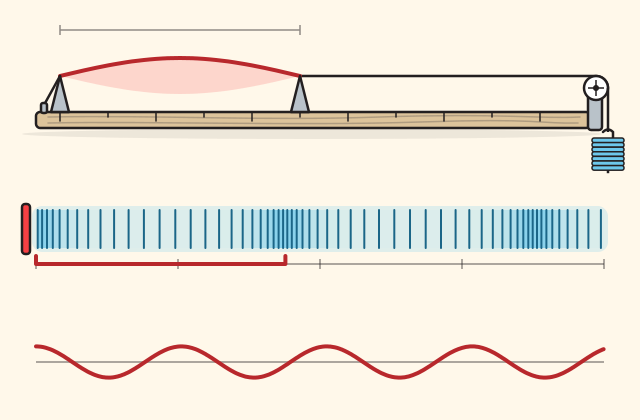
The drawing shows where it starts. It runs here once its script has loaded.El dibujo muestra dónde empieza. Funciona aquí una vez que carga su código.
Your challengeSu reto
- Cut the length in half and make the pitch go exactly one octave higher.Corte el largo a la mitad y haga que el tono suba justo una octava. Not done yet.Todavía no.
- Make the sound louder without changing its pitch.Haga el sonido más fuerte sin cambiar su tono. Not done yet.Todavía no.
- Make a sound whose wavelength in the air is shorter than thirty centimeters, about the length of a ruler.Haga un sonido cuya longitud de onda en el aire mida menos de treinta centímetros, más o menos el largo de una regla. Not done yet.Todavía no.
Every challenge done. Now try it for real at home.Todos los retos logrados. Ahora pruébelo de verdad en casa.
Pitch: vibrations each second, from low to highTono: vibraciones por segundo, de grave a agudo
Wavelength in the air, from short to longLongitud de onda en el aire, de corta a larga
Nearest noteNota más cercana
The last tryEl intento anterior
Vibrations now, compared with beforeVibraciones ahora, comparadas con antes
At the top, the shaded shape shows how far the string, or the air in the straw, moves at each place. In the middle, the sound in two meters of air: the blue layers bunch together where the air is squeezed, and the red mark on the ruler under them is one wavelength, from one squeeze to the next. At the bottom, ten milliseconds of the vibration: the solid wave is now and the dashed wave your last try. The sound plays only when you press its button.Arriba, la forma sombreada muestra cuánto se mueve la cuerda, o el aire del popote, en cada lugar. En medio, el sonido en dos metros de aire: las capas azules se juntan donde el aire se aprieta, y la marca roja en la regla de abajo es una longitud de onda, de un apretón al siguiente. Abajo, diez milisegundos de la vibración: la onda continua es ahora y la punteada su intento anterior. El sonido suena solo cuando usted oprime su botón.
The math, whereLas cuentas, donde : ;
What is happeningQué está pasando
Sound is a vibration, and its pitch is how many vibrations happen each second, counted in hertz. More vibrations each second means a higher pitch.El sonido es una vibración, y su tono es cuántas vibraciones ocurren cada segundo, contadas en hercios. Más vibraciones por segundo significan un tono más alto.
A shorter string or straw vibrates faster, and half the length makes twice as many vibrations: one octave higher. Pulling a string tighter also raises its pitch.Una cuerda o un popote más corto vibra más rápido, y la mitad del largo hace el doble de vibraciones: una octava más alta. Tensar más una cuerda también sube su tono.
In the air, every vibration pushes the air into a squeeze, and the squeezes travel away at the speed of sound, about three hundred forty three meters each second at room temperature. The distance from one squeeze to the next is the wavelength. Every pitch travels at the same speed, so a higher pitch, with more squeezes each second, packs them closer together: the higher the pitch, the shorter the wavelength.En el aire, cada vibración aprieta el aire, y esos apretones se alejan a la velocidad del sonido, unos trescientos cuarenta y tres metros por segundo a temperatura ambiente. La distancia de un apretón al siguiente es la longitud de onda. Todos los tonos viajan a la misma velocidad, así que un tono más alto, con más apretones por segundo, los junta más: entre más alto el tono, más corta la longitud de onda.
A bigger vibration is louder, not higher: the squeezes get stronger, but their pitch and their wavelength stay the same. The cup phone works because the tight string carries the vibration from one cup to the other.Una vibración más grande es más fuerte, no más alta: los apretones se hacen más fuertes, pero su tono y su longitud de onda siguen iguales. El teléfono de vasos funciona porque la cuerda tensa lleva la vibración de un vaso al otro.
Things to tryCosas para probar
- Cut the string’s length in half and compare the two waves, in time and in the air.Corte el largo de la cuerda a la mitad y compare las dos ondas, en el tiempo y en el aire.
- Hang a heavier weight and watch the pitch go up and the wavelength get shorter.Cuelgue una pesa más pesada y vea cómo sube el tono y se acorta la longitud de onda.
- Switch to the straw flute and compare its wavelength with its length.Cambie a la flauta de popote y compare su longitud de onda con su largo.
- Make it louder: does the pitch change? Does the wavelength?Súbale el volumen: ¿cambia el tono? ¿Y la longitud de onda?
The drawing is slowed down two hundred times so your eyes can follow it, and only the lowest note is shown; a real pluck also sounds higher overtones, and a real straw sounds a little lower than the rule says. The speed of sound changes a little with the air’s temperature. The tone plays only when you press the button, made in your browser, never a file.El dibujo está doscientas veces más lento para que sus ojos lo puedan seguir, y solo se muestra la nota más baja; un rasgueo real también suena con armónicos más altos, y un popote real suena un poco más grave de lo que dice la regla. La velocidad del sonido cambia un poco con la temperatura del aire. El tono suena solo cuando presiona el botón, hecho en su navegador, nunca un archivo.
Open the simulation on its own pageAbrir la simulación en su propia página
Your engineering challengeSu reto de ingeniería
Start a junk band: build an instrument from boxes, cans, rubber bands and straws, then line up your family's instruments from lowest to highest and explain the order with length.Arme una banda de cachivaches: construya un instrumento con cajas, latas, ligas y popotes, y luego ordenen los instrumentos de la familia del más grave al más agudo y explique el orden con el largo.
Make it an experimentConviértalo en un experimento
Science is about changing one thing and watching what happens. Write down your guess, your hypothesis, before you start.La ciencia se trata de cambiar una cosa y observar qué pasa. Escriba su suposición, su hipótesis, antes de empezar.
- Cut a straw flute in half and blow again, then cut it to a quarter. Listen to how the note changes.Corte a la mitad una flauta de popote y vuelva a soplar, y luego córtela a un cuarto. Escuche cómo cambia la nota.
- Pluck a rubber band, then slide a pencil under it to make the part that vibrates shorter, and pluck again.Puntee una liga, luego meta un lápiz debajo para acortar la parte que vibra y vuelva a puntearla.
- Try a thick band and a thin band stretched the same way, and a loose band against a tight one.Pruebe una liga gruesa y una delgada estiradas igual, y una liga floja contra una tensa.
Use it, share it, adapt itÚsela, compártala, adáptela
The credit to copyEl crédito para copiar
Free BYRD, CC BY. “Make a straw flute and a rubber-band guitar” from the Byrd Academy STEM Curriculum by Byrd EDU, byrdathome.org.Free BYRD, CC BY. “Haga una flauta de popote y una guitarra de ligas”, del Currículo STEM de Byrd Academy, de Byrd EDU, byrdathome.org.
This is free to use, share and adapt, even commercially, under the Creative Commons Attribution 4.0 International license (CC BY 4.0), with this credit. What Free BYRD means.Esto es libre de usar, compartir y adaptar, incluso con fines comerciales, bajo la licencia Creative Commons Atribución 4.0 Internacional (CC BY 4.0), con este crédito. Qué significa Free BYRD.
Keep goingSiga adelante
What to do nextQué hacer después
Make it harderHágalo más difícil
Cut a set of straw flutes to a whole, a half and a quarter of the same length, play them from low to high, and say how the fraction relates to the note. Then write a repeating rhythm pattern and hold it with your family band through a whole song.Corte un juego de flautas de popote a un entero, una mitad y un cuarto del mismo largo, tóquelas de grave a agudo y diga cómo se relaciona la fracción con la nota. Luego escriba un patrón de ritmo que se repita y manténgalo con su banda familiar durante toda una canción.
For a younger onePara alguien más pequeño
Tap the rice drum together and watch the rice dance, then hum with a hand on the throat. The grown-up makes a straw flute for the younger one to blow.Den golpecitos juntos al tambor de arroz y vean cómo baila el arroz, y luego tarareen con una mano en la garganta. La persona adulta hace una flauta de popote para que la niña o el niño la sople.
Try this nextPruebe esto después
Sound and its wavesEl sonido y sus ondas
Change a string’s length and tightness, or a straw flute’s length, and watch how fast it vibrates and how long its sound waves are in the air. Half the length, one octave higher, and a wave half as long.Cambie el largo y la tensión de una cuerda, o el largo de una flauta de popote, y vea qué tan rápido vibra y qué tan largas son sus ondas de sonido en el aire. La mitad del largo, una octava más alta, y una onda de la mitad.
- Ways in:Formas de empezar:
- SimulateSimular
Best for ages 4 to 12Ideal de 4 a 12 años
ElectronicsElectrónica
Free BYRD, CC BYSimulationSimulación
 BH-0004
 Build a cup phoneConstruya un teléfono de vasos
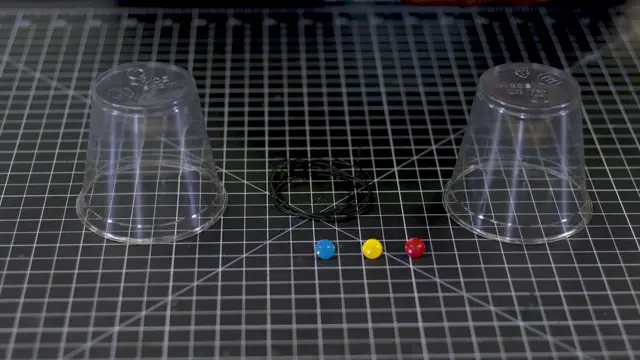
Two cups and a string carry your voice across the room: see how sound travels as a vibration.Dos vasos y una cuerda llevan su voz de un lado a otro del cuarto: vea cómo el sonido viaja como una vibración.
- Ways in:Formas de empezar:
- ReadLeer
- DoHacer
- SimulateSimular
Best for ages 4 to 10Ideal de 4 a 10 años
ManufacturingManufacturaElectronicsElectrónica
Free BYRD, CC BYLessonLección
 BH-0001
 Make a vacuumHaga un vacío
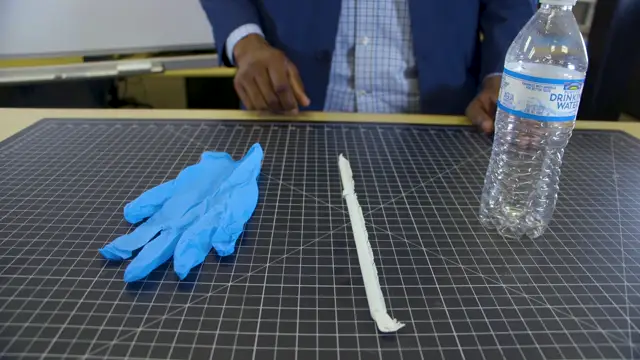
Pull the air out of a water bottle through a straw and watch a balloon shrink, then grow.Saque el aire de una botella de agua con un popote y vea cómo un globo se encoge y luego crece.
- Ways in:Formas de empezar:
- ReadLeer
- WatchVer
- DoHacer
- SimulateSimular
Best for ages 4 to 12Ideal de 4 a 12 años
ManufacturingManufacturaDesignDiseño
Free BYRD, CC BYLessonLección
Sound MachinesMáquinas de sonido
See sound as vibration, find out how length changes pitch, and build a junk band that proves fractions have a sound.Vea el sonido como vibración, descubra cómo la longitud cambia el tono y forme una banda de cosas recicladas que demuestra que las fracciones tienen sonido.
- Ways in:Formas de empezar:
- ReadLeer
- DoHacer
- SimulateSimular
Grades 3 to 5Grados 3 a 5
ManufacturingManufactura
Free BYRD, CC BYCurriculum unitUnidad del currículo