

ExploreExplorarBH-0076
Build a tower that stands in a fan’s windConstruya una torre que aguante el viento de un ventilador
Stack light blocks or small boxes in front of a fan, find the height where the wind tips the tower over, then make a taller one stand with a wider base and a lump of clay on the right side.Apile bloques ligeros o cajitas frente a un ventilador, encuentre la altura a la que el viento vuelca la torre, y luego haga que una más alta se quede de pie con una base más ancha y una bolita de plastilina del lado correcto.
- Ways in:Formas de empezar:
- Read, 3 minutesLeer, 3 minutos
- Do, 25 minutesHacer, 25 minutos
- Simulate, 10 minutesSimular, 10 minutos
- AgesEdades
- Every age. Best for ages 5 and up.Todas las edades. Ideal desde los 5 años.
- CostCosto
- Things already at homeCosas que ya hay en casa
The MESH'D components this item uses:Los componentes MESH'D que usa:ManufacturingManufacturaHolistic DesignDiseño integral
Do, about 25 minutesHacer, unos 25 minutos
Build it at homeConstrúyalo en casa
StepsPasos
- A grown-up sets the fan on the floor or a steady table, facing across an open space, plugs it in where the cord is out of the way, and leaves it off for now.Una persona adulta coloca el ventilador en el piso o en una mesa firme, mirando hacia un espacio libre, lo conecta donde el cable no estorbe y por ahora lo deja apagado.
- Lay a ruler straight out from the front of the fan and put a strip of tape at its far end. Build every tower on that tape, so each try is fair.Ponga una regla derecha desde el frente del ventilador y pegue una tira de cinta en su otro extremo. Construya cada torre sobre esa cinta, para que cada prueba sea justa.
- Stack three blocks straight on the tape, each one squarely on the one below.Apile tres bloques derechos sobre la cinta, cada uno bien centrado sobre el de abajo.
- The grown-up turns the fan on at its lowest speed. Does the tower stand or tip? Which way does it fall?La persona adulta enciende el ventilador en su velocidad más baja. ¿La torre se queda de pie o se vuelca? ¿Hacia dónde cae?
- Turn the fan off, add one block, and try again. Write down the height where it first tips. If nothing tips by the time you run out of blocks, the grown-up tries the next speed.Apague el ventilador, agregue un bloque y pruebe otra vez. Anote la altura a la que se vuelca por primera vez. Si nada se vuelca cuando se le acaban los bloques, la persona adulta prueba la siguiente velocidad.
- Build that tower again and press the clay on top, on the side nearest the fan. Does it stand now? Try the clay in the middle and on the far side.Vuelva a construir esa torre y presione la plastilina encima, del lado más cercano al ventilador. ¿Ahora se queda de pie? Pruebe la plastilina en medio y del lado lejano.
- Turn every block so its long side points at the fan, which makes the base wider along the wind, and find the tallest tower again.Voltee cada bloque de modo que su lado largo apunte al ventilador, lo que hace la base más ancha en la dirección del viento, y vuelva a buscar la torre más alta.
- The grown-up turns the fan off and unplugs it, and you put the clay back in its container.La persona adulta apaga y desconecta el ventilador, y usted guarda la plastilina en su recipiente.
What you needLo que necesita
- Eight or more light blocks or small empty boxes, all the same size, such as foam blocks or empty tea boxesOcho o más bloques ligeros o cajitas vacías, todos del mismo tamaño, como bloques de espuma o cajas vacías de té
- An electric fan with a guard all the way around its bladesUn ventilador eléctrico con una rejilla que cubra todas sus aspas
- A lump of modeling clay or play dough about the size of a walnutUna bolita de plastilina o de masa para jugar del tamaño de una nuez
- Tape, to mark where the tower standsCinta adhesiva, para marcar dónde va la torre
- A rulerUna regla
- Paper and a pencilPapel y un lápiz
Things already at home.Cosas que ya hay en casa.
A grown-up sets the fan on the floor or a steady table where it cannot fall, keeps its cord out of the way so no one trips, and starts it on its lowest speed. Use a fan with a guard all the way around its blades, and keep fingers, hair, toys and the blocks out of the guard; never poke anything through it. Build with light blocks or empty boxes that cannot hurt anyone when they fall, keep the clay out of mouths, and unplug the fan when you finish.Una persona adulta coloca el ventilador en el piso o en una mesa firme donde no se pueda caer, mantiene su cable fuera del paso para que nadie se tropiece y lo enciende en su velocidad más baja. Use un ventilador con una rejilla que cubra todas sus aspas, y mantenga los dedos, el cabello, los juguetes y los bloques fuera de la rejilla; nunca meta nada a través de ella. Construya con bloques ligeros o cajas vacías que no lastimen a nadie al caer, mantenga la plastilina fuera de la boca y desconecte el ventilador al terminar.
Read, 3 minutesLeer, 3 minutos
The big ideaLa gran idea
A tower stands as long as its weight can hold it down. Wind pushing on its side tries to turn it over the edge of its base on the far side from the wind, and the tower’s weight, pulling straight down from its balance point, turns it back. How hard each one turns the tower is its turning effect: the push or the weight times its distance from that edge. A taller tower catches more wind and catches it higher up, so the wind wins sooner. A wider base puts the weight farther from the edge, so the weight holds on longer. That is why tall towers, cranes and signs stand on wide bases, and why a weight helps most on the side the wind comes from.Una torre se queda de pie mientras su peso pueda sostenerla. El viento que empuja su costado trata de girarla sobre el borde de su base del lado contrario al viento, y el peso de la torre, que jala derecho hacia abajo desde su punto de equilibrio, la gira de regreso. Qué tan fuerte gira cada uno a la torre es su efecto de giro: el empuje o el peso por su distancia a ese borde. Una torre más alta atrapa más viento y lo atrapa más arriba, así que el viento gana antes. Una base más ancha pone el peso más lejos del borde, así que el peso aguanta más. Por eso las torres altas, las grúas y los letreros se paran sobre bases anchas, y por eso un peso ayuda más del lado de donde viene el viento.
Simulate, 10 minutesSimular, 10 minutos
Build a tower the fan cannot tipConstruya una torre que el ventilador no pueda volcar
Stack light blocks into a tower, set a fan blowing on it, and find out what keeps it standing: a wider base, a shorter tower, or a lump of clay in the right place.Apile bloques ligeros en una torre, ponga un ventilador a soplarle y descubra qué la mantiene de pie: una base más ancha, una torre más baja o una bolita de plastilina en el lugar correcto.
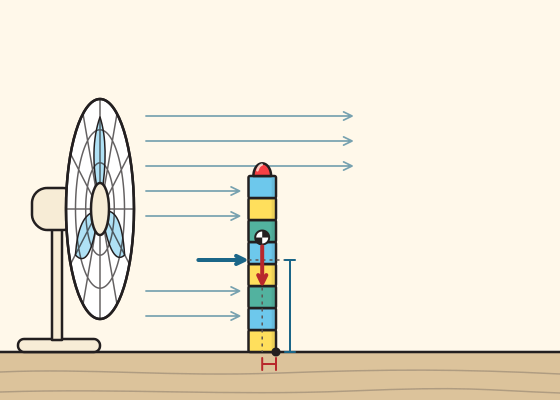
The drawing shows where it starts. It runs here once its script has loaded.El dibujo muestra dónde empieza. Funciona aquí una vez que carga su código.
Your challengeSu reto
- Turn up the fan until the tower tips over.Suba el ventilador hasta que la torre se vuelque. Not done yet.Todavía no.
- Tip a tower, then keep the same tower standing in the same wind by moving only the clay.Vuelque una torre y luego mantenga de pie la misma torre, con el mismo viento, moviendo solo la plastilina. Not done yet.Todavía no.
- With the fan at its strongest and blocks seven centimeters wide, build the tallest tower that does not tip.Con el ventilador lo más fuerte y bloques de siete centímetros de ancho, construya la torre más alta que no se vuelque. Not done yet.Todavía no.
Every challenge done. Now try it for real at home.Todos los retos logrados. Ahora pruébelo de verdad en casa.
Turning effect of the wind, toward the far sideEfecto de giro del viento, hacia el lado lejano
Turning effect of the weight, back toward the fanEfecto de giro del peso, de regreso hacia el ventilador
The wind’s push:El empuje del viento:
The tower’s weight:El peso de la torre:
The blue arrow is the wind’s push, and the blue mark beside the tower is its height above the table. The red arrow is the tower’s weight, pulling straight down at its balance point, the quartered circle; the red mark on the table is how far that is from the tipping edge, the edge on the far side from the fan. A turning effect is a push or a weight times its distance from the tipping edge, in grams times centimeters; the push is given as the weight it equals. Each block is four centimeters tall and weighs five grams for every four centimeters of width, and the clay weighs twenty grams.La flecha azul es el empuje del viento, y la marca azul junto a la torre es su altura sobre la mesa. La flecha roja es el peso de la torre, que jala derecho hacia abajo en su punto de equilibrio, el círculo dividido en cuartos; la marca roja sobre la mesa es qué tan lejos está del borde de vuelco, el borde del lado lejano del ventilador. Un efecto de giro es un empuje o un peso por su distancia al borde de vuelco, en gramos por centímetros; el empuje se da como el peso al que equivale. Cada bloque mide cuatro centímetros de alto y pesa cinco gramos por cada cuatro centímetros de ancho, y la plastilina pesa veinte gramos.
What is happeningQué está pasando
The fan’s wind pushes on the side of the tower. That push tries to turn the tower over the edge of its base on the far side from the fan, its tipping edge. The tower’s weight pulls straight down from its balance point, the average place of all its weight, and turns it back the other way.El viento del ventilador empuja el costado de la torre. Ese empuje trata de girar la torre sobre el borde de su base del lado lejano del ventilador, su borde de vuelco. El peso de la torre jala derecho hacia abajo desde su punto de equilibrio, el lugar promedio de todo su peso, y la gira de regreso hacia el otro lado.
How hard each one turns the tower is its turning effect: the push times its height above the table, and the weight times how far the balance point sits from the tipping edge, measured along the table. When the wind’s turning effect is bigger, the tower tips over that edge and falls the way the wind blows.Qué tan fuerte gira cada uno a la torre es su efecto de giro: el empuje por su altura sobre la mesa, y el peso por qué tan lejos queda el punto de equilibrio del borde de vuelco, medido a lo largo de la mesa. Cuando el efecto de giro del viento es mayor, la torre se vuelca sobre ese borde y cae hacia donde sopla el viento.
A taller tower catches more wind, and that wind pushes higher up, so its turning effect grows fast: twice as tall turns it four times as hard, while the weight’s turning effect only doubles. A wider base helps twice over: wider blocks weigh more, and their weight sits farther from the edge.Una torre más alta atrapa más viento, y ese viento empuja más arriba, así que su efecto de giro crece rápido: el doble de alta la gira cuatro veces más fuerte, mientras que el efecto de giro del peso solo se duplica. Una base más ancha ayuda por partida doble: los bloques más anchos pesan más, y su peso queda más lejos del borde.
Where the weight sits matters too. Clay on the side the fan blows from is farthest from the tipping edge, so it holds the tower best, and clay on the far side helps the least. Watch the balance point move toward the fan as the clay does.También importa dónde va el peso. La plastilina del lado de donde sopla el ventilador queda más lejos del borde de vuelco, así que es la que mejor sostiene la torre, y la plastilina del lado lejano es la que menos ayuda. Observe cómo el punto de equilibrio se mueve hacia el ventilador cuando la plastilina se mueve.
Things to tryCosas para probar
- Set the fan at its strongest and add blocks one at a time. How tall does the tower get before it tips?Ponga el ventilador lo más fuerte y agregue bloques uno por uno. ¿Qué tan alta llega la torre antes de volcarse?
- Move the clay from the far side to the fan side and watch the balance point and the red mark on the table.Mueva la plastilina del lado lejano al lado del ventilador y observe el punto de equilibrio y la marca roja sobre la mesa.
- Make the base twice as wide. How many more blocks can the tower hold up in the same wind?Haga la base el doble de ancha. ¿Cuántos bloques más puede tener la torre con el mismo viento?
- Build a tower of light blocks or small boxes in front of a fan at home, and see which way it falls.Construya una torre de bloques ligeros o cajitas frente a un ventilador en casa, y vea hacia dónde cae.
A model: the wind’s push comes from the drag equation, with the density of air at sea level and the drag of a flat face square to the wind, and the wind blows evenly over the whole tower. The blocks are light foam, four centimeters tall, weighing five grams for every four centimeters of width, and the clay twenty grams; both are the model’s choices. The bottom block never slides, though on a slippery table a short, wide tower may slide instead of tipping, and the fallen blocks are drawn lying in a row where real ones would bounce and scatter. A real fan’s wind is strongest in front of its middle and comes in gusts, so your own tower may tip a little sooner or later.Un modelo: el empuje del viento sale de la ecuación de arrastre, con la densidad del aire al nivel del mar y el arrastre de una cara plana de frente al viento, y el viento sopla parejo sobre toda la torre. Los bloques son de espuma ligera, de cuatro centímetros de alto, y pesan cinco gramos por cada cuatro centímetros de ancho, y la plastilina veinte gramos; las dos cosas son elecciones del modelo. El bloque de abajo nunca se resbala, aunque en una mesa resbalosa una torre baja y ancha puede deslizarse en vez de volcarse, y los bloques caídos se dibujan acostados en fila, donde los reales rebotarían y se esparcirían. El viento de un ventilador real es más fuerte frente a su centro y llega en ráfagas, así que su torre puede volcarse un poco antes o un poco después.
Open the simulation on its own pageAbrir la simulación en su propia página
Your engineering challengeSu reto de ingeniería
Find the tallest tower that stands in your fan’s wind. Then make a taller tower stand in the same wind, changing only how the blocks are turned and where one lump of clay sits.Encuentre la torre más alta que se queda de pie con el viento de su ventilador. Luego haga que una torre más alta se quede de pie con el mismo viento, cambiando solo cómo están volteados los bloques y dónde va una bolita de plastilina.
Make it an experimentConviértalo en un experimento
Science is about changing one thing and watching what happens. Write down your guess, your hypothesis, before you start.La ciencia se trata de cambiar una cosa y observar qué pasa. Escriba su suposición, su hipótesis, antes de empezar.
- Change only the height: add one block at a time and write down the height where the tower first tips.Cambie solo la altura: agregue un bloque a la vez y anote la altura a la que la torre se vuelca por primera vez.
- Change only the base: build the same height with every block turned so its long side points at the fan, then its short side.Cambie solo la base: construya la misma altura con cada bloque volteado de modo que su lado largo apunte al ventilador, y luego su lado corto.
- Change only where the clay sits: on top on the fan side, in the middle, then on the far side, on a tower that tipped without clay.Cambie solo dónde va la plastilina: arriba del lado del ventilador, en medio y luego del lado lejano, en una torre que se volcó sin plastilina.
Use it, share it, adapt itÚsela, compártala, adáptela
The credit to copyEl crédito para copiar
Free BYRD, CC BY. “Build a tower that stands in a fan’s wind” from the Byrd Academy STEM Curriculum by Byrd EDU, byrdathome.org.Free BYRD, CC BY. “Construya una torre que aguante el viento de un ventilador”, del Currículo STEM de Byrd Academy, de Byrd EDU, byrdathome.org.
This is free to use, share and adapt, even commercially, under the Creative Commons Attribution 4.0 International license (CC BY 4.0), with this credit. What Free BYRD means.Esto es libre de usar, compartir y adaptar, incluso con fines comerciales, bajo la licencia Creative Commons Atribución 4.0 Internacional (CC BY 4.0), con este crédito. Qué significa Free BYRD.
Keep goingSiga adelante
What to do nextQué hacer después
Make it harderHágalo más difícil
Measure one block’s height and its width along the wind, and weigh a few blocks on a kitchen scale. In the simulation, set blocks of that width and find the tallest tower that stands; then see whether your own fan agrees, and explain any difference.Mida la altura de un bloque y su ancho en la dirección del viento, y pese unos bloques en una báscula de cocina. En la simulación, ponga bloques de ese ancho y encuentre la torre más alta que se queda de pie; luego vea si su propio ventilador coincide, y explique cualquier diferencia.
For a younger onePara alguien más pequeño
A younger child can stack the blocks and call out which way the tower will fall before the grown-up turns on the fan. Keep small hands away from the fan, and the clay out of mouths.La niña o el niño más pequeño puede apilar los bloques y decir hacia dónde va a caer la torre antes de que la persona adulta encienda el ventilador. Mantenga las manitas lejos del ventilador y la plastilina fuera de la boca.
Try this nextPruebe esto después
Build a tower the fan cannot tipConstruya una torre que el ventilador no pueda volcar
Stack light blocks into a tower, set a fan blowing on it, and find out what keeps it standing: a wider base, a shorter tower, or a lump of clay in the right place.Apile bloques ligeros en una torre, ponga un ventilador a soplarle y descubra qué la mantiene de pie: una base más ancha, una torre más baja o una bolita de plastilina en el lugar correcto.
- Ways in:Formas de empezar:
- SimulateSimular
Best for ages 5 and upIdeal desde los 5 años
ManufacturingManufacturaDesignDiseño
Free BYRD, CC BYSimulationSimulación
Test the strength of trianglesPonga a prueba la fuerza de los triángulos
Push on a square and a triangle made of sticks, see which one holds its shape, then build a paper tower that stands on shape, not tape.Empuje un cuadrado y un triángulo hechos de palitos, vea cuál conserva su forma y luego construya una torre de papel que se sostenga por su forma, no por la cinta.
- Ways in:Formas de empezar:
- ReadLeer
- DoHacer
- SimulateSimular
Best for ages 5 and upIdeal desde los 5 años
ManufacturingManufacturaDesignDiseño
Free BYRD, CC BYHome activityActividad en casa
Standing Strong: Towers and BridgesBien firmes: torres y puentes
Build towers and bridges from paper and craft sticks, then test them fairly with washers to find out why triangles make things strong.Construya torres y puentes con papel y palitos de madera, y luego póngalos a prueba con arandelas para descubrir por qué los triángulos dan firmeza.
- Ways in:Formas de empezar:
- ReadLeer
- DoHacer
- SimulateSimular
Grades 3 to 5Grados 3 a 5
ManufacturingManufacturaDesignDiseño
Free BYRD, CC BYCurriculum unitUnidad del currículo
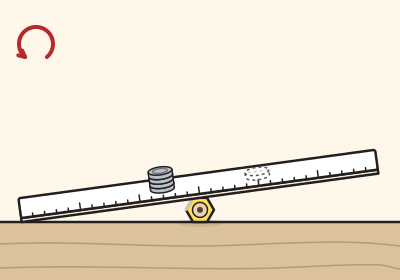 SIM-0015
 Balance a ruler seesawEquilibre un subibaja de regla
Stack coins on a ruler resting on a pencil, see which side turns harder, and balance a big stack with one coin far out.Apile monedas sobre una regla apoyada en un lápiz, vea qué lado gira más fuerte y equilibre una pila grande con una sola moneda lejos del lápiz.
- Ways in:Formas de empezar:
- SimulateSimular
Best for ages 6 and upIdeal desde los 6 años
ManufacturingManufacturaDesignDiseño
Free BYRD, CC BYSimulationSimulación