

ExploreExplorarBH-0077
Feed yeast sugar and watch it blow up a balloonAlimente la levadura con azúcar y vea cómo infla un globo
Mix yeast, sugar and warm water in a bottle, stretch a balloon over its mouth, and watch living yeast fill it with gas. Then set a bottle of cold water beside it and see which balloon grows.Mezcle levadura, azúcar y agua tibia en una botella, estire un globo sobre la boca y vea cómo la levadura, que está viva, lo llena de gas. Luego ponga al lado una botella con agua fría y vea qué globo crece.
- Ways in:Formas de empezar:
- Read, 4 minutesLeer, 4 minutos
- Do, 45 minutesHacer, 45 minutos
- Simulate, 8 minutesSimular, 8 minutos
- AgesEdades
- Every age. Best for ages 5 and up.Todas las edades. Ideal desde los 5 años.
- CostCosto
- Under a few dollarsMenos de unos pocos dólares
The MESH'D components this item uses:Los componentes MESH'D que usa:Holistic DesignDiseño integral
Do, about 45 minutesHacer, unos 45 minutos
Build it at homeConstrúyalo en casa
StepsPasos
- Label one bottle Warm and the other Cold with tape and the marker.Ponga a una botella la etiqueta Tibia y a la otra Fría, con cinta y el marcador.
- Using the funnel, pour two tablespoons of sugar into each bottle, then one packet of yeast into each.Con el embudo, eche dos cucharadas de azúcar en cada botella y luego un sobre de levadura en cada una.
- A grown-up fills the Warm bottle about halfway with warm tap water, tested on the inside of a wrist: warm to the touch, never hot. With a kitchen thermometer, aim for about one hundred five to one hundred fifteen degrees Fahrenheit.Una persona adulta llena la botella Tibia hasta más o menos la mitad con agua tibia de la llave, probada en la parte de adentro de la muñeca: tibia al tacto, nunca caliente. Con un termómetro de cocina, busque unos cuarenta y uno a cuarenta y seis grados Celsius.
- The grown-up fills the Cold bottle about halfway with cold tap water.La persona adulta llena la botella Fría hasta más o menos la mitad con agua fría de la llave.
- Swirl each bottle gently until the yeast and sugar are mixed in, with no cap on.Mueva cada botella en círculos con cuidado, sin tapa, hasta que la levadura y el azúcar se mezclen.
- A grown-up stretches a balloon over the mouth of each bottle and pulls it down over the neck so it holds tight.Una persona adulta estira un globo sobre la boca de cada botella y lo jala hacia abajo por el cuello para que quede bien firme.
- Start the timer. Every five minutes, look at the bubbles and foam in each bottle and at each balloon, and say what you see.Arranque el temporizador. Cada cinco minutos, mire las burbujas y la espuma en cada botella y cada globo, y diga lo que ve.
- Every ten minutes, a grown-up wraps the string around the middle of each balloon, and you measure the string against the ruler. Write each one down.Cada diez minutos, una persona adulta rodea con la cuerda la parte más ancha de cada globo, y usted mide la cuerda con la regla. Anote cada medida.
- When you finish, a grown-up takes off the balloons and throws them away, pours the mix down the sink with the water running, and everyone washes their hands.Al terminar, una persona adulta quita los globos y los tira a la basura, tira la mezcla en el fregadero con el agua corriendo, y todos se lavan las manos.
What you needLo que necesita
- Two clean, empty plastic bottles of the same sizeDos botellas de plástico limpias y vacías, del mismo tamaño
- Two packets of dry yeast, one for each bottleDos sobres de levadura seca, uno para cada botella
- Sugar and a tablespoonAzúcar y una cuchara sopera
- Two balloonsDos globos
- A funnel, or a sheet of paper rolled into a coneUn embudo, o una hoja de papel enrollada en forma de cono
- Warm and cold water from the tap, for the grown-upAgua tibia y agua fría de la llave, para la persona adulta
- Tape and a marker for labelsCinta adhesiva y un marcador para las etiquetas
- A piece of string, a ruler and a clock or timerUn pedazo de cuerda, una regla y un reloj o temporizador
Under a few dollars.Menos de unos pocos dólares.
Use warm water from the tap, never hot, and never water heated on a stove or in a microwave. A grown-up handles anything hot: the grown-up runs the tap, because a tap can run hot enough to scald, tests the water on the inside of a wrist and pours it, and it should feel warm to the touch, never hot. Water hot enough to kill yeast can burn skin in less than a minute. A grown-up stretches each balloon on and takes it off. Children under eight can choke or suffocate on balloons that are not blown up and on pieces of broken balloons, so keep loose balloons out of their hands and mouths, and throw away a broken balloon’s pieces at once. Many balloons are made of latex, so if anyone is allergic to latex, use balloons that are not. Use plastic bottles, not glass. Nothing in the bottles is for tasting or drinking: when you finish, pour it down the sink with the water running and wash your hands.Use agua tibia de la llave, nunca caliente, y nunca agua calentada en la estufa ni en el microondas. Una persona adulta se encarga de todo lo caliente: abre la llave, porque una llave puede dar agua tan caliente que quema, prueba el agua en la parte de adentro de la muñeca y la sirve, y debe sentirse tibia al tacto, nunca caliente. El agua lo bastante caliente para matar la levadura puede quemar la piel en menos de un minuto. Una persona adulta estira cada globo sobre la botella y lo quita. Los niños menores de ocho años pueden atragantarse o asfixiarse con globos sin inflar y con pedazos de globos reventados, así que mantenga los globos sueltos fuera de sus manos y de su boca, y tire de inmediato los pedazos de un globo reventado. Muchos globos son de látex, así que si alguien es alérgico al látex, use globos que no lo sean. Use botellas de plástico, no de vidrio. Nada de lo que hay en las botellas es para probar ni para tomar: al terminar, tírelo en el fregadero con el agua corriendo y lávese las manos.
Read, 4 minutesLeer, 4 minutos
The big ideaLa gran idea
Yeast is alive. Dry yeast is made of tiny living things, a fungus with only one cell each, far too small to see one at a time, resting while they are dry. In warm water with sugar they wake up and eat, and as they eat the sugar they give off a gas, carbon dioxide. In a bottle, the gas bubbles up through the water and has nowhere to go but into a balloon stretched over the mouth, so the balloon slowly fills. Because yeast is alive, the water matters: it works slowly in cold water and best in warm water, about one hundred five to one hundred fifteen degrees Fahrenheit, and water at one hundred thirty five degrees or more kills it. Sugar is its food, and salt slows it down. Bakers use the same gas to make bread rise.La levadura está viva. La levadura seca está hecha de seres vivos diminutos, un hongo de una sola célula, demasiado pequeños para verlos uno por uno, que descansan mientras están secos. En agua tibia con azúcar despiertan y comen, y mientras se comen el azúcar sueltan un gas, el dióxido de carbono. En una botella, el gas sube en burbujas por el agua y no tiene otro lugar a donde ir más que un globo estirado sobre la boca, así que el globo se llena poco a poco. Como la levadura está viva, el agua importa: trabaja despacio en agua fría y mejor en agua tibia, de unos cuarenta y uno a cuarenta y seis grados Celsius, y el agua a cincuenta y siete grados Celsius o más la mata. El azúcar es su alimento, y la sal la frena. Los panaderos usan el mismo gas para que el pan se esponje.
Simulate, 8 minutesSimular, 8 minutos
Feed yeast and fill a balloonAlimente la levadura y llene un globo
Yeast is alive. Choose the water and the sugar, start the clock, and watch the gas the yeast gives off fill a balloon over an hour.La levadura está viva. Elija el agua y el azúcar, ponga el reloj en marcha y vea cómo el gas que suelta la levadura llena un globo durante una hora.
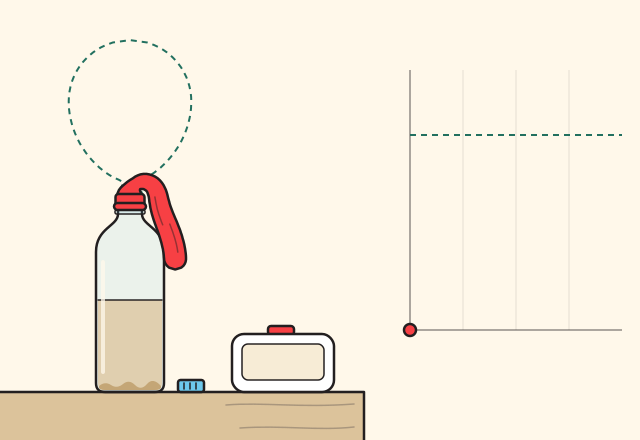
The drawing shows where it starts. It runs here once its script has loaded.El dibujo muestra dónde empieza. Funciona aquí una vez que carga su código.
Your challengeSu reto
- Start the clock and watch the balloon for the whole hour.Ponga el reloj en marcha y observe el globo durante toda la hora. Not done yet.Todavía no.
- Compare cold water with warm water, with the same sugar, for at least half an hour.Compare agua fría con agua tibia, con la misma cantidad de azúcar, durante media hora por lo menos. Not done yet.Todavía no.
- Try water that is too hot and watch for half an hour. Why does the balloon stay flat?Pruebe agua demasiado caliente y observe media hora. ¿Por qué el globo se queda desinflado? Not done yet.Todavía no.
- Fill the balloon past the dashed outline within the hour.Llene el globo más allá del contorno punteado dentro de la hora. Not done yet.Todavía no.
Every challenge done. Now try it for real at home.Todos los retos logrados. Ahora pruébelo de verdad en casa.
How full the balloon isQué tan lleno está el globo
The yeast:La levadura:
Your last try, at the hour:Su intento anterior, a la hora:
The bubbles in the bottle are the gas the yeast gives off, and the balloon catches it. The dashed outline is the size to aim for. On the graph, the solid line is this try so far, the dashed line your last try over the whole hour, and the green line the goal. Warm water here is what university extension pages call best for yeast, and hot water is as hot as the water they say kills it.Las burbujas en la botella son el gas que suelta la levadura, y el globo lo atrapa. El contorno punteado es el tamaño que hay que alcanzar. En la gráfica, la línea continua es este intento hasta ahora, la punteada su intento anterior durante toda la hora, y la línea verde la meta. El agua tibia aquí es la que las páginas de extensión universitaria señalan como la mejor para la levadura, y el agua caliente es tan caliente como el agua que, según ellas, la mata.
What is happeningQué está pasando
Yeast is alive. Dry yeast is made of tiny living things, a fungus with only one cell each, far too small to see one at a time. Dry, it rests. In water with sugar it wakes up and eats.La levadura está viva. La levadura seca está hecha de seres vivos diminutos, un hongo de una sola célula, demasiado pequeños para verlos uno por uno. Seca, descansa. En agua con azúcar despierta y come.
As yeast eats sugar, it gives off a gas, carbon dioxide. The gas rises through the water in bubbles, gathers at the top of the bottle and has nowhere to go but into the balloon, so the balloon fills. Bakers use the same gas to make bread rise.Mientras la levadura come azúcar, suelta un gas, el dióxido de carbono. El gas sube por el agua en burbujas, se junta arriba en la botella y no tiene otro lugar a donde ir más que el globo, así que el globo se llena. Los panaderos usan el mismo gas para que el pan se esponje.
Because yeast is alive, the water matters. In cold water it works slowly. Warm water, about one hundred five to one hundred fifteen degrees Fahrenheit, is best. Water at one hundred thirty five degrees or more kills it, and dead yeast makes no gas, so the balloon stays flat.Como la levadura está viva, el agua importa. En agua fría trabaja despacio. El agua tibia, de unos cuarenta y uno a cuarenta y seis grados Celsius, es la mejor. El agua a cincuenta y siete grados Celsius o más la mata, y la levadura muerta no hace gas, así que el globo se queda desinflado.
Sugar is its food. With no sugar, it makes almost no gas. With a little, the balloon grows until the sugar is used up; with more, it keeps growing. Salt slows it down.El azúcar es su alimento. Sin azúcar, casi no hace gas. Con un poco, el globo crece hasta que se acaba el azúcar; con más, sigue creciendo. La sal la frena.
Things to tryCosas para probar
- Run the hour with a little sugar and then with more. Where does the line with a little sugar flatten out, and why?Corra la hora con un poco de azúcar y luego con más. ¿Dónde se aplana la línea con un poco de azúcar, y por qué?
- Take the sugar away. How much gas does the yeast make with nothing to eat?Quite el azúcar. ¿Cuánto gas hace la levadura sin nada que comer?
- Add the salt to your best bottle and compare it with your last try.Agregue la sal a su mejor botella y compárela con su intento anterior.
- Try it for real with two bottles side by side, one warm and one cold, and measure around each balloon with a string.Pruébelo de verdad con dos botellas lado a lado, una tibia y una fría, y mida alrededor de cada globo con una cuerda.
A model: the gas comes from a smooth, made-up rate curve shaped the way public sources describe yeast (slow in cold water, busiest in warm water, killed by water that is too hot, faster with sugar, slower with salt, and a few minutes to wake up), not from a measurement, so your own balloons will grow by different amounts and at different times. The temperatures are the ones university extension pages state; cold water is cold from the tap, because they give it no number. The water keeps its temperature for the whole hour, though a real bottle cools; the air in the bottle and the stretch of the balloon are left out; and the little bit of sugar running out is the model’s way of showing food being used up. Never test hot water at home: water hot enough to kill yeast can burn skin in less than a minute.Un modelo: el gas sale de una curva de ritmo suave e inventada, con la forma con que las fuentes públicas describen la levadura (lenta en agua fría, más activa en agua tibia, muerta en agua demasiado caliente, más rápida con azúcar, más lenta con sal, y unos minutos para despertar), no de una medición, así que sus propios globos crecerán distinto y a otros tiempos. Las temperaturas son las que indican las páginas de extensión universitaria; el agua fría es fría de la llave, porque no le dan ningún número. El agua conserva su temperatura toda la hora, aunque una botella real se enfría; se dejan fuera el aire de la botella y lo que se estira el globo; y el poquito de azúcar que se acaba es la manera del modelo de mostrar que el alimento se gasta. Nunca pruebe agua caliente en casa: el agua lo bastante caliente para matar la levadura puede quemar la piel en menos de un minuto.
Open the simulation on its own pageAbrir la simulación en su propia página
Your engineering challengeSu reto de ingeniería
Set up two bottles the same way, one with warm water and one with cold, and predict which balloon will be bigger after half an hour. Then measure around each balloon with a string to find out.Prepare dos botellas igual, una con agua tibia y otra con agua fría, y prediga qué globo estará más grande después de media hora. Luego mida alrededor de cada globo con una cuerda para averiguarlo.
Make it an experimentConviértalo en un experimento
Science is about changing one thing and watching what happens. Write down your guess, your hypothesis, before you start.La ciencia se trata de cambiar una cosa y observar qué pasa. Escriba su suposición, su hipótesis, antes de empezar.
- Change only the sugar: one bottle with sugar and one with none, both with warm water. Which balloon fills?Cambie solo el azúcar: una botella con azúcar y otra sin nada, las dos con agua tibia. ¿Qué globo se llena?
- Change only how much sugar: one tablespoon in one bottle and three in the other. Does the balloon with more sugar keep growing longer?Cambie solo la cantidad de azúcar: una cucharada en una botella y tres en la otra. ¿El globo con más azúcar sigue creciendo por más tiempo?
- Check with salt: add a spoonful of salt to one of two warm bottles that are the same in every other way. Does the salt slow the yeast down?Compruébelo con sal: agregue una cucharada de sal a una de dos botellas tibias que son iguales en todo lo demás. ¿La sal frena a la levadura?
Use it, share it, adapt itÚsela, compártala, adáptela
The credit to copyEl crédito para copiar
Free BYRD, CC BY. “Feed yeast sugar and watch it blow up a balloon” from the Byrd Academy STEM Curriculum by Byrd EDU, byrdathome.org.Free BYRD, CC BY. “Alimente la levadura con azúcar y vea cómo infla un globo”, del Currículo STEM de Byrd Academy, de Byrd EDU, byrdathome.org.
This is free to use, share and adapt, even commercially, under the Creative Commons Attribution 4.0 International license (CC BY 4.0), with this credit. What Free BYRD means.Esto es libre de usar, compartir y adaptar, incluso con fines comerciales, bajo la licencia Creative Commons Atribución 4.0 Internacional (CC BY 4.0), con este crédito. Qué significa Free BYRD.