

CurriculumCurrículoSTEMGrades 9 to 12Grados 9 a 12STEM-HS-09
Power and RenewablesEnergía y fuentes renovables
Measure volts and amps to compute power, test a solar panel at different angles and light levels, then build a solar charger and measure its real efficiency.Mida voltios y amperios para calcular la potencia, pruebe un panel solar con distintos ángulos y niveles de luz, y luego construya un cargador solar y mida su eficiencia real.
- Ways in:Formas de empezar:
- Read, 1 minuteLeer, 1 minuto
- Do, 270 minutesHacer, 270 minutos
- Simulate, 5 minutesSimular, 5 minutos
- GradesGrados
- Grades 9 to 12, and any learner ready for itGrados 9 a 12, y cualquier persona lista para ello
- TimeTiempo
- 6 sessions of about 45 minutes6 sesiones de unos 45 minutos
- CostCosto
- Needs equipmentNecesita equipo
The MESH'D components this unit uses:Los componentes MESH'D que usa esta unidad:ManufacturingManufacturaElectronicsElectrónica
The driving questionLa pregunta central
Where does the energy come from?¿De dónde viene la energía?
Volts times amps stops being a formula when the solar charger you built charges your battery at the rate you predicted.Voltios por amperios deja de ser una fórmula cuando el cargador solar que usted construyó carga su batería al ritmo que predijo.
Learners will be able toAl terminar se podrá
- Measure voltage and current on real loads and compute power.Medir voltaje y corriente en cargas reales y calcular la potencia.
- Characterize a solar panel by angle and light level.Caracterizar un panel solar según el ángulo y el nivel de luz.
- Build a charge circuit and compute its measured efficiency.Construir un circuito de carga y calcular su eficiencia medida.
Where the math isDónde están las matemáticas
Power equals voltage times current, efficiency percentages, and battery charge measured in milliamp-hours.La potencia es igual al voltaje por la corriente, porcentajes de eficiencia y la carga de una batería medida en miliamperios hora.
Texas standards, strand levelEstándares de Texas, por componente
- Science: Matter and EnergyCiencias: Materia y energía
- Math: Number and OperationsMatemáticas: Números y operaciones
Session by sessionSesión por sesión
What to doQué hacer
- Power lab: measure voltage and current across different loads and compute power.Laboratorio de potencia: mida voltaje y corriente en distintas cargas y calcule la potencia.
- Characterize a solar panel: measure its output at different angles and light levels.Caracterice un panel solar: mida su salida con distintos ángulos y niveles de luz.
- Learn the basics of a charge circuit, along with the battery safety rules.Aprenda lo básico de un circuito de carga, junto con las reglas de seguridad de baterías.
- Build the solar charger.Construya el cargador solar.
- Test the charge rate, then compute the measured efficiency and compare it with theory.Pruebe el ritmo de carga y luego calcule la eficiencia medida y compárela con la teoría.
- Present your results and demo the charger.Presente sus resultados y haga una demostración del cargador.
What you needLo que necesita
- A small solar panel, one per pairUn panel solar pequeño por pareja
- DiodesDiodos
- WireAlambre
- Battery holdersPortapilas
- NiMH rechargeable cellsPilas recargables NiMH
EquipmentEquipo
- A multimeterUn multímetro
Needs equipment.Necesita equipo.
Finish the tool and soldering certification from the Workshop Bootcamp unit before any hands-on work here. Batteries: alkaline and NiMH rechargeable cells are the defaults, and NiMH is the choice for this charger. Lithium pouch and LiPo cells are not for learner builds without written approval from the responsible adult; where approved, they charge in a fireproof charging bag, are never charged unattended, and are stored in a marked bin. Never leave any battery charging unattended. If younger children are nearby, count coin cells out and back in and never leave one loose, because a swallowed coin cell can cause severe injury. All learner electrical work is low-voltage direct current, twelve volts or less; wall power is never learner work.Termine la certificación de herramientas y soldadura de la unidad Campamento de taller antes de cualquier trabajo práctico aquí. Baterías: las pilas alcalinas y las recargables NiMH son las predeterminadas, y NiMH es la elección para este cargador. Las celdas de litio tipo bolsa y las LiPo no son para proyectos de estudiantes sin la aprobación por escrito del adulto responsable; donde se aprueben, se cargan dentro de una bolsa de carga a prueba de fuego, nunca se cargan sin supervisión y se guardan en un contenedor marcado. Nunca deje ninguna batería cargando sin supervisión. Si hay niños más pequeños cerca, cuente las pilas de botón al sacarlas y al guardarlas y nunca deje una suelta, porque tragarse una pila de botón puede causar lesiones graves. Todo trabajo eléctrico de los estudiantes es de corriente directa de bajo voltaje, doce voltios o menos; la electricidad de la pared nunca es trabajo de estudiantes.
What learners make and showLo que se hace y se muestra
A working solar charger with its charge-rate results: real measurements, efficiency computed correctly, and the battery rules followed.Un cargador solar que funciona con sus resultados de ritmo de carga: mediciones reales, eficiencia calculada correctamente y las reglas de baterías respetadas.
Mix-ups to expectConfusiones que esperar
- The panel's label is its output. The label gives the output under ideal test conditions; real output changes with angle and light, as your measurements show.La etiqueta del panel es su salida. La etiqueta da la salida en condiciones ideales de prueba; la salida real cambia con el ángulo y la luz, como muestran sus mediciones.
- Efficiency near one hundred percent is normal. Real circuits lose energy along the way, so measured efficiency comes out lower than the ideal.Una eficiencia cercana al cien por ciento es normal. Los circuitos reales pierden energía en el camino, así que la eficiencia medida resulta menor que la ideal.
- Batteries are all the same. Battery chemistries differ in how they charge, how they fail, and how they must be handled.Todas las baterías son iguales. Las químicas de las baterías difieren en cómo se cargan, cómo fallan y cómo deben manejarse.
At homeEn casa
Try it at the kitchen tablePruébelo en la mesa de la cocina
Find the output label on a phone charger, read its volts and amps, and multiply them to get its rated power in watts.Busquen la etiqueta de salida de un cargador de teléfono, lean sus voltios y amperios, y multiplíquenlos para obtener su potencia nominal en vatios.
Simulate, 5 minutesSimular, 5 minutos
Heat in a solar ovenEl calor en un horno solar
Aim your oven at the sun, add foil, plastic and newspaper, and watch the temperature inside climb over an hour until the food is hot.Apunte su horno al sol, agregue papel de aluminio, plástico y periódico, y vea subir la temperatura adentro durante una hora hasta que la comida esté caliente.
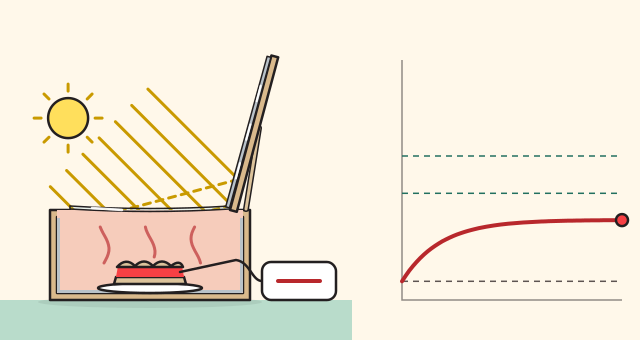
The drawing shows where it starts. It runs here once its script has loaded.El dibujo muestra dónde empieza. Funciona aquí una vez que carga su código.
Your challengeSu reto
- Take the plastic off the window and compare the new line with the last one.Quite el plástico de la ventana y compare la línea nueva con la anterior. Not done yet.Todavía no.
- Get the inside past one hundred forty degrees Fahrenheit (sixty Celsius) within the hour, hot enough to keep food hot.Haga que el interior pase de sesenta grados Celsius (ciento cuarenta Fahrenheit) dentro de la hora, lo bastante para mantener caliente la comida. Not done yet.Todavía no.
- Get the inside past one hundred sixty five degrees Fahrenheit (seventy four Celsius) within the hour, hot enough to reheat leftovers.Haga que el interior pase de setenta y cuatro grados Celsius (ciento sesenta y cinco Fahrenheit) dentro de la hora, lo bastante para recalentar sobras. Not done yet.Todavía no.
Every challenge done. Now try it for real at home.Todos los retos logrados. Ahora pruébelo de verdad en casa.
Sunlight getting into the ovenLuz del sol que entra al horno
Inside the ovenDentro del horno
The day outsideEl día afuera
Each yellow ray carries the same sunlight; a dashed one has bounced off the foil. On the graph, the solid line is this oven over the hour, the dashed line your last try, and the green lines the temperatures that keep food hot and that reheat leftovers.Cada rayo amarillo lleva la misma luz del sol; uno punteado rebotó en el aluminio. En la gráfica, la línea continua es este horno durante la hora, la punteada su intento anterior, y las líneas verdes las temperaturas que mantienen caliente la comida y que recalientan las sobras.
What is happeningQué está pasando
Sunlight carries energy. When it shines straight onto the window, the most light gets in; when it comes in at a slant, the same sunlight is spread out, so less of it reaches the window.La luz del sol lleva energía. Cuando brilla directo sobre la ventana, entra la mayor cantidad de luz; cuando llega inclinada, la misma luz se reparte, así que menos alcanza la ventana.
Foil on the lid bounces extra sunlight down through the window. The lid catches the most when the sun is a little to the front, so the best aim is a trade between the window and the lid.El papel de aluminio en la tapa rebota más luz del sol hacia la ventana. La tapa atrapa más cuando el sol está un poco al frente, así que la mejor posición es un equilibrio entre la ventana y la tapa.
Inside, the light turns into heat. Heat always leaks out of a warm box: plastic over the window keeps the warm air in, and newspaper in the walls slows the leak. The inside keeps warming until the heat leaking out matches the heat coming in.Adentro, la luz se convierte en calor. El calor siempre se escapa de una caja caliente: el plástico sobre la ventana mantiene adentro el aire caliente, y el periódico en las paredes frena la fuga. El interior se sigue calentando hasta que el calor que sale iguala al calor que entra.
Things to tryCosas para probar
- Turn the oven away from the sun and watch the rays thin out and the line flatten.Aleje el horno del sol y vea cómo los rayos se separan y la línea se aplana.
- Take the foil off the lid and see which rays stop.Quite el papel de aluminio de la tapa y vea qué rayos se detienen.
- Change one thing at a time and compare the new line with the last one.Cambie una cosa a la vez y compare la línea nueva con la anterior.
- Run the hour and watch how fast the inside warms at first, and how it slows down later.Corra la hora y vea qué tan rápido se calienta el interior al principio, y cómo se frena después.
This is a model of a box oven on a clear, sunny day with no wind: the light is counted in a flat slice through the oven, and how much heat leaks out comes from typical numbers for cardboard, newspaper and plastic, some of them estimates. A real box also has side walls, and clouds and wind change everything, so your own oven will heat differently. Use a food thermometer, and let a grown-up take the food out.Este es un modelo de un horno de caja en un día claro y soleado, sin viento: la luz se cuenta en un corte plano del horno, y cuánto calor se escapa sale de números típicos del cartón, el periódico y el plástico, algunos de ellos estimados. Una caja real también tiene paredes a los lados, y las nubes y el viento lo cambian todo, así que su horno se calentará de otra manera. Use un termómetro de cocina, y deje que una persona adulta saque la comida.
Open the simulation on its own pageAbrir la simulación en su propia páginaVolts, ohms and amps: Ohm's lawVoltios, ohmios y amperios: la ley de Ohm
Use it, share it, adapt itÚsela, compártala, adáptela
The credit to copyEl crédito para copiar
Free BYRD, CC BY. “Power and Renewables” from the Byrd Academy STEM Curriculum by Byrd EDU, byrdathome.org.Free BYRD, CC BY. “Energía y fuentes renovables”, del Currículo STEM de Byrd Academy, de Byrd EDU, byrdathome.org.
This is free to use, share and adapt, even commercially, under the Creative Commons Attribution 4.0 International license (CC BY 4.0), with this credit. What Free BYRD means.Esto es libre de usar, compartir y adaptar, incluso con fines comerciales, bajo la licencia Creative Commons Atribución 4.0 Internacional (CC BY 4.0), con este crédito. Qué significa Free BYRD.
Keep goingSiga adelante
What to do nextQué hacer después
Make it harderHágalo más difícil
Predict the charge rate before you test, then explain the gap between your predicted and measured efficiency.Prediga el ritmo de carga antes de probar y luego explique la diferencia entre la eficiencia que predijo y la que midió.
For a younger onePara alguien más pequeño
Connect a small solar panel to a meter, point it at a lamp or the sun, tilt it to different angles, and find which angle gives the most.Conecte un panel solar pequeño a un medidor, apúntelo hacia una lámpara o al sol, inclínelo en distintos ángulos y encuentre cuál ángulo da más.
Try this nextPruebe esto después
Read the power labels and test a solar calculator by angleLea las etiquetas de potencia y pruebe una calculadora solar según el ángulo
Read volts and amps on charger labels and multiply them into watts, rank what plugs in at home, then tilt a solar calculator through angles and light levels to see that the label is only the ideal.Lea los voltios y los amperios en las etiquetas de los cargadores y multiplíquelos para obtener vatios, ordene lo que se enchufa en casa, y luego incline una calculadora solar en distintos ángulos y niveles de luz para ver que la etiqueta es solo el ideal.
- Ways in:Formas de empezar:
- ReadLeer
- DoHacer
- SimulateSimular
Best for ages 12 and upIdeal desde los 12 años
ElectronicsElectrónica
Free BYRD, CC BYHome activityActividad en casa
Heat in a solar ovenEl calor en un horno solar
Aim your oven at the sun, add foil, plastic and newspaper, and watch the temperature inside climb over an hour until the food is hot.Apunte su horno al sol, agregue papel de aluminio, plástico y periódico, y vea subir la temperatura adentro durante una hora hasta que la comida esté caliente.
- Ways in:Formas de empezar:
- SimulateSimular
Best for ages 8 and upIdeal desde los 8 años
ManufacturingManufacturaElectronicsElectrónica
Free BYRD, CC BYSimulationSimulación
 SIM-0020
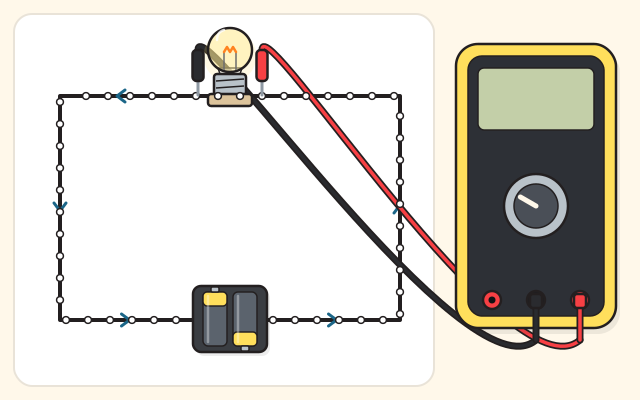
 Volts, ohms and amps: Ohm's lawVoltios, ohmios y amperios: la ley de Ohm
Light a bulb from a battery, add a resistor in a row or side by side, and read the volts and amps on a multimeter, the way an electrician checks a circuit.Encienda un foco con una pila, agregue una resistencia en fila o lado a lado, y lea los voltios y amperios en un multímetro, como revisa un circuito un electricista.
- Ways in:Formas de empezar:
- SimulateSimular
Best for ages 8 and upIdeal desde los 8 años
ElectronicsElectrónica
Free BYRD, CC BYSimulationSimulación
The power grid, from the power plant to your homeLa red eléctrica, de la central a su casa
Ride along with electricity from a power plant's spinning generator, up onto high-voltage lines, down through a substation and the transformer on your street, to the meter on your wall, while people keep supply and demand in balance.Acompañe a la electricidad desde el generador que gira en una central, por las líneas de alto voltaje, a través de una subestación y del transformador de su calle, hasta el medidor de su pared, mientras unas personas mantienen en equilibrio la oferta y la demanda.
- Ways in:Formas de empezar:
- TourRecorrer
Best for ages 5 and upIdeal desde los 5 años
ElectronicsElectrónica
Free BYRD, CC BYVirtual tourRecorrido virtual